
So, how far can an e-bike go on a single charge? The answer is: it depends, but typically e-bikes can travel anywhere from 20 to 100 miles or even more, depending on several key factors.
The world of electric bikes, or e-bikes, is exciting and offers a fantastic way to get around. Whether you’re commuting to work, exploring trails, or simply enjoying a leisurely ride, an e-bike can make the journey easier and more enjoyable. But a big question on many minds is about the e-bike range: “How far can I actually go before needing to recharge?” This is a crucial aspect when considering an e-bike purchase, and it directly ties into electric bike battery life and your overall e-bike distance capabilities.
This guide will delve deep into what determines how far your electric bicycle can travel, offering insights into e-bike performance, how to maximize your rides, and what to expect from your electric bicycle mileage. We’ll explore the science behind e-bike battery capacity, the role of pedal assist range, and discuss how factors affecting e-bike range can influence your adventure.
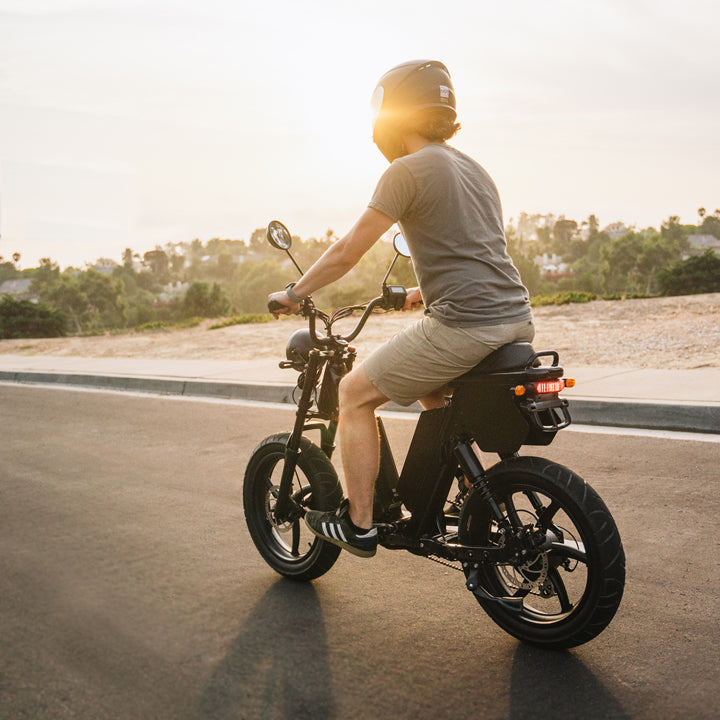
Image Source: cdn.shopify.com
The Heart of the E-bike: Battery Capacity and Its Impact
At the core of any e-bike’s capability is its battery. The e-bike battery capacity, measured in watt-hours (Wh), is the most significant factor dictating how far you can travel. Think of it like the fuel tank in a car; a larger tank means more miles.
Watt-Hours (Wh): What It Means
Watt-hours are a unit of energy. For e-bikes, it’s calculated by multiplying the battery’s voltage (V) by its amp-hour (Ah) rating.
Wh = Volts (V) × Amp-hours (Ah)
- Higher Wh = Longer Potential Range: A battery with a higher watt-hour rating can store more energy, allowing the motor to assist you for a longer period or over a greater distance.
- Common E-bike Battery Sizes: E-bike batteries commonly range from 300Wh to 700Wh, with some high-end models exceeding 1000Wh.
E-bike Battery Capacity Ranges:
| Battery Capacity (Wh) | Typical E-bike Range (Miles) | Notes |
|---|---|---|
| 250-350 Wh | 20-45 miles | Often found on lighter commuter or entry-level e-bikes. Good for shorter, flatter rides. |
| 400-500 Wh | 35-65 miles | A very common range, offering a good balance for daily commuting and moderate trail riding. |
| 500-750 Wh | 50-85 miles | Suitable for longer commutes, touring, or more demanding off-road adventures. |
| 750+ Wh | 70+ miles | High-capacity batteries for endurance riders, heavy-duty e-bikes, or those tackling significant inclines. |
Note: These are general estimates. Actual range can vary significantly based on other factors.
Deciphering E-bike Range: More Than Just Battery Size
While battery capacity is paramount, several other factors affecting e-bike range come into play, influencing your e-bike distance and overall e-bike performance.
Motor Power and Efficiency
The motor’s power, measured in watts (W), and its efficiency play a crucial role.
- More Powerful Motors: While more power can mean easier climbing and faster acceleration, it can also consume battery more quickly if used at higher assist levels.
- Motor Efficiency: A more efficient motor converts more electrical energy into mechanical power, meaning less energy is wasted as heat. Hub motors and mid-drive motors have different efficiency characteristics. Mid-drive motors, which drive the crank, are often more efficient, especially on varied terrain.
Pedal Assist Levels: Your Control Over Range
Most e-bikes feature multiple levels of pedal assistance. This is where you have direct control over your pedal assist range.
- Eco/Low Assist: Uses minimal motor power, relying more on your pedaling. This maximizes your range significantly.
- Medium Assist: A good balance between motor help and your effort, offering moderate assistance for everyday riding.
- High/Turbo Assist: Provides the most powerful motor support, making climbs easier and riding feel effortless, but it drains the battery much faster.
Impact of Pedal Assist Level on Range:
| Pedal Assist Level | Motor Power Usage | Typical Impact on Range | Rider Effort |
|---|---|---|---|
| Eco / 1 | Low | ++++ (Max Range) | High |
| Tour / 2 | Moderate-Low | +++ | Medium-High |
| Sport / 3 | Moderate | ++ | Medium |
| Turbo / 4 | High | + (Min Range) | Low |
The plus signs indicate the relative impact on range or rider effort.
Rider Weight and Cargo
The total weight the e-bike needs to move directly impacts energy consumption.
- Rider Weight: A heavier rider will naturally require more power to pedal and accelerate, thus consuming battery faster.
- Cargo/Accessories: Carrying panniers, trailers, or additional gear adds weight, similar to carrying a passenger.
- Bike Weight: The weight of the e-bike itself also contributes. Lighter e-bikes, especially those with smaller batteries, might have a lower overall maximum range but can be more efficient with less assistance.
Terrain and Inclines
The type of terrain you ride on is a major determinant of your e-bike distance.
- Flat Surfaces: Require less power and result in longer e-bike range.
- Hills and Inclines: Steep climbs demand significant motor power, draining the battery considerably faster. If your commute involves many hills, your achievable range will be lower.
- Off-Road vs. Paved: Rough terrain, like dirt trails or gravel, creates more rolling resistance, requiring more energy than smooth paved roads.
Tire Pressure and Type
The condition of your tires can make a surprising difference.
- Tire Pressure: Underinflated tires create more friction (rolling resistance), forcing the motor to work harder. Keeping tires properly inflated to the manufacturer’s recommended pressure is key for optimal electric bicycle mileage.
- Tire Tread: Knobby tires designed for off-road use have higher rolling resistance than smooth, slick tires made for pavement.
Riding Style and Cadence
How you pedal and interact with the e-bike’s assistance can influence e-bike performance and range.
- Smooth Pedaling: Maintaining a consistent pedaling cadence is more efficient than jerky acceleration and deceleration.
- Aggressive Riding: Frequent stop-and-go, rapid acceleration, and high speeds will deplete the battery faster.
- Gear Selection: Using the e-bike’s gears appropriately, similar to a regular bicycle, helps maintain an efficient pedaling speed (cadence) and reduces strain on the motor.
Environmental Factors
Even the weather can impact your e-bike’s range.
- Wind: Riding against a strong headwind requires significantly more effort from the motor, reducing range. A tailwind, conversely, can help extend your ride.
- Temperature: Extreme cold or heat can affect battery performance. Very cold temperatures can reduce battery capacity and output, while very hot conditions can also lead to reduced efficiency if the battery overheats.
Fathoming Your E-bike’s Maximum Distance: Calculating Range
While precise prediction is complex due to the numerous variables, you can get a good estimate using an e-bike range calculator or by applying general principles.
Estimating Your E-bike Range
A common rule of thumb is to estimate 10-20 miles per 100Wh of battery capacity. This is a broad estimate and can be adjusted based on the factors discussed.
Example: A 500Wh battery might offer an estimated range of:
- Conservative Estimate (10 miles/100Wh): 500 Wh / 100 Wh * 10 miles = 50 miles
- Optimistic Estimate (20 miles/100Wh): 500 Wh / 100 Wh * 20 miles = 100 miles
This means your actual range could fall anywhere between 50 and 100 miles, heavily depending on the conditions.
Using an E-bike Range Calculator
Many e-bike manufacturers and third-party websites offer e-bike range calculators. These tools typically ask for:
- Battery capacity (Wh)
- Motor wattage (W)
- Rider weight
- Terrain type (flat, hilly)
- Assistance level
- Average speed
By inputting this information, you can get a more tailored estimate of your potential e-bike distance.
How to Extend Your E-bike Range: Maximizing Every Charge
Want to go further on a single charge? Several strategies can help you maximize your electric bike battery life and e-bike distance.
Smart Battery Management
- Charge Fully: Always charge your battery to 100% before a long ride, unless you have specific long-term storage guidelines from the manufacturer.
- Avoid Deep Discharges: While modern lithium-ion batteries are robust, frequently draining them completely can shorten their overall lifespan. It’s generally better to recharge when you have about 20-30% of battery life remaining.
- Store Properly: If storing your e-bike for an extended period, charge the battery to around 50-60% and store it in a cool, dry place.
Optimizing Your Riding
- Use Lower Assist Levels: Rely more on your own pedaling power by using the lower pedal-assist settings.
- Maintain Consistent Speed: Avoid rapid acceleration and braking. Smooth, steady riding is more energy-efficient.
- Anticipate the Road: Look ahead to anticipate traffic lights, turns, and obstacles to minimize braking and re-acceleration.
- Use Gears Wisely: Shift gears to maintain a comfortable and efficient pedaling cadence, especially when approaching hills.
- Minimize Weight: If possible, remove unnecessary accessories or cargo.
Tire and Drivetrain Maintenance
- Proper Tire Inflation: Regularly check and maintain optimal tire pressure.
- Clean and Lubricate Drivetrain: A clean and well-lubricated chain and gears reduce friction and improve efficiency.
- Smooth Ride: Ensure your tires are in good condition and properly balanced.
Strategic Planning
- Plan Your Route: Choose routes that are flatter and have smoother surfaces if maximizing range is your priority.
- Utilize Tailwind: If possible, plan your route so a tailwind helps you on the latter part of your journey.
- Carry a Spare Charger (for very long trips): For exceptionally long rides where you might need to recharge, consider carrying a compact charger if you have access to a power source.
E-bike Performance: Beyond Just Range
While e-bike range is critical, it’s just one aspect of e-bike performance. Other elements contribute to the overall riding experience.
Acceleration and Top Speed
- Acceleration: The motor’s torque (measured in Newton-meters, Nm) influences how quickly the e-bike accelerates, especially from a standstill or when climbing.
- Top Speed: E-bikes in many regions are legally limited to a top assisted speed (e.g., 20 mph or 28 mph in the US, 25 km/h in Europe). Exceeding this speed generally means the motor cuts out, and you rely solely on your pedaling.
Hill Climbing Ability
The combination of motor power, torque, and gearing determines how well an e-bike handles inclines. A more powerful motor with higher torque, coupled with appropriate gearing, will make climbing much easier.
Durability and Build Quality
A well-built e-bike with quality components will not only perform better but also last longer, providing a more consistent e-bike distance capability over its lifespan.
Integration of Components
The seamless integration of the motor, battery, controller, and display contributes to a smoother and more intuitive riding experience.
Common E-bike Range Scenarios
Let’s consider some typical scenarios to illustrate how e-bike range can play out.
The Commuter
- Bike: Mid-drive e-bike with a 500Wh battery.
- Rider: 170 lbs.
- Route: 15 miles each way, mostly flat with a few gentle inclines, paved roads.
- Usage: Uses “Tour” assist (level 2) for the commute.
- Estimated Range: On a single charge, this rider can comfortably complete their 30-mile round trip and likely have enough power left for errands, achieving around 40-50 miles. If they switch to “Eco” on the return journey, they could push that range to 60 miles or more.
The Trail Rider
- Bike: Full-suspension e-mtb with a 750Wh battery.
- Rider: 190 lbs, carrying a light backpack.
- Route: 25-mile trail ride with significant climbs, descents, and varied terrain.
- Usage: Frequently switches between “Sport” and “Turbo” assist for climbs, uses “Tour” on flatter sections.
- Estimated Range: Due to the demanding terrain and higher assist levels, the rider might achieve 25-35 miles on this single charge. If they focused on lower assist levels and managed their power use more carefully, they might stretch it to 40 miles, but this would require significant rider effort.
The Leisure Rider
- Bike: Step-through e-bike with a 400Wh battery.
- Rider: 150 lbs.
- Route: Gentle, scenic rides around town and park paths, mostly flat.
- Usage: Primarily uses “Eco” or “Tour” assist.
- Estimated Range: This rider could easily cover 35-50 miles on a single charge, enjoying their rides without range anxiety.
Frequently Asked Questions (FAQ) about E-bike Range
Q1: How do I know if my e-bike battery needs replacing?
A1: E-bike batteries degrade over time. You’ll notice a significant decrease in your e-bike range on a full charge compared to when it was new. Other signs include the battery taking much longer to charge, or not holding a charge at all, and the battery management system (BMS) displaying error codes.
Q2: Can I get a second battery for my e-bike to extend my range?
A2: Yes, many e-bike manufacturers offer an optional second battery that can be carried and swapped out for longer rides. This is a straightforward way to double your potential e-bike distance.
Q3: Does riding in the rain affect my e-bike’s range?
A3: Riding in the rain typically doesn’t directly reduce the battery’s capacity, but it increases rolling resistance due to wet roads and potential spray. You might also be more inclined to use higher assist levels to overcome the increased drag and maintain momentum, which would indirectly reduce your e-bike range.
Q4: How long does an e-bike battery typically last (in years)?
A4: A good quality e-bike battery, with proper care and maintenance, should last between 3 to 5 years, or approximately 500 to 1000 charge cycles. After this period, its capacity will noticeably decrease, impacting your electric bike battery life.
Q5: Is it okay to charge my e-bike battery overnight?
A5: Modern e-bike batteries with sophisticated battery management systems (BMS) are designed to prevent overcharging. So, charging overnight is generally safe. However, for optimal battery health, it’s often recommended to unplug the charger once the battery is full.
Q6: Will a higher-wattage motor give me a longer range?
A6: Not necessarily. While a higher-wattage motor can provide more power for acceleration and climbing, it will also consume battery power more quickly if used at higher settings. The efficiency of the motor and how you use the assist levels are more critical for e-bike range than the raw wattage alone.
Q7: What is the difference between pedal assist and throttle?
A7: Pedal assist provides power to the motor only when you are pedaling, with different levels of assistance available. A throttle, found on some e-bikes, allows you to engage the motor and get power without pedaling, similar to a motorcycle or scooter. Using the throttle exclusively will drain the battery much faster than pedal assist.
Q8: How does the e-bike’s weight affect its range?
A8: The heavier the e-bike, the more energy it takes for the motor to accelerate and maintain speed, especially on inclines. Therefore, heavier e-bikes will generally have a shorter e-bike distance capability compared to lighter models with the same battery capacity and riding conditions.
Conclusion
The question of “how far can an e-bike go” is multifaceted, with your e-bike range being a dynamic figure influenced by a combination of the battery’s e-bike battery capacity, the motor’s efficiency, and your riding habits. By understanding the key factors affecting e-bike range and implementing smart riding strategies, you can significantly enhance your electric bicycle mileage and enjoy more miles on your adventures. Whether you’re a daily commuter or a weekend explorer, knowing how to manage your power and maintain your e-bike will ensure you get the most out of every charge and every ride. Happy riding!