
A 50cc bike’s top speed typically ranges from 30 mph to 45 mph (48 km/h to 72 km/h), depending on factors like the type of vehicle, its condition, rider weight, and terrain.
If you’ve ever wondered about the capabilities of those zippy little machines known as 50cc bikes, you’ve come to the right place. From nimble scooters to pint-sized motorcycles, these vehicles offer an accessible and often economical way to get around. But when it comes to speed, just how fast can a 50cc bike actually go? The answer, like many things in the world of two-wheelers, isn’t a simple one-number figure. It’s a blend of engineering, design, and a few other crucial elements.
Let’s dive deep into what determines the 50cc scooter top speed, the maximum speed 50cc moped can achieve, and explore the nuances of 50cc motorcycle speed limit considerations. We’ll also touch upon the specific performance of a 50cc dirt bike top speed, the agility of a 50cc pit bike speed, and the general question of how fast is 50cc powered vehicles.
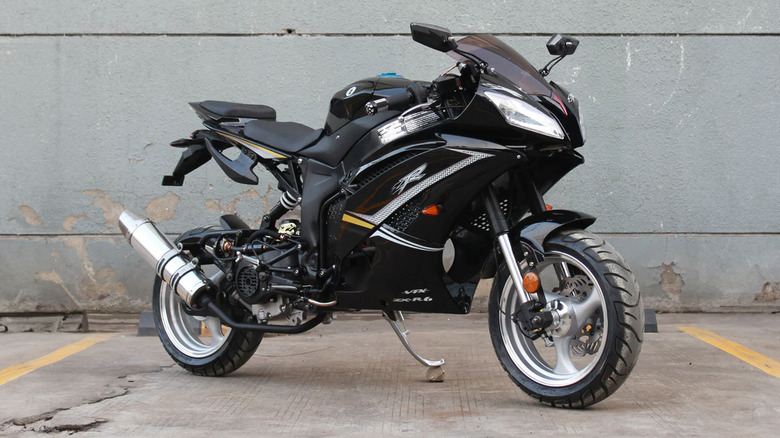
Image Source: www.slashgear.com
Deciphering 50cc Engine Performance
The heart of any 50cc vehicle is its engine. When we talk about 50cc engine performance, we’re really talking about how efficiently and powerfully that small engine can deliver its output. A 50cc engine displaces 50 cubic centimeters of volume. This is a relatively small displacement, meaning it’s designed for fuel efficiency and often for lighter loads rather than outright speed or heavy-duty work.
Horsepower: The Driving Force
A key metric in engine performance is horsepower (HP). For a typical 50cc scooter, you might see figures ranging from 3 HP to 6 HP. This might not sound like much compared to a car or a larger motorcycle, but for a lightweight vehicle, it’s enough to get you moving. A higher horsepower output generally correlates with a higher potential top speed and better acceleration. A 50cc scooter horsepower rating is a good initial indicator of its potential.
Torque: The Initial Push
While horsepower often dictates top speed, torque is what gets you moving from a standstill. It’s the rotational force of the engine. Even a small 50cc engine will have some torque, allowing for decent 50cc bike acceleration, especially when starting from a stop. The gearing and transmission play a significant role here, ensuring that the engine’s power is effectively translated to the wheels.
What Influences a 50cc Bike’s Top Speed?
So, we know the engine is important, but what else plays a role in how fast a 50cc bike can go? A lot of factors come into play, and understanding these will give you a clearer picture.
1. Vehicle Type: Scooter vs. Moped vs. Motorcycle vs. Dirt Bike
The design of the vehicle itself has a massive impact on its top speed.
-
50cc Scooters: These are very common and are often designed for urban commuting. They typically have an automatic transmission (CVT), bodywork that shields the rider from the elements, and are generally optimized for ease of use and fuel economy. Their aerodynamics can play a role, but they aren’t usually built for high speeds. A 50cc scooter top speed is usually in the 30-40 mph range.
-
50cc Mopeds: Historically, mopeds were defined by having both pedals and a small engine. Today, the term is often used more broadly for lightweight, low-powered two-wheelers. Some 50cc mopeds might have a manual clutch and gears, which can offer slightly different performance characteristics than a scooter. The maximum speed 50cc moped can reach is often similar to scooters, perhaps slightly higher if geared for it, but still generally within the 30-45 mph window.
-
50cc Motorcycles: These are typically geared like larger motorcycles, with manual transmissions. They often have a more exposed engine and frame. A 50cc motorcycle speed limit might be slightly higher than a scooter due to their more performance-oriented design, but the engine displacement is still the primary limitation.
-
50cc Dirt Bikes & Pit Bikes: These are built for off-road use. Their gearing is designed for torque and low-speed maneuverability on rough terrain, not for high top speeds on pavement. A 50cc dirt bike top speed will be lower than a road-legal 50cc scooter or moped, as their focus is on climbing and handling bumps. Similarly, a 50cc pit bike speed is also limited by its off-road gearing and often smaller wheels.
2. Rider Weight and Load
The heavier the rider, or the more cargo a 50cc bike is carrying, the harder the engine has to work. This will reduce its ability to reach its maximum potential speed. Think of it like trying to push a heavy box versus a light one – it takes more effort.
3. Terrain and Inclines
A flat, smooth road is ideal for achieving top speed. Hills are the enemy of small engines. Going uphill requires the engine to fight gravity, significantly reducing speed. Even a slight incline can drop a 50cc bike’s speed by several miles per hour.
4. Tire Condition and Inflation
Properly inflated tires reduce rolling resistance, allowing the engine to propel the bike more efficiently. Worn or underinflated tires can sap performance.
5. Engine Tuning and Condition
A well-maintained and properly tuned 50cc engine will perform at its best. Factors like clean air filters, properly functioning spark plugs, and correct carburetor settings all contribute. A neglected engine might not reach its factory-rated top speed.
6. Gearing and Transmission
The gearing ratio determines how the engine’s power is delivered to the wheels. A lower gear ratio provides more acceleration but a lower top speed, while a higher gear ratio allows for a higher top speed but slower acceleration. Many 50cc scooters use a Continuously Variable Transmission (CVT), which automatically adjusts the gear ratio for optimal performance across the speed range.
7. Aerodynamics
While less significant at lower speeds, the shape of the vehicle and rider can still influence top speed. A more streamlined design will encounter less wind resistance, allowing for a slightly higher speed. Scooters with full body fairings might have a slight advantage over more exposed motorcycles in this regard, though the rider’s body position is often a bigger factor.
Typical Top Speeds: A Breakdown
Let’s put some numbers to it. While these are general estimates, they’ll give you a good idea of what to expect.
50cc Scooter Top Speed
Most stock 50cc scooters are designed to be legally classified as mopeds or low-speed vehicles in many regions, often with a manufacturer-imposed speed limiter. You can expect a typical 50cc scooter top speed to be in the 30 mph to 40 mph (48 km/h to 64 km/h) range. Some might nudge slightly higher, up to 45 mph under ideal conditions.
Maximum Speed 50cc Moped
Similar to scooters, the maximum speed 50cc moped can achieve is generally in the 30 mph to 45 mph (48 km/h to 72 km/h) bracket. The “moped” classification itself often comes with legal speed restrictions, so manufacturers tend to build them within those bounds.
50cc Motorcycle Speed Limit
A 50cc motorcycle, particularly one with a manual gearbox, might feel a bit more responsive. However, the engine’s displacement is still the ultimate limit. You might find a 50cc motorcycle speed limit also hovering around 30-45 mph, though some may be geared slightly differently, potentially allowing for a bit more if you push them.
50cc Dirt Bike Top Speed
Off-road machines are a different story. A 50cc dirt bike top speed is significantly lower because their gearing prioritizes torque for climbing and traversing obstacles. On flat, hard-packed dirt, you might see speeds in the 20 mph to 35 mph (32 km/h to 56 km/h) range, but this is highly dependent on the specific bike and terrain.
50cc Pit Bike Speed
50cc pit bike speed is very similar to dirt bikes. These are small, often affordable bikes used for recreational riding, often at racetracks or in backyards. Their primary purpose isn’t speed on pavement. Expect speeds in the 20 mph to 35 mph range, again, heavily influenced by gearing and riding conditions.
Achieving Higher Speeds: Modifications and Considerations
Can you make a 50cc bike go faster? Yes, but it comes with caveats.
Performance Modifications
Owners sometimes look to modify their 50cc vehicles to increase speed. Common modifications include:
- De-restricting the CDI (Capacitor Discharge Ignition): Many 50cc scooters and mopeds have their CDI unit electronically limited to cap the RPMs and thus the top speed. Removing this restriction can unlock more performance.
- Upgraded Exhaust Systems: A less restrictive exhaust can help the engine “breathe” better, potentially increasing power and top speed.
- Performance Air Filters: Similar to exhaust, a better-flowing air filter can improve engine efficiency.
- Larger Carburetor: A bigger carburetor can allow more fuel and air into the engine, potentially boosting power.
- Performance Variator/Clutch: These CVT components can be upgraded to alter the gear ratios, often prioritizing higher top-end speed.
- Engine Rebuilds/Upgrades: More advanced modifications can involve changing the cylinder, piston, or even swapping the engine for a slightly larger displacement unit (if legally permissible).
Important Note: Modifications can void warranties, increase fuel consumption, and, crucially, may make your 50cc vehicle illegal to ride on public roads if it exceeds local speed or displacement limits. Always research your local laws before making any changes.
Real-World vs. Advertised Speeds
It’s worth noting that advertised top speeds are often achieved under optimal conditions: a light rider, perfect weather, a flat and smooth surface, and a perfectly running, brand-new vehicle. In everyday use, you’ll rarely hit these absolute maximums consistently.
Legal Considerations and Speed Limits
The classification of 50cc vehicles is often tied to legal regulations regarding speed and licensing.
- 50cc Motorcycle Speed Limit: In many jurisdictions, vehicles with an engine displacement of 50cc or less are classified as mopeds or low-speed vehicles. This often means they have a legal speed limit, typically around 30 mph to 35 mph, regardless of their potential top speed. This is why many manufacturers limit them.
- Licensing and Registration: In many places, 50cc vehicles do not require a motorcycle license and may have simpler registration requirements. Exceeding the legal speed limit for these vehicles could mean you need a different type of license or face penalties.
When considering a 50cc moped review, pay attention to whether the reviewer mentions the vehicle’s legal speed classification and if it adheres to common regulations.
50cc Bike Acceleration
While top speed is a key performance metric, 50cc bike acceleration is equally important for everyday usability. From a standstill, most 50cc scooters and mopeds will get you up to speed reasonably quickly for urban environments. They’re designed for stop-and-go traffic and short sprints. However, don’t expect blistering acceleration; it’s more about a gentle, predictable build-up of speed.
Who is a 50cc Bike For?
Given their performance characteristics, 50cc bikes are ideal for:
- New riders: Their low speeds and often automatic transmissions make them very forgiving and easy to learn on.
- Urban commuters: They are excellent for short trips around town, navigating traffic, and parking.
- Students: They offer an affordable and efficient way to get to school or work.
- Leisure riders: For those who enjoy a relaxed ride on scenic routes or within their neighborhood.
Reviewing a 50cc Scooter
When you’re looking at a 50cc scooter review, you’ll want to see information on its reliability, fuel economy, comfort, and, of course, its actual, real-world top speed and acceleration. Some reviews might also touch on how easy it is to modify if that’s something you’re interested in.
FAQs About 50cc Bike Speeds
Here are some common questions people ask about how fast 50cc bikes can go:
Q: Can a 50cc scooter go on the highway?
A: Generally, no. Most 50cc scooters and mopeds have top speeds well below the minimum speed limits on most highways. They are intended for city streets and local roads.
Q: What is the top speed of a Honda Metropolitan 50cc?
A: The Honda Metropolitan 50cc is typically limited to around 35-40 mph. It’s designed for urban convenience and fuel efficiency.
Q: Can I legally derestrict my 50cc scooter?
A: This depends entirely on your local laws. In many places, de-restricting a 50cc vehicle makes it illegal for road use without proper licensing and registration upgrades. Always check your local regulations.
Q: How much does rider weight affect a 50cc bike’s speed?
A: Rider weight can have a noticeable impact. A heavier rider will experience slower acceleration and a lower top speed compared to a lighter rider on the same 50cc bike.
Q: Are 50cc dirt bikes fast?
A: For off-road use, they offer adequate performance. On pavement, their gearing makes them relatively slow, usually topping out in the 20-35 mph range.
Q: How fast is 50cc in km/h?
A: As mentioned, 50cc vehicles typically reach speeds between 48 km/h and 72 km/h (30-45 mph).
Conclusion
So, how fast can a 50cc bike go? It’s a question with a nuanced answer. While the small engine displacement is a fundamental limitation, leading to typical top speeds in the 30-45 mph range for road-going vehicles, several factors contribute to the final performance. From the type of vehicle—be it a scooter, moped, or even a specialized dirt bike—to rider weight, terrain, and mechanical condition, each element plays its part. Understanding these variables is key to appreciating the capabilities and limitations of these accessible and often charming two-wheeled machines. Whether you’re considering one for a zippy commute or a weekend cruise, knowing what to expect regarding speed will help you make the most of your ride.