
So, how much does a Tour de France bike weigh? Typically, a Tour de France bike will weigh around 6.8 kilograms (15 pounds). This figure is largely dictated by the UCI weight limit, a rule established by the Union Cycliste Internationale to ensure a level playing field in professional cycling. But the cost associated with achieving that precise weight is where the real story unfolds. It’s a complex interplay of cutting-edge materials, meticulous engineering, and the relentless pursuit of aerodynamic efficiency.
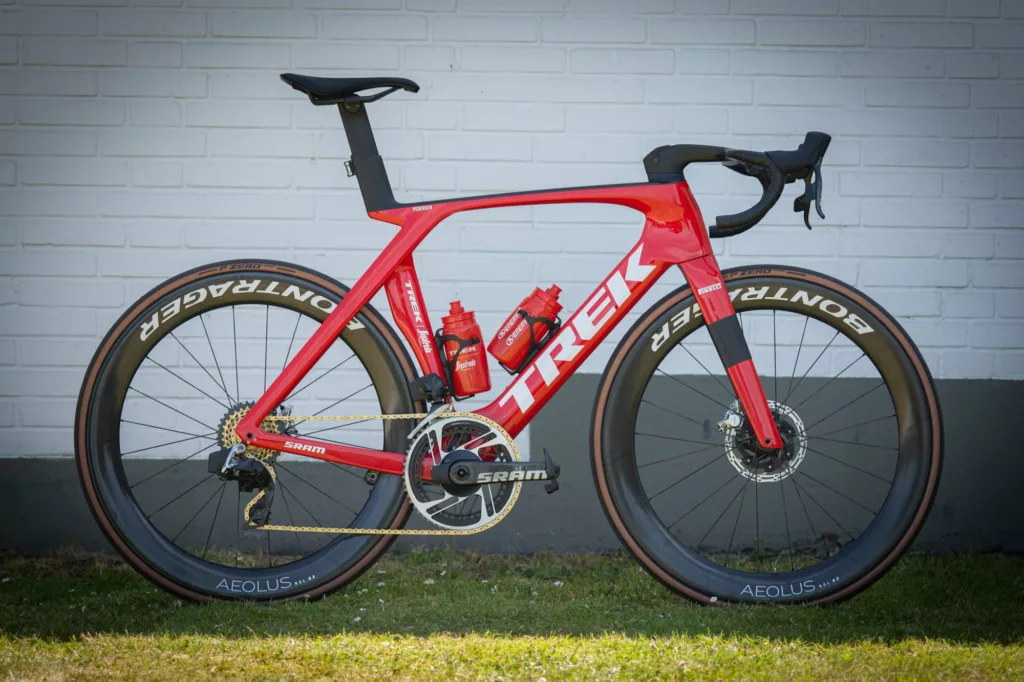
Image Source: procyclinguk.com
Deciphering the Pursuit of Lightness: The Core of Pro Cycling
The weight of a professional cyclist’s bike is a critical factor in performance. In the grueling terrain of the Tour de France, where every gram counts, manufacturers and mechanics work tirelessly to shave off any unnecessary ounces. This isn’t just about aesthetics; it’s about tangible advantages on climbs, in sprints, and during prolonged efforts. The constant quest for the lightest Tour de France bikes drives innovation across the entire spectrum of Tour de France bike technology.
The Foundation: Bicycle Frame Weight
The backbone of any racing bicycle is its frame. The bicycle frame weight is arguably the single most significant contributor to the overall mass of the bike. For the Tour de France, these frames are typically constructed from high-modulus carbon fiber. This material offers an exceptional strength-to-weight ratio, allowing for incredibly stiff and lightweight structures.
- Carbon Fiber Excellence: Manufacturers use advanced weaving techniques and resin systems to create frames that are both light and incredibly strong. The lay-up schedule, which dictates the orientation and number of carbon fiber layers, is meticulously designed to optimize stiffness in critical areas (like the bottom bracket for power transfer) while minimizing weight elsewhere.
- Aerodynamic Integration: Modern frames are not just about being light; they are also designed with aerodynamics in mind. This means sculpted tube shapes, integrated seatposts, and internal cable routing all contribute to reducing drag, which is often as important as weight on flat stages.
- Cost Implications: The specialized molds, the skilled labor required for carbon fiber layup, and the advanced materials themselves make these frames incredibly expensive. A top-tier carbon fiber frame can easily cost several thousand dollars, and this is just the starting point for a Tour de France bike build.
The Cost of Speed: Key Tour de France Bike Components
Beyond the frame, every single component on a Tour de France bike is scrutinized for its weight and performance. The pursuit of lightness extends to every nut, bolt, and pulley.
Wheels: Where Every Gram Matters
The wheels are often the most expensive single component on a racing bike. In the Tour de France, teams use deep-section carbon fiber wheels.
- Carbon Fiber Rims: These are incredibly light and stiff, contributing to faster acceleration and better power transfer. The depth of the rim also plays a role in aerodynamics.
- Hubs and Spokes: Even the hubs and spokes are made from lightweight materials like titanium and aluminum alloys. Ceramic bearings are often used in the hubs to reduce friction, further enhancing efficiency.
- Tires: Tubeless or tubular tires are preferred for their weight savings and puncture resistance. The rubber compound and casing construction are optimized for low rolling resistance.
- Cost: A set of high-performance carbon fiber wheels can easily range from $1,500 to $3,000 or more, and teams often have multiple sets for different conditions.
Drivetrain: Precision and Lightness
The groupset – which includes shifters, derailleurs, crankset, cassette, and chain – is another area where significant investment is made for weight savings and performance.
- Electronic Shifting: Modern top-tier groupsets use electronic shifting, which is not only faster and more precise than mechanical shifting but also often lighter due to smaller, more efficient components and lighter wiring.
- Lightweight Materials: Cranksets, chainrings, cassettes, and derailleurs are manufactured using advanced alloys and carbon fiber to reduce weight. For example, hollow-chainring designs and minimalist derailleur cages are common.
- Cost: A full electronic groupset can cost upwards of $2,000 to $4,000.
Cockpit: Steering with Precision and Lightness
The handlebars, stem, and seatpost are also areas where weight is carefully managed.
- Carbon Fiber Cockpit: Integrated handlebars and stems, often made from a single piece of carbon fiber, offer aerodynamic advantages and weight savings.
- Seatpost: Lightweight carbon fiber seatposts are standard, often featuring minimalist designs.
- Cost: A high-end carbon fiber handlebar and stem combination can cost between $500 and $1,000.
Saddle and Pedals: The Unsung Heroes
Even seemingly small components like the saddle and pedals are subject to the weight-saving scrutiny.
- Lightweight Saddles: Saddles often feature carbon fiber rails and minimalist padding.
- Performance Pedals: Pedals are typically made from lightweight alloys with titanium spindles for maximum weight reduction and efficient power transfer.
- Cost: A premium saddle might be $200-$400, and high-end pedals can be $300-$500.
The UCI Weight Limit: A Constant Constraint
The UCI weight limit of 6.8 kilograms (15 pounds) for bikes used in competition plays a crucial role. It’s a benchmark that manufacturers and teams constantly aim for, but it also presents a significant challenge. Achieving this weight often requires using the most expensive materials and the most advanced manufacturing techniques.
- Why the Limit? The UCI implemented this rule primarily to prevent a “weight war” where bike weights would become so low that safety could be compromised. It also aims to keep the focus on rider strength and skill rather than solely on technological advantages.
- The Practicality of the Limit: Most top-tier professional road bikes naturally fall at or slightly above this limit when equipped with standard components. However, when a bike is weighed for official checks, it must include all the necessary equipment for racing, such as bottle cages, water bottles, and sometimes even certain electronic devices. This means that to meet the 6.8kg limit, the bike itself often needs to be built significantly lighter, perhaps in the 5.5-6kg range, before any accessories are added.
The Cost of Meeting the UCI Weight Limit
Achieving the UCI weight limit often means opting for the absolute lightest available components, which are also the most expensive.
- Exotic Materials: Think titanium bolts instead of steel, or ultra-light carbon fiber lay-ups that push the boundaries of material science.
- Specialized Components: Components designed specifically for weight reduction, often with less durability or comfort, are favored.
- The “Cost of Lightness” Premium: There’s often a direct correlation between how light a component is and its price tag. A lighter version of a component almost invariably comes with a higher cost.
The Weight of Racing Bikes: A Comparative Look
The weight of racing bikes in the Tour de France is significantly lower than that of typical consumer-grade road bikes. While a high-end consumer road bike might weigh around 8-10 kilograms (17.6-22 pounds), a professional race bike is engineered to be as close to the UCI limit as possible.
- Consumer Bikes: These often use slightly heavier, more durable materials and may incorporate features for comfort or practicality that are omitted in pro bikes.
- Pro Bikes: Every component is selected with weight and performance as the primary drivers. This means compromising on aspects like long-term durability or everyday comfort in favor of marginal gains on the race course.
Pro Cyclist Bike Weight: The Rider’s Influence
While the bike’s weight is crucial, the pro cyclist bike weight is also a significant factor in overall performance. Lighter riders have an advantage on climbs. However, the bike’s weight remains a constant for every rider. A 70kg rider carrying a 7kg bike is carrying 10% of their total weight. If that bike were 5kg, they would be carrying just over 7% of their total weight – a substantial difference on a mountain stage.
Tour de France Bike Technology: Pushing the Boundaries
The technology found on a Tour de France bike is at the absolute cutting edge of cycling innovation.
- Aerodynamics: Beyond light weight, aerodynamics is paramount. Manufacturers invest heavily in wind tunnel testing to refine frame shapes, wheel profiles, and even the integration of handlebars and stems to slice through the air as efficiently as possible.
- Integration: Everything is integrated to reduce drag and improve aesthetics. Cables are routed internally, seat clamps are hidden, and many bikes feature one-piece cockpit designs.
- Power Meter Integration: Accurate power meters are standard, allowing riders and teams to monitor performance and dictate race strategy. These are often integrated directly into the crankset or hubs.
- Electronic Drivetrains: As mentioned, electronic shifting is the norm, offering unparalleled precision and speed.
- Customization: Bikes are often customized for individual riders, with specific crank arm lengths, handlebar widths, and saddle positions.
The Tour de France Bike Build: A Symphony of Components
A Tour de France bike build is a meticulous process. It involves selecting the optimal combination of components to meet the rider’s needs and the team’s specifications, all while adhering to the UCI regulations.
- Frame Selection: The team chooses the team-issue frames from their sponsor.
- Component Allocation: Lightweight groupsets, wheels, and finishing kit are chosen.
- Wheel Choice: Specific wheelsets are selected based on the stage profile – deeper sections for flat stages, shallower sections for windy conditions or climbing.
- Contact Points: The saddle, handlebars, and stem are chosen for rider comfort and control.
- Tire Selection: Tires are selected based on grip, rolling resistance, and durability for the specific stage.
- Final Assembly: The bike is carefully assembled by professional mechanics, ensuring every bolt is torqued correctly and everything is functioning perfectly.
- Weight Check: The bike is weighed, and if it’s under the UCI limit, components like bottle cages and water bottles are added to bring it up to the required weight.
The Cost Factor: What Does It All Add Up To?
When you factor in all the cutting-edge materials, specialized engineering, and the sheer number of high-performance components, the cost of a Tour de France bike is astronomical.
- Frame: $3,000 – $7,000+
- Wheels (Set): $1,500 – $3,000+
- Groupset (Electronic): $2,000 – $4,000+
- Cockpit (Handlebars/Stem): $500 – $1,000+
- Seatpost: $200 – $500+
- Saddle: $200 – $400+
- Pedals: $300 – $500+
- Other Components (Screws, headset, etc.): $100 – $300+
Estimated Total Cost (Excluding Labor and R&D): $7,800 – $16,700+
It’s important to note that these are retail prices. Teams often receive these components at a significant discount, or as sponsorships. However, the inherent cost of the technology is still incredibly high. Furthermore, teams will often have multiple bikes per rider, and replace components very frequently to ensure optimal performance and to test new equipment.
Bike Weight Regulations: Maintaining Fair Play
The bike weight regulations are a crucial aspect of professional cycling. The UCI weight limit ensures that while technological innovation is encouraged, it doesn’t lead to an arms race that would be inaccessible to many and potentially compromise safety.
- Enforcement: Bikes are weighed at various points during a race, often before a time trial or at the start of a stage. If a bike is found to be under the minimum weight limit without the necessary accessories, the rider can face penalties.
- Impact on Design: These regulations influence how manufacturers design their bikes. They must create bikes that are not only fast and light but also robust enough to withstand the rigors of professional racing and can be ballasted up to the minimum weight if needed.
The Lighter, The Better? Not Always.
While teams strive to get as close to the UCI weight limit as possible, it’s not simply about building the lightest possible bike.
- Stiffness vs. Weight: A frame that is too light might also be too flexible, leading to inefficient power transfer. Mechanics and engineers must find the perfect balance between weight and stiffness.
- Durability: Pro bikes endure incredible stress. Components need to be durable enough to last an entire Grand Tour, or at least a significant portion of it, without failing.
- Aerodynamics: On flatter stages, aerodynamic performance can be more important than weight. A slightly heavier but more aerodynamic bike might be faster overall.
- Rider Preference: Ultimately, the bike must suit the rider. Some riders prefer a slightly heavier but more compliant ride, while others prioritize absolute stiffness.
Frequently Asked Questions (FAQ)
Q1: Can I buy a Tour de France bike?
Yes, you can buy replica or very similar models of the bikes used by professional cyclists. However, these bikes will still be very expensive, often costing several thousand dollars. They will likely be built to a higher weight than the absolute minimum to ensure durability and compliance with general consumer safety standards.
Q2: Why do Tour de France bikes have to weigh at least 6.8 kg?
The UCI weight limit was introduced to ensure a level playing field and prevent safety issues arising from bikes becoming too lightweight and potentially fragile. It’s designed to keep the focus on rider performance and skill.
Q3: What are the lightest Tour de France bikes?
The lightest Tour de France bikes are those built by the professional teams that are as close to the 6.8kg UCI weight limit as possible. Brands like Specialized, Trek, Pinarello, and Colnago all produce incredibly light and technologically advanced bikes that are used in the Tour.
Q4: How much does a professional road bike weigh?
A professional road bike weight in the Tour de France is typically around 6.8 kilograms (15 pounds), the UCI minimum. Some bikes might be built slightly lighter to accommodate accessories like water bottles, which are added to reach the minimum weight.
Q5: Does bike weight matter more than aerodynamics in the Tour de France?
It depends on the stage. On steep climbs, weight is a primary factor. On flat or rolling terrain, aerodynamics often plays a more significant role. Professional teams meticulously choose their equipment based on the specific demands of each stage.
Q6: What is the most expensive part of a Tour de France bike?
While the entire bike is incredibly expensive, the wheels, the electronic groupset, and the carbon fiber frame are typically the most costly components.
Q7: Can you put normal parts on a Tour de France bike?
You can buy bikes that are similar to Tour de France bikes with standard components. However, the actual bikes used in the race feature the highest-end, lightest, and most technologically advanced components available, which are often not accessible or practical for everyday riders.