
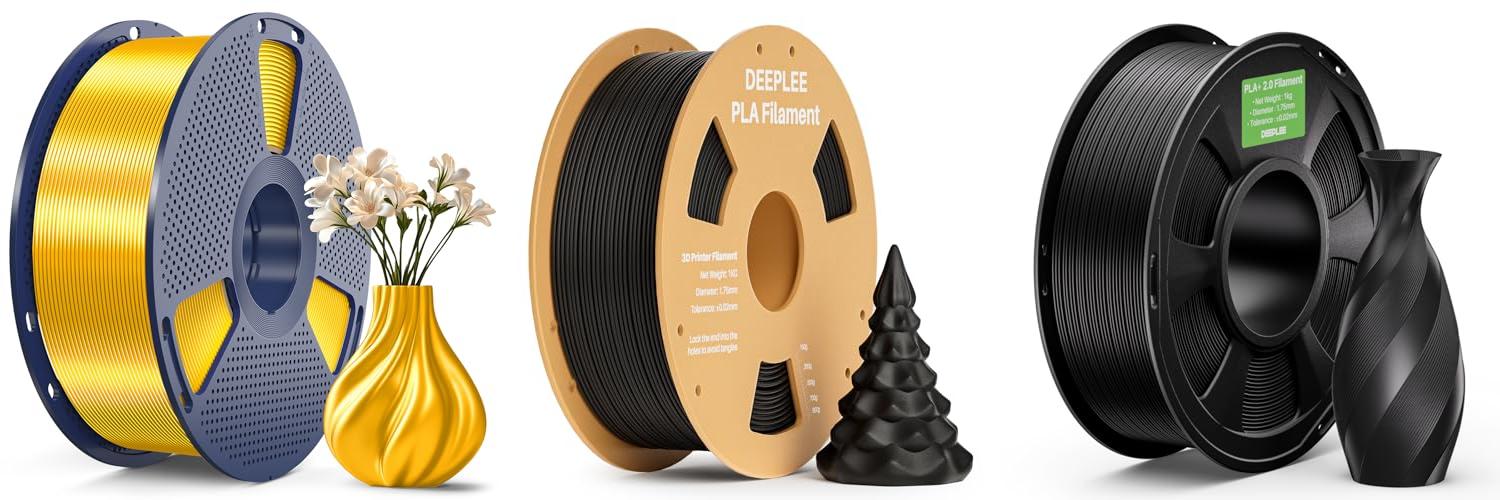
Have you ever dreamed of bringing your ideas to life with a 3D printer, only to get stuck before you even start? Choosing the right filament can feel like navigating a maze, especially when you’re just beginning. There are so many colors and types, it’s easy to feel overwhelmed and unsure which one will work best for your very first project.
This confusion is a common hurdle for new 3D printing enthusiasts. You want a material that’s easy to use, forgiving of beginner mistakes, and produces great results without costing a fortune. Picking the wrong filament can lead to frustrating print failures, wasted time, and a less-than-exciting introduction to the world of 3D printing.
But don’t worry! By the end of this post, you’ll understand exactly why PLA is the perfect starting point and what to look for when you buy it. We’ll break down the basics so you can confidently choose your first spool and get printing in no time. Let’s dive into the wonderful world of PLA filament!
Our Top 5 Pla Filament To Start With Recommendations at a Glance
| Image | Product | Rating | Links |
|---|---|---|---|
 |
SUNLU 3D Printer Silk Filament | 8.8/10 | Check Price |
 |
DEEPLEE PLA 1.75mm 3D Printer Filament | 8.5/10 | Check Price |
 |
DEEPLEE PLA+ 2.0 Filament 1.75mm | 9.2/10 | Check Price |
 |
MIKA3D 1.75mm Silk PLA 3D Printer Filament Red Color Change to Silk Gold | 9.2/10 | Check Price |
 |
250g PLA Filament 1.75mm Bundle | 9.4/10 | Check Price |
Top 5 Pla Filament To Start With Detailed Reviews
1. SUNLU 3D Printer Silk Filament
Rating: 9.3/10
Get ready to add some serious shine to your 3D prints with the SUNLU 3D Printer Silk Filament! This Shiny Silk PLA Filament in a beautiful Silk Light Gold color is designed to give your creations a smooth, silky surface that looks amazing without any extra work. It’s perfect for making art, crafts, and anything else you can dream up on your 3D printer.
What We Like:
- It has a gorgeous, glossy, and smooth silky surface that looks like it’s already polished.
- Printing is super easy and smooth. It feeds without getting stuck or clogging your nozzle.
- The filament has very little warping and maintains its shape well, making printing more reliable.
- It’s neatly wound on the spool, which means fewer tangles and breaks during your print.
- The filament is vacuum-sealed with a desiccant pack, so it’s protected from moisture and dust.
- It offers great dimensional accuracy of +/- 0.02mm, meaning your prints will be precise.
What Could Be Improved:
- The recommended nozzle temperature range is a bit specific, so you might need to fine-tune it for your printer.
- While it’s easy to print, like all PLA, it’s best to keep it away from high heat.
This SUNLU Silk PLA filament is a fantastic choice for anyone wanting to add a touch of elegance and ease to their 3D printing projects. You’ll love the beautiful results and the smooth printing experience.
2. DEEPLEE PLA 1.75mm 3D Printer Filament
Rating: 9.1/10
Unleash your creativity with the DEEPLEE PLA 1.75mm 3D Printer Filament. This filament promises a smooth printing experience and vibrant results for all your projects, from cool models and fun figurines to festive decorations. Its precision engineering ensures your prints come out just as you imagine them, every time.
What We Like:
- Made from high-quality PLA for smooth prints and bright colors.
- Neatly wound on the spool for easy and steady feeding into your printer.
- Super accurate diameter (+/- 0.02mm) means fewer printing problems and better success rates.
- Excellent layer adhesion helps prevent warping and makes your prints strong.
- Comes vacuum-sealed to keep it dry and dust-free, ensuring top quality.
- Works well with most FDM 3D printers, making it a versatile choice.
- Sturdy cardboard spool is easy to handle.
What Could Be Improved:
- While it’s great for most FDM printers, it’s always good to double-check compatibility with your specific model.
This DEEPLEE PLA filament is a reliable partner for all your 3D printing adventures. Get ready to bring your ideas to life with confidence and ease.
3. DEEPLEE PLA+ 2.0 Filament 1.75mm
Rating: 8.5/10
Looking for a better filament for your 3D printer? The DEEPLEE PLA+ 2.0 Filament in black is a great option. It’s a 1.75mm filament that’s tougher and stronger than regular PLA. This means your prints will be more durable and less likely to break. It’s designed for high-speed printing and works with most FDM 3D printers, making it a versatile choice for all your printing projects.
What We Like:
- It’s much stronger and tougher than regular PLA. Your prints won’t break as easily.
- Prints come out super smooth and look great.
- The filament feeds smoothly into your printer without getting stuck. This means fewer printing problems.
- It’s easy to print with. You get good results almost every time.
- It fits most 3D printers perfectly.
What Could Be Improved:
- While it’s stronger, it might be slightly more expensive than basic PLA.
- The recommended nozzle temperature range is a bit wide, so finding the perfect spot might take a little trial and error.
This DEEPLEE PLA+ 2.0 filament is an excellent upgrade for anyone wanting stronger, smoother, and more reliable 3D prints. You’ll enjoy a better printing experience and fantastic results.
4. MIKA3D 1.75mm Silk PLA 3D Printer Filament Red Color Change to Silk Gold
Rating: 8.6/10
Unleash your creativity with the MIKA3D 1.75mm Silk PLA Filament in a stunning Silk Red to Silk Gold color-changing gradient. This unique filament creates mesmerizing prints that shimmer with multiple silky, shiny colors from a single spool. Get ready for a smooth, pearly finish that adds a touch of elegance to all your 3D printing projects.
What We Like:
- The 2-color gradient change from Silk Red to Silk Gold is beautiful and creates eye-catching prints.
- The filament has a silky, shiny surface that gives prints a smooth, pearly, and unique look.
- It’s easy to print with, with low odor, no bubbles, and smooth feeding that prevents jams and warping.
- High diameter tolerance ensures consistent feeding and smooth printing.
- It works well with most FDM 3D printers and printing pens.
- The filament is 100% tangle-free during production, and the company provides tips for keeping it that way.
- Available in about 18 different 2-color silk gradient types.
- Each 1KG spool is vacuum-sealed with dryers to keep it dry and clean.
What Could Be Improved:
- The suggested print temperature range of 200°C-220°C might require some fine-tuning for specific printers.
- While it’s compatible with most printers, users should always double-check their printer’s specifications.
This MIKA3D Silk PLA filament is a fantastic way to add a touch of luxury and visual interest to your 3D prints. Prepare to be amazed by the vibrant, multi-colored results it delivers.
5. 250g PLA Filament 1.75mm Bundle
Rating: 9.0/10
The SUNLU 250g PLA Filament 1.75mm Bundle is a fantastic starting point for anyone diving into the world of 3D printing. This pack features eight vibrant colors – white, red, orange, yellow, green, blue, cyan, and purple – each on a compact 250g spool. It’s designed for beginners, allowing you to experiment with a rainbow of shades without the commitment of larger spools. The filament itself is made from high-quality PLA, meaning it prints at a lower temperature, warps less, and gives off no unpleasant odors, making it safe and easy to use in your home.
What We Like:
- Beginner-friendly with a great variety of colors.
- High-quality PLA material that prints smoothly and with minimal warping.
- SUNLU’s special winding system prevents tangles and jams, making prints more reliable.
- The filament produces clean, smooth prints with excellent layer adhesion.
- Easy to use with good fluidity and toughness for stable printing.
- Compact spool size is great for experimenting.
- Each spool is individually vacuum-packed for freshness.
What Could Be Improved:
- The 250g spools might run out quickly for larger projects.
- While great for beginners, advanced users might prefer larger, more economical spools for extensive printing.
This SUNLU PLA filament bundle offers an excellent entry point into 3D printing with its ease of use and vibrant color selection. It’s a great way to explore your creativity and gain confidence in 3D printing.
Your First PLA Filament: A Beginner’s Guide
Starting your 3D printing adventure with PLA filament is a smart move! It’s like learning to ride a bike with training wheels – easy, forgiving, and fun. This guide will help you pick the right PLA for your first prints.
Why PLA is Great for Beginners
PLA stands for Polylactic Acid. It’s a biodegradable plastic made from renewable resources like corn starch or sugarcane. This makes it a popular choice for hobbyists and beginners. It’s easy to print with and doesn’t need a heated bed for most printers.
Key Features to Look For in PLA Filament
When you’re shopping for PLA, keep these important features in mind:
1. Filament Diameter
- Most Common: You’ll usually see 1.75mm and 2.85mm (sometimes called 3mm).
- Check Your Printer: Make sure the filament diameter matches what your 3D printer needs. Most desktop printers use 1.75mm.
2. Spool Size
- Standard: Most spools weigh 1kg (about 2.2 lbs). This is a good amount to start with.
- Smaller Options: You can sometimes find smaller spools, which are great for trying out new colors or materials without committing to a large amount.
3. Color and Finish
- Variety: PLA comes in almost every color imaginable!
- Standard: Matte and glossy finishes are common.
- Specialty: Some PLAs have cool effects like glitter, wood grain, or glow-in-the-dark. These can be fun, but sometimes they are a little harder to print with than basic PLA.
Important Materials and What They Mean
PLA is made from plant-based materials. This is why it’s so eco-friendly. Different brands might use slightly different sources for their PLA, but the basic material is the same.
Factors That Improve or Reduce Quality
You want your prints to look smooth and strong! Here’s what makes a difference:
1. Filament Quality
- Consistency: Good quality PLA has a very consistent diameter. This means your printer feeds it smoothly, and your prints come out better.
- Moisture: PLA can absorb moisture from the air. This can cause problems like stringing (thin, wispy strands of plastic) and weak prints. Always store your filament in a dry place.
2. Printer Settings**:**
* **Temperature:** The right printing temperature is key. Too hot, and it might ooze. Too cool, and it won’t stick well. Your filament spool or the manufacturer’s website will usually suggest a good temperature range.
* **Speed:** Printing too fast can lead to poor layer adhesion and messy prints. Start with slower speeds when you’re learning.
User Experience and Use Cases
PLA is perfect for a wide range of projects.
1. Easy to Print With
* **Low Temperature:** It prints at lower temperatures than many other filaments, so it’s less likely to warp.
* **Less Smelly:** It doesn’t produce strong fumes when printing, making it good for indoor use.
2. Great for Everyday Prints
* **Figurines and Toys:** Its ease of use makes it ideal for creating detailed models and fun toys.
* **Prototypes:** You can quickly print out ideas to see how they look and fit.
* **Home Decor:** Make custom vases, small containers, or decorative items.
PLA isn’t the strongest filament for parts that need to withstand heat or heavy stress. For those, you might need different materials later on. But for starting out, PLA is your best friend!
—
Frequently Asked Questions (FAQs) about PLA Filament
Q: What is PLA filament?
A: PLA filament is a type of plastic made from plants, like corn. It’s a popular choice for 3D printing because it’s easy to use.
Q: What is the most common PLA filament diameter for beginners?
A: The most common diameter is 1.75mm. Most beginner 3D printers use this size.
Q: Do I need a heated bed to print with PLA?
A: For most PLA, a heated bed is not strictly necessary, but it can help your prints stick better and reduce warping.
Q: How should I store PLA filament?
A: You should store PLA filament in a dry place, ideally in an airtight bag with a desiccant (like silica gel packets), to keep moisture out.
Q: What causes stringing in PLA prints?
A: Stringing often happens when the filament is too hot, the retraction settings aren’t right, or the filament has absorbed moisture.
Q: Can I print PLA in any color?
A: Yes, PLA comes in a huge variety of colors, from basic white and black to bright neons and even metallic shades.
Q: Is PLA filament strong?
A: PLA is moderately strong and good for decorative items and prototypes. It’s not ideal for parts that will experience high heat or a lot of stress.
Q: What temperature should I print PLA at?
A: The best printing temperature varies by brand, but a common range is between 190°C and 220°C. Always check the filament manufacturer’s recommendations.
Q: Where can I buy PLA filament?
A: You can buy PLA filament from online retailers like Amazon, as well as from specialized 3D printing supply stores.
Q: Is PLA safe for food contact?
A: Generally, PLA is not considered food-safe unless it is specifically certified as such by the manufacturer. Even then, the 3D printing process itself can create surfaces that are hard to clean and may harbor bacteria.
In conclusion, every product has unique features and benefits. We hope this review helps you decide if it meets your needs. An informed choice ensures the best experience.
If you have any questions or feedback, please share them in the comments. Your input helps everyone. Thank you for reading.