
A 450 dirt bike typically has between 45 and 65 horsepower. This range can vary based on the specific make, model, year, and whether it’s a motocross or off-road variant.
Welcome to the definitive guide on 450 dirt bike horsepower! If you’ve ever stood trackside, mesmerized by the sheer speed and power of these machines, you’ve likely wondered about the heart of the beast: its engine and its output. This post delves deep into the world of 450cc dirt bikes, exploring what makes them so potent and how their power is measured and utilized. We’ll dissect the factors that influence their performance, discuss the nuances between different types of 450 dirt bikes, and provide insights into what this horsepower means for the rider. Get ready to gain a comprehensive grasp of 450 dirt bike power.
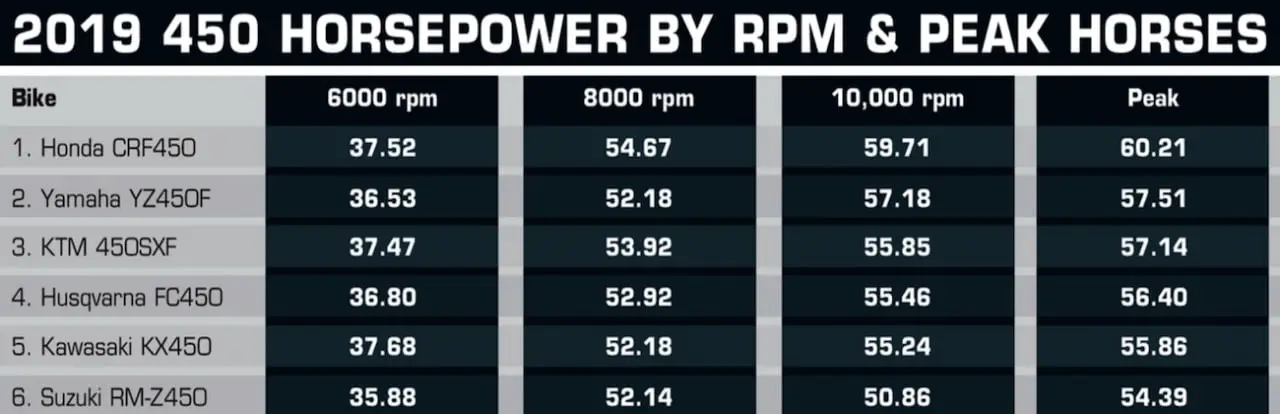
Image Source: cdn-0.motocrossactionmag.com
Deciphering the 450cc Dirt Bike Engine Size
The “450” in 450 dirt bike refers to the dirt bike engine size, specifically its displacement. Engine displacement is the total volume of the cylinders in an engine. It’s measured in cubic centimeters (cc). A larger displacement generally means a larger combustion chamber, which allows for more air and fuel to be mixed and burned, leading to more power.
From CC to Horsepower: The Conversion
The question of dirt bike cc to horsepower is a common one. While there’s no direct, fixed conversion formula because many factors affect power output, displacement is a primary indicator. A larger cc engine, all else being equal, will produce more horsepower. However, it’s crucial to remember that engine design, tuning, fuel injection, exhaust systems, and even rider skill play significant roles.
The Four-Stroke Advantage: 450 Four-Stroke Dirt Bike Specs
Modern 450 dirt bikes predominantly utilize four-stroke engines. A four-stroke engine completes its power cycle in four distinct piston strokes: intake, compression, combustion (power), and exhaust. This design is favored for its fuel efficiency, smoother power delivery, and broader torque curve compared to older two-stroke designs.
When examining 450 four-stroke dirt bike specs, you’ll find many elements contributing to their performance:
- Engine Type: Typically single-cylinder, liquid-cooled.
- Displacement: Around 450cc.
- Bore and Stroke: These dimensions influence the engine’s character. A longer stroke generally favors torque, while a larger bore can favor high-RPM power.
- Compression Ratio: A higher compression ratio means more power can be extracted from the fuel-air mixture, but it also requires higher octane fuel and can increase heat.
- Fueling System: Modern bikes predominantly use electronic fuel injection (EFI) for precise fuel delivery, improving throttle response and power.
- Ignition System: Advanced digital ignition systems manage spark timing for optimal performance.
- Transmission: Usually a five-speed gearbox, carefully spaced for motocross or off-road use.
The Horsepower Figures: 450cc Motocross Bike Horsepower vs. Off-Road
There’s a distinction in the 450cc motocross bike horsepower and that of a 450cc off-road motorcycle horsepower. While they share the same engine size, their tuning and intended use lead to different power characteristics.
450cc Motocross Bike Horsepower
Motocross bikes are designed for closed-course racing on dirt tracks with jumps, berms, and various obstacles. They prioritize peak horsepower and aggressive power delivery.
- Peak Horsepower: Motocross-focused 450cc bikes often sit at the higher end of the horsepower spectrum, typically ranging from 55 to 65 horsepower. Some highly tuned race bikes can even exceed this.
- Power Delivery: The powerband is usually broad but with a strong mid-range and top-end surge. This is ideal for accelerating out of corners, launching off jumps, and maintaining high speeds on straights.
- Engine Tuning: Manufacturers tune these engines for maximum performance on the track, often with a focus on responsiveness and a willingness to rev.
450cc Off-Road Motorcycle Horsepower
Off-road motorcycles are built for trails, desert riding, and enduro events. They require a more manageable and tractable power delivery for navigating technical terrain, longer rides, and varying conditions.
- Horsepower Output: While still powerful, off-road 450s might produce slightly less peak horsepower than their motocross counterparts, often in the 45 to 55 horsepower range.
- Power Delivery: The focus is on low-end torque and a smooth, predictable throttle response. This helps riders maintain traction in slippery conditions, climb steep hills, and avoid overwhelming the rear wheel in technical sections.
- Engine Tuning: The engine mapping and exhaust systems are often designed to provide a broader, more user-friendly torque curve, making the bike easier to control at lower speeds.
Typical 450 Dirt Bike Performance Metrics
Beyond just horsepower, typical 450 dirt bike performance is defined by a combination of factors that make them incredibly capable machines.
450 Dirt Bike Torque
Torque is the rotational force an engine produces. It’s what gets the bike moving from a standstill and helps it pull through challenging sections.
- Torque Figures: A 450cc dirt bike will typically produce between 35 and 45 foot-pounds (lb-ft) of torque. Again, motocross bikes might lean towards the higher end for quick acceleration, while off-road bikes might have a broader torque curve for consistent pulling power.
- Impact on Riding: Higher torque at lower RPMs is crucial for off-road riding, allowing riders to crawl over obstacles or climb steep inclines without constantly needing to slip the clutch or rev the engine excessively. Motocross riders benefit from strong mid-range torque for exiting corners and maintaining momentum.
450 Dirt Bike Top Speed
The 450 dirt bike top speed is impressive but highly dependent on gearing, track conditions, rider weight, and the specific bike’s tuning.
- Speed Potential: On a motocross track or an open off-road section, a 450 dirt bike can reach speeds well over 70 miles per hour (mph), and potentially up to 80 mph or more in ideal conditions with appropriate gearing.
- Gearing’s Role: The final drive gearing (sprocket sizes) is a significant factor. Shorter gearing (larger rear sprocket) will result in faster acceleration but a lower top speed. Taller gearing (smaller rear sprocket) will yield a higher top speed but sacrifice some acceleration.
- Aerodynamics and Rider Position: While dirt bikes aren’t designed for aerodynamic efficiency like street bikes, a tucked rider position can slightly improve top-end speed on straights.
Factors Influencing 450 Dirt Bike Horsepower
The 450 dirt bike power output isn’t a static number. Several variables can cause it to fluctuate significantly:
1. Make and Model
Different manufacturers use distinct engineering approaches. Each brand has its philosophy on engine design, power delivery characteristics, and internal components. For instance, some brands might focus on brute torque, while others aim for a higher-revving, more peaky powerband.
- Example Brands: KTM, Husqvarna, Yamaha, Honda, Kawasaki, Suzuki, and GasGas all produce 450cc dirt bikes with unique performance profiles.
2. Model Year
Advancements in technology, emissions regulations, and manufacturer research and development mean that newer models often offer improved performance over older ones.
- EFI Implementation: The widespread adoption of Electronic Fuel Injection (EFI) has allowed for more precise fuel and ignition mapping, leading to better throttle response and power optimization across the RPM range.
- Engine Internals: Changes to piston design, valve timing, crankshafts, and cylinder heads can all contribute to power gains or shifts in the powerband.
3. Motocross vs. Off-Road Variants
As discussed earlier, the intended use dictates the tuning. Motocross bikes are generally tuned for maximum power and aggressive delivery, while off-road bikes are tuned for a more manageable and tractable power delivery.
4. Aftermarket Modifications
The aftermarket is huge for dirt bikes, and owners often modify their bikes to enhance performance.
- Exhaust Systems: Aftermarket exhausts are a popular modification, often designed to improve exhaust flow, reduce weight, and increase horsepower.
- Engine Tuning (ECU Flashing/Piggyback Systems): Modifying the bike’s engine control unit (ECU) can alter fuel maps and ignition timing, unlocking more power.
- Air Filters and Intake Modifications: High-flow air filters and modified airbox designs can improve airflow into the engine.
- Camshafts and Porting: More advanced modifications can include performance camshafts or cylinder head porting to optimize airflow.
5. Fuel Quality
The octane rating of the fuel used can impact performance. Higher octane fuel resists detonation (pinging or knocking), allowing for higher compression ratios and more aggressive ignition timing, which can lead to increased power.
What Does This Horsepower Mean for the Rider?
The power of a 450 dirt bike translates into a thrilling and capable riding experience, but it also demands respect and skill.
For Motocross Riders
- Explosive Acceleration: The high horsepower allows for rapid acceleration out of corners and off the starting gate.
- Big Jumps: Ample power makes it easier to clear large jumps and maintain airtime.
- Overcoming Obstacles: The torque and power help power through rutted sections, whoops, and challenging terrain.
- Demanding on the Rider: The sheer power requires precise throttle control, good clutch work, and strong physical fitness to manage effectively.
For Off-Road Riders
- Effortless Hill Climbs: The low-end torque and substantial horsepower make tackling steep inclines significantly easier.
- Technical Terrain Navigation: The controllable power delivery allows riders to navigate rocky trails, logs, and tight sections with greater confidence.
- Endurance Riding: The broader, smoother powerband can be less fatiguing over long distances compared to a highly aggressive motocross engine.
- Traction Management: The ability to modulate the throttle smoothly is key to maintaining traction in varied off-road conditions like mud, sand, and loose gravel.
Comparing Performance: 450cc to Other Dirt Bike Classes
To put the 450 dirt bike power output into perspective, let’s briefly compare it to other common dirt bike engine sizes.
- 250cc Four-Stroke: These bikes typically produce around 35-45 horsepower. They are lighter, more agile, and often favored by smaller or less experienced riders. Their power delivery is usually more focused on the mid-to-top end.
- 350cc Four-Stroke: These bikes bridge the gap, offering a blend of 250cc agility with more manageable power than a 450. They usually produce 40-50 horsepower.
- Two-Stroke Engines (e.g., 250cc or 300cc): While not directly comparable by horsepower alone due to their different power delivery, a 250cc two-stroke might produce similar horsepower to a 250cc four-stroke but with a much more abrupt, “hit-and-miss” powerband. Larger two-strokes can compete with 450cc four-strokes in terms of raw power, but their character is very different.
Maintenance and Longevity of a 450cc Engine
High-performance engines like those found in 450 dirt bikes require diligent maintenance to ensure longevity and optimal performance.
- Regular Oil Changes: Crucial for lubricating, cooling, and cleaning the engine.
- Air Filter Cleaning/Replacement: A clean air filter is essential for proper airflow and preventing engine damage.
- Top-End Rebuilds: Pistons, piston rings, and valves wear over time, especially under hard use. Regular inspection and replacement are necessary.
- Valve Adjustments: Ensuring valves are correctly adjusted is vital for compression and performance.
- Spark Plug Replacement: A fouled or worn spark plug can significantly impact performance.
Frequently Asked Questions (FAQ)
Is a 450 dirt bike too powerful for beginners?
Generally, yes. The power and torque of a 450 dirt bike can be overwhelming for a novice rider. It demands a higher level of skill, physical fitness, and throttle control. Beginners are usually advised to start with smaller displacement bikes like 125cc or 250cc two-strokes, or 250cc four-strokes, to develop fundamental skills in a safer manner.
Can I ride a 450 dirt bike on the street?
No, not legally without significant modifications and registration as a street-legal motorcycle. Dirt bikes are designed for off-road use only and lack the necessary equipment (lights, mirrors, turn signals, street tires, etc.) and emissions compliance for street use.
How often do I need to rebuild a 450 dirt bike engine?
This depends heavily on how the bike is used. A motocross bike ridden aggressively in races will require top-end rebuilds much more frequently than an off-road bike used for casual trail riding. For competitive motocross, top-end rebuilds might be needed every 20-50 hours of riding. For less intense off-road use, it could be hundreds of hours.
What is the difference between a 450 motocross bike and a 450 enduro bike?
While both are 450cc, motocross bikes are built for closed-course racing with aggressive, peaky power and stiff suspension. Enduro bikes are designed for off-road endurance events, featuring broader, more tractable power delivery, softer suspension, often a larger fuel tank, lights, and sometimes a wider-ratio gearbox.
Does the brand of 450 dirt bike matter for horsepower?
Yes, the brand and specific model do matter. Each manufacturer tunes their engines differently, leading to variations in peak horsepower and power delivery characteristics. For example, a KTM 450 SX-F might have slightly different horsepower figures and power delivery than a Yamaha YZ450F or a Honda CRF450R.
How can I increase the horsepower of my 450 dirt bike?
Common ways to increase horsepower include installing an aftermarket exhaust system, remapping the ECU (engine control unit) or using a fuel tuner, installing a high-flow air filter, and making internal engine modifications like camshaft upgrades or cylinder head porting. However, these modifications can affect the bike’s reliability and may void warranties.
Conclusion
The 450 dirt bike engine size places it firmly in the realm of powerful, high-performance off-road machinery. With 450 dirt bike horsepower figures typically ranging from 45 to 65 HP, these bikes offer exhilarating acceleration and the capability to tackle demanding terrain. Whether you’re eyeing a 450cc motocross bike horsepower for the thrill of the track or a 450cc off-road motorcycle horsepower for exploring trails, understanding the nuances of dirt bike cc to horsepower conversion and the factors influencing 450 four-stroke dirt bike specs will help you appreciate the engineering prowess and choose the right machine for your riding style. The typical 450 dirt bike performance is a testament to modern engine technology, delivering impressive 450 dirt bike torque and an exciting 450 dirt bike top speed. Remember that this power comes with responsibility, requiring skilled riding and proper maintenance.