
Curious about how much a bicycle weighs? The weight of a bicycle can vary dramatically, typically ranging from under 15 pounds for high-end road bikes to over 70 pounds for heavy-duty electric cargo bikes. This wide spectrum means there’s no single answer, but rather a range influenced by numerous factors. This guide will delve into the intricacies of bicycle weight, helping you navigate the world of bike specifications and make informed choices. We’ll explore what contributes to a bike’s heft, what bike curb weight truly means, and how different types of bicycles stack up.
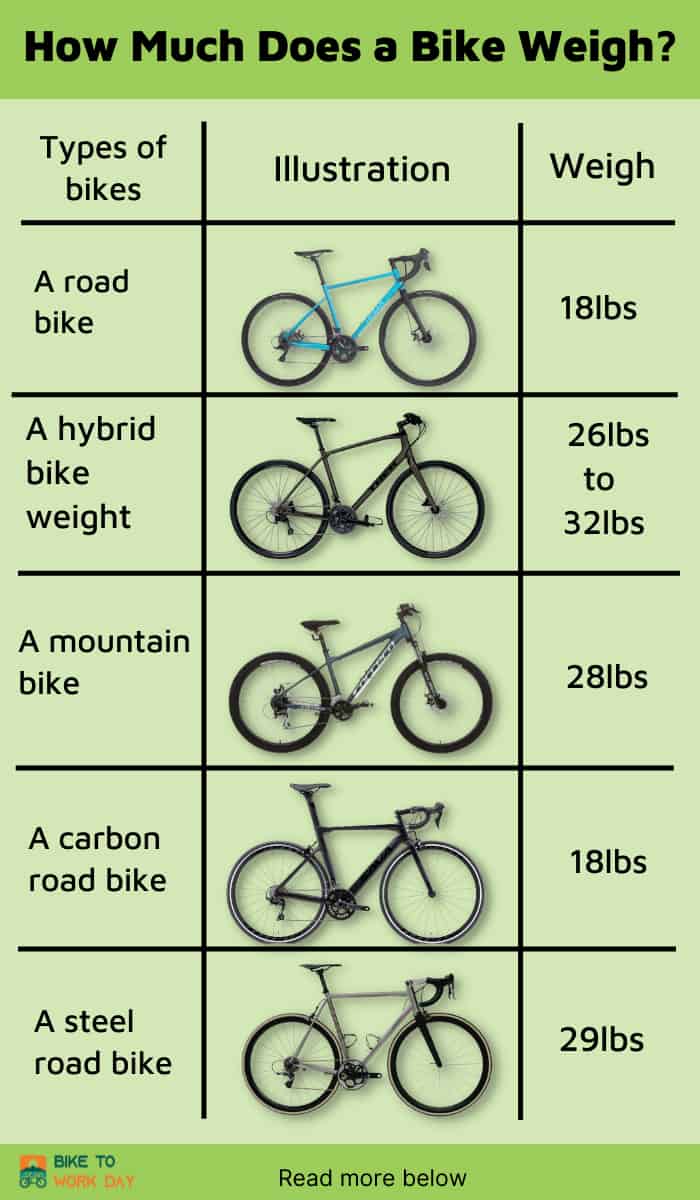
Image Source: biketoworkday.us
Deciphering Bicycle Weight: What’s the Big Deal?
The weight of a bicycle is a significant factor for many riders. It affects how easily a bike accelerates, climbs hills, and handles. A lightweight bicycle often translates to a more responsive and energetic ride, especially for performance-oriented cyclists. For casual riders or those with specific needs like commuting or touring, the weight might be a secondary consideration to durability or carrying capacity.
What Affects Bike Weight?
Many elements contribute to the overall weight of a bike. These range from the frame material and size to the components attached.
Frame Material: The Foundation of Weight
The frame is the largest and often heaviest part of a bicycle. The material used for its construction has a profound impact on its weight.
- Steel: Traditionally used, steel is durable and offers a comfortable ride. However, it’s also the heaviest common frame material. High-quality steel alloys can be lighter, but generally, steel frames are on the heavier side.
- Aluminum: A popular choice for its balance of strength, corrosion resistance, and relatively low weight. Aluminum frames are often lighter than steel but can be stiffer, leading to a less comfortable ride for some.
- Titanium: Known for its excellent strength-to-weight ratio, durability, and natural shock absorption, titanium is a premium material. Bikes with titanium frames are usually very light and comfortable but come with a higher price tag.
- Carbon Fiber: The current king of lightweight materials in cycling. Carbon fiber frames are incredibly light, strong, and can be molded into aerodynamic shapes. This material allows for significant customization of stiffness and compliance, making it ideal for performance bikes. However, it’s also the most expensive and can be more susceptible to damage from impacts.
Bicycle Component Weight: The Sum of Many Parts
Beyond the frame, every component bolted onto the bike adds to its total weight.
- Wheels and Tires: These are rotating mass, meaning their weight has a disproportionately larger effect on how the bike feels to pedal and accelerate. Lighter wheels and tires can make a significant difference.
- Drivetrain: This includes the crankset, chain, cassette, derailleurs, and shifters. Materials like carbon fiber and titanium are used in high-end components to reduce weight, while more affordable components often use steel and aluminum.
- Brakes: Disc brakes, especially hydraulic systems, can be heavier than rim brakes. The type of brake levers and calipers also contributes.
- Suspension: For mountain bikes, suspension systems (forks and rear shocks) are significant contributors to weight. More travel and advanced damping technologies often mean more mass.
- Saddle and Seatpost: While typically not massive weight contributors, lightweight saddles and seatposts made from carbon fiber can shave off grams.
- Handlebars and Stem: Similar to the saddle and seatpost, these can be made from lighter materials.
Frame Size and Geometry
Larger frames naturally require more material, thus increasing weight. The design and geometry of the frame also play a role. For example, a bike designed for touring with braze-ons for racks and fenders will generally be heavier than a minimalist racing frame.
Average Bike Weight: A General Overview
When we talk about the average bike weight, it’s essential to categorize by bike type, as the numbers vary wildly.
Road Bike Weight
Road bike weight is often a primary concern for serious cyclists. These bikes are designed for speed and efficiency on paved surfaces.
- Entry-Level Road Bikes: These might use aluminum frames and more robust components. Expect weights in the 18-22 pound (8.2-10 kg) range.
- Mid-Range Road Bikes: Featuring lighter aluminum or entry-level carbon frames with better component groups, these often fall between 16-18 pounds (7.3-8.2 kg).
- Performance/Race Road Bikes: Built with lightweight carbon fiber frames and top-tier components, these can weigh as little as 14-16 pounds (6.4-7.3 kg). Some ultra-light racing bikes can even dip below 13 pounds (5.9 kg), though these are rare and extremely expensive.
Mountain Bike Weight
Mountain bikes are built for off-road terrain and require more robust construction, often leading to higher weights.
- Hardtail Mountain Bikes (No Rear Suspension): These can range from 24-30 pounds (11-13.6 kg). Aluminum frames are common, and components are chosen for durability.
- Full-Suspension Mountain Bikes: The addition of rear suspension, plus typically wider tires and stronger wheels, adds significant weight.
- Cross-Country (XC) Full-Suspension: Aiming for efficiency on climbs, these might be in the 22-28 pound (10-12.7 kg) range.
- Trail/All-Mountain Full-Suspension: Designed for more aggressive riding, these tend to be heavier, often 28-35 pounds (12.7-15.9 kg).
- Downhill/Freeride Bikes: These are built for extreme abuse and can weigh 35-50 pounds (15.9-22.7 kg) or more, prioritizing strength over lightness.
Electric Bike Weight
Electric bike weight is a major consideration, as the battery and motor add substantial mass.
- Lightweight e-Bikes (e.g., some road e-bikes, commuter e-bikes): These might utilize smaller batteries and more efficient, lighter motors. They can range from 35-50 pounds (15.9-22.7 kg).
- Standard e-Bikes (e.g., hybrid, commuter, some mountain e-bikes): With larger batteries and more powerful motors, these typically weigh between 45-60 pounds (20.4-27.2 kg).
- Heavy-Duty e-Bikes (e.g., cargo e-bikes, fat-tire e-bikes, robust e-MTBs): These are built for hauling or extreme conditions and can easily exceed 60 pounds (27.2 kg), with some cargo bikes reaching 70-80+ pounds (31.7-36.3+ kg) even before adding cargo.
Other Bike Types
- Hybrid Bikes: A blend of road and mountain bike features, often used for commuting or fitness. They typically weigh 25-30 pounds (11.3-13.6 kg).
- Gravel Bikes: Similar to road bikes but designed for mixed terrain. Their weight often falls between road and hybrid bikes, around 20-25 pounds (9.1-11.3 kg).
- Cruiser Bikes: Known for comfort and style, these bikes often use steel frames and wide tires, placing their weight in the 30-40 pound (13.6-18.1 kg) range.
- Folding Bikes: The complexity of hinges and folding mechanisms can add weight, but many aim for portability. Weights vary but often sit between 25-35 pounds (11.3-15.9 kg).
Comprehending Bike Curb Weight
Bike curb weight is a term borrowed from the automotive industry, referring to the weight of a vehicle without passengers or cargo, but with all necessary operating fluids. For bicycles, it essentially means the weight of the bike as it is sold, ready to ride. This typically includes the bike itself, without any accessories like racks, lights, water bottles, or bags. When manufacturers list a bike’s weight, it’s usually the bike curb weight or a manufacturer’s claimed weight, often for a specific frame size (usually a medium) and without pedals.
Why Pedal Weight Matters
Pedals are often not included in the advertised weight because riders often swap out stock pedals for their preferred type. Stock pedals are frequently basic plastic or metal platforms that can add a pound or more. High-end clipless pedals can also add significant weight depending on their construction and cleat system.
How to Find Bike Weight
Determining the precise weight of a specific bicycle can be done in a few ways:
Manufacturer Specifications
The easiest way is to check the manufacturer’s website or product listing. They usually provide a claimed weight for a particular model and size. Be aware that this is often a “best-case scenario” weight.
Bike Shop Scales
If you’re at a reputable bike shop, you can often ask if they have a bike scale. Many shops weigh bikes as they come in, especially for new inventory.
Home Scale Methods
- Bathroom Scale: This is the most accessible method.
- Weigh yourself normally.
- Hold the bike and weigh yourself again.
- Subtract your initial weight from the second reading.
* Accuracy Note: This method is generally accurate enough for most purposes but can be affected by how you stand or hold the bike.
- Hanging Scale (e.g., Luggage Scale):
- Hang the bike by its saddle or handlebars (ensure it’s balanced).
- Use a hanging scale to get the weight.
* Accuracy Note: This can be more accurate than the bathroom scale method if done carefully.
Weighing Individual Bicycle Component Weight
For enthusiasts who want to optimize every gram, weighing individual components is key. This involves disassembling the bike and weighing each part separately. This is a meticulous process, often undertaken by those building custom bikes or seeking to shave significant weight from an existing one.
The Pursuit of a Lightweight Bicycle
The quest for a lightweight bicycle is a common thread among many cyclists, from racers to avid enthusiasts. Why is this pursuit so popular?
- Performance: Lighter bikes accelerate faster, climb hills with less effort, and can feel more nimble and responsive. This is particularly important in competitive cycling.
- Handling: Reduced weight can translate to easier maneuvering, making the bike feel more agile in corners and on technical terrain.
- Portability: For commuters who need to carry their bike up stairs or onto public transport, a lighter bike is a significant advantage.
- Subjective Feel: Many riders simply enjoy the sensation of a light bike – it feels more effortless and dynamic.
Optimizing for Weight
- Frame Material: As discussed, carbon fiber offers the most significant weight savings for the frame.
- Component Selection: Choosing lighter-weight components is crucial. This includes wheels, handlebars, seatposts, and even smaller parts like bolts.
- Tire Choice: Lighter-weight racing tires or tubeless setups can reduce rotational weight.
- Accessory Removal: Removing unnecessary accessories like reflectors, heavy bottle cages, or even the kickstand (if not needed) contributes to weight savings.
When Weight Might Not Be the Top Priority
While a lightweight bicycle is appealing, it’s not always the most important factor.
- Durability: For touring, commuting in rough conditions, or aggressive mountain biking, durability often trumps minimal weight. Steel and robust aluminum frames, along with stronger components, are often preferred.
- Comfort: Extremely lightweight bikes can sometimes be stiffer and less comfortable on longer rides. Certain frame materials (like titanium or well-designed carbon) and frame geometries can prioritize comfort alongside reasonable weight.
- Cargo Capacity: For touring or utility bikes, the ability to carry gear is paramount. This often means adding racks and mounts, which inherently increase weight but are essential for the bike’s purpose.
- Cost: Lighter materials and components are generally more expensive. For many riders, a slightly heavier bike that fits their budget is a better choice.
- Electric Assistance: For electric bikes, the motor and battery add significant weight. The focus shifts to the quality of the assistance, battery range, and overall ride feel, rather than absolute lightness.
Frequently Asked Questions (FAQ)
Q1: Is a lighter bike always faster?
A1: Not necessarily. While lighter bikes tend to accelerate quicker and climb better, aerodynamics, rolling resistance, and rider efficiency are also major factors in overall speed. On flat terrain or descents, aerodynamic design can often be more important than weight.
Q2: What is the average weight of a bicycle?
A2: The average bike weight is highly dependent on the type of bike. Road bikes might average 18-20 lbs, hybrids 27-30 lbs, and mountain bikes 28-35 lbs. Electric bikes are considerably heavier, often starting around 45 lbs.
Q3: Can I make my bike lighter?
A3: Yes, you can often make a bike lighter by upgrading components. Switching to lighter wheels, a carbon fiber seatpost or handlebars, or lighter tires can make a noticeable difference. However, be mindful of cost and durability trade-offs.
Q4: How much does a bike component weigh typically?
A4: Bicycle component weight varies greatly. A lightweight carbon road bike wheelset might weigh around 1300-1500 grams, while a heavy-duty downhill wheelset could be 2000-2400 grams. A typical aluminum frame might weigh 1.5-2 kg, while a high-end carbon frame could be under 1 kg.
Q5: What is bike curb weight?
A5: Bike curb weight refers to the weight of the bicycle as it’s sold, ready to ride, without any added accessories or rider. It’s the manufacturer’s stated weight, usually for a medium frame size, and often excluding pedals.
Q6: Is there a maximum weight limit for a bicycle?
A6: Yes, most bicycles have a rider weight limit and a total weight limit (rider + cargo). This is usually specified by the manufacturer and depends on the frame, wheels, and components used. Exceeding this limit can compromise safety and lead to component failure.
Q7: How much does an electric bike weight?
A7: Electric bike weight is significantly higher due to the motor and battery. They typically range from 35 lbs for lighter models to 70+ lbs for heavy-duty cargo e-bikes.
Q8: What is a lightweight bicycle commonly used for?
A8: A lightweight bicycle is typically preferred for performance-oriented cycling disciplines like road racing, time trials, and competitive climbing, where efficiency and speed are paramount.
By now, you should have a comprehensive grasp of how much a bike weighs, the factors influencing it, and how to find this information for any given bicycle. Whether you’re chasing KOMs or simply want a comfortable commuter, knowing the weight of your bicycle helps you make the best choice for your riding needs.