
Can you use a motorcycle charger for a quad bike? Yes, in most cases, you can use a motorcycle charger for a quad bike, provided it’s designed for 12-volt batteries and has the appropriate amperage. Charging a quad bike battery is a straightforward process, but doing it safely and correctly is crucial for battery longevity and your personal safety. This guide will walk you through everything you need to know about quad battery charging, from selecting the right charger to the step-by-step procedure.
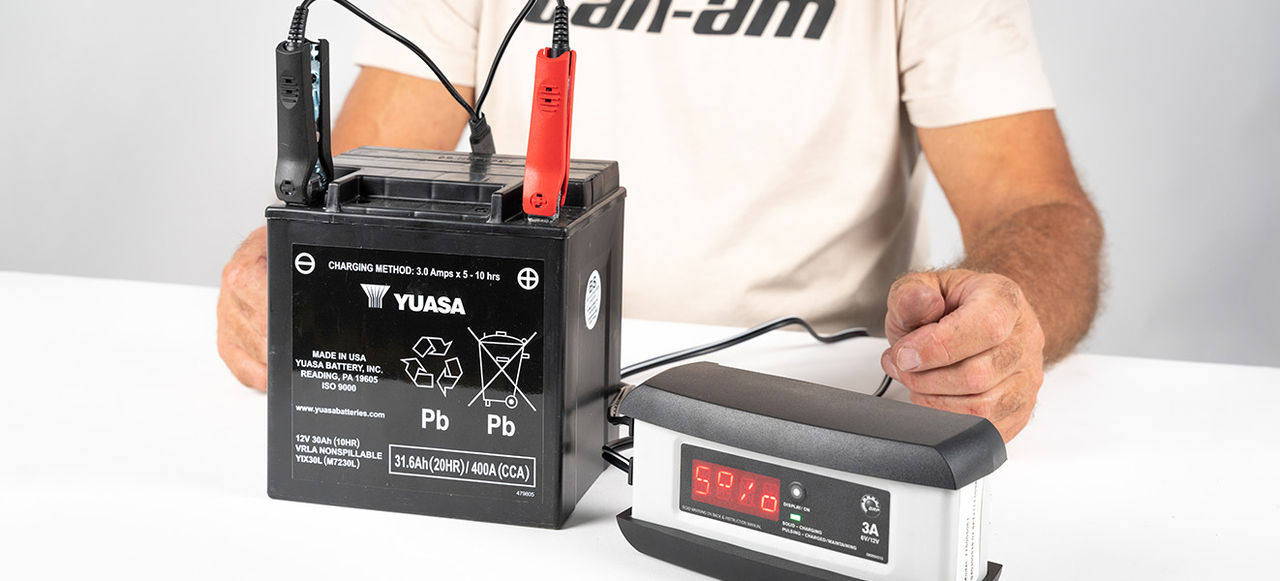
Image Source: can-am.brp.com
Why Proper Quad Battery Charging Matters
Your quad bike’s battery is its heart. It provides the power to start the engine, run the lights, and operate all the electrical components. A well-maintained and correctly charged battery ensures your ATV is ready when you are. Improper charging can lead to several issues:
- Reduced Battery Lifespan: Overcharging or undercharging can permanently damage the battery’s internal structure, significantly shortening its life.
- Poor Performance: A weak battery might struggle to start the engine, cause electrical glitches, or leave you stranded.
- Safety Hazards: Damaged batteries can leak acid or even explode, posing serious risks.
- Ineffective Charging: Using the wrong charger or method might not fully charge the battery, leaving you with insufficient power.
Deciphering Your Quad Bike Battery
Before you plug in a charger, it’s important to know a bit about your quad bike battery. Most ATVs use 12-volt batteries.
Quad Battery Voltage Explained
The standard ATV battery voltage is 12 volts. This is a common standard for most recreational vehicles. You might encounter different battery types, such as lead-acid (conventional, gel, or AGM) or even lithium-ion, but the voltage remains consistent at 12V for the vast majority of quad bikes. Always check your ATV’s manual or the battery itself for confirmation.
Common Quad Battery Types
- Flooded Lead-Acid (Conventional): These are the most traditional type. They require checking and topping up electrolyte levels with distilled water. They are often cheaper but require more maintenance.
- Sealed Lead-Acid (SLA): These include Gel and Absorbed Glass Mat (AGM) batteries. They are maintenance-free as the electrolyte is sealed within the battery. AGM batteries are generally more robust and offer better vibration resistance, making them a popular choice for ATVs.
- Lithium-ion (LiFePO4): While less common in older ATVs, lithium batteries are gaining popularity due to their lighter weight, faster charging capabilities, and longer lifespan. They require specific lithium battery chargers.
Choosing the Best Quad Battery Charger
Not all chargers are created equal. Selecting the best quad battery charger depends on your battery type and your charging needs.
Key Features to Look For:
- Voltage Compatibility: Ensure the charger is designed for 12V batteries.
- Amperage Output: For a 12V quad battery, a charger with an amperage output between 1A and 5A is generally suitable. Higher amperage can charge faster but may be too aggressive for some batteries if not regulated.
- Automatic Shut-off/Smart Charging: The best chargers are “smart” chargers. They monitor the battery’s state of charge and adjust the charging current accordingly, preventing overcharging. They often have different charging modes.
- Battery Type Specificity: Some chargers have modes for lead-acid, AGM, Gel, or Lithium batteries. Using the correct mode is vital.
- Trickle Charging Capability: A charger with a trickle charging quad battery function is excellent for maintaining a fully charged battery over long periods without damaging it.
- Safety Features: Look for features like reverse polarity protection, short-circuit protection, and spark-proof clamps.
Can I Use a Motorcycle Charger for a Quad Bike?
As mentioned, generally, yes, a motorcycle charger for quad bikes can be used if it’s a 12-volt charger. Motorcycle batteries are very similar to quad bike batteries. However, always check the amperage. If the motorcycle charger has a very high amperage (e.g., 10A or more), it might be too powerful for a smaller ATV battery and could cause damage. A charger rated for 1A to 5A is usually safe for most quad batteries.
How to Connect a Battery Charger Safely
How to connect a battery charger correctly is paramount. One wrong move can cause sparks, damage the battery, or even injure you.
Step-by-Step Connection Guide:
- Ensure the Charger is OFF and Unplugged: Before connecting anything, make sure the charger is switched off at the wall and unplugged.
- Locate the Battery Terminals: Your quad bike battery will have two terminals: positive (+) and negative (-). They are usually clearly marked. The positive terminal is often red or has a “+” symbol, while the negative is black or has a “-” symbol.
- Connect the Positive (Red) Clamp: Attach the red clamp from the charger to the positive (+) terminal of the battery. Ensure a firm, secure connection.
- Connect the Negative (Black) Clamp: Attach the black clamp from the charger to the negative (-) terminal of the battery.
- Double-Check Connections: Verify that the clamps are securely attached to the correct terminals and are not touching any other metal parts of the quad.
- Plug In and Turn On the Charger: Once the connections are secure, plug the charger into a suitable power outlet and then switch it on.
Important Safety Precautions:
- Ventilation: Always charge batteries in a well-ventilated area. Batteries can release explosive hydrogen gas during charging.
- No Smoking or Open Flames: Keep any sources of ignition away from the charging area.
- Eye Protection: Wear safety glasses to protect your eyes from potential acid splashes or sparks.
- Gloves: Consider wearing gloves, especially if dealing with a conventional lead-acid battery that might have acid residue.
- Remove Jewelry: Remove any metal jewelry that could accidentally bridge the terminals and cause a short circuit.
- Check Battery Condition: Before charging, inspect the battery for any cracks, leaks, or damage. Do not charge a visibly damaged battery.
The Charging Process: From Dead to Dwell
Quad battery charging involves more than just plugging in the charger. It’s about understanding the different stages and ensuring a complete and safe charge.
Charging a Dead Quad Battery
Charging a dead quad battery requires a bit more care. A completely discharged battery can sometimes be difficult for a smart charger to recognize.
- Initial Charge: If the battery is deeply discharged, a smart charger might initially refuse to charge it. Some chargers have a “manual” or “boost” mode for initial charging, but use this with caution and for a limited time, as it can be more aggressive.
- Patience: Allow sufficient time. A dead battery will take longer to charge than one that is just low.
- Check for Sulfation: If a lead-acid battery has been dead for a long time, it may have become sulfated. This can reduce its capacity and ability to hold a charge. Some advanced chargers have a desulfation mode to combat this, but it’s not always effective on severely sulfated batteries.
Trickle Charging Quad Battery for Maintenance
Trickle charging quad battery is the ideal way to maintain its charge when the ATV isn’t in use for extended periods (e.g., during winter storage).
- Purpose: A trickle charger provides a very low, constant current to keep the battery topped up without overcharging.
- Smart Trickle Chargers: Most modern “maintenance” chargers are smart and will automatically switch between charging and monitoring, only providing a small charge when needed.
- Benefit: This prevents the battery from self-discharging, which can lead to sulfation and reduced lifespan.
Charging Time Considerations
The time it takes to charge a quad bike battery depends on several factors:
- Battery Capacity (Ah – Ampere-hours): A larger capacity battery will take longer to charge.
- Charger Amperage: A higher amperage charger will charge faster.
- Battery’s State of Charge: A deeply discharged battery will take significantly longer than one that is only partially depleted.
- Battery Health: An older or damaged battery might not accept a full charge or may charge very slowly.
Example: A 12Ah battery that is half discharged (6Ah remaining) being charged by a 2A charger would theoretically take around 3 hours (6Ah / 2A = 3 hours). However, this is a simplified calculation, as charging isn’t always linear, and smart chargers adjust the current.
Maintaining Your Quad Battery: Beyond Charging
Quad battery maintenance is crucial for its performance and longevity.
Regular Checks:
- Clean Terminals: Keep the battery terminals clean and free from corrosion. Use a wire brush and a mixture of baking soda and water to clean any white, powdery residue.
- Check Electrolyte Levels (Conventional Batteries): For flooded lead-acid batteries, check the electrolyte levels every month or two. If they are low, top them up with distilled water only. Never use tap water or acid.
- Secure Mounting: Ensure the battery is securely mounted in its tray. Vibration can damage the battery and loosen connections.
- Inspect for Damage: Regularly look for any signs of swelling, cracks, or leaks.
When to Replace Your Quad Battery:
- Slow Cranking: If your ATV struggles to start even after a full charge.
- Short Run Time: If accessories like lights dim quickly or the battery drains rapidly.
- Visible Damage: Swelling, leaks, or corroded terminals that cannot be cleaned.
- Age: Most ATV batteries have a lifespan of 3-5 years.
Troubleshooting Common Quad Battery Issues
| Problem | Potential Cause | Solution |
|---|---|---|
| Battery won’t charge | Charger malfunction | Test charger with another known good battery. |
| Bad charger connections | Ensure clamps are clean and securely connected to correct terminals. | |
| Dead battery (severe sulfation) | Try a charger with a desulfation mode; may need replacement. | |
| Battery terminals are heavily corroded | Clean terminals thoroughly. | |
| Battery drains quickly | Faulty charging system (ATV’s alternator/rectifier) | Have the ATV’s charging system tested. |
| Parasitic drain (electrical component drawing power) | Use a multimeter to check for draws when the ATV is off. | |
| Old or weak battery | Test battery capacity; likely needs replacement. | |
| Battery appears swollen/leaking | Overcharging | Check charger’s functionality; replace charger if faulty. |
| Internal damage | Replace battery immediately. | |
| Extreme heat exposure | Ensure battery is in a well-ventilated area. | |
| Battery is hot during charging | Overcharging | Disconnect immediately and check charger. |
| Internal short circuit | Replace battery. | |
| Charging too fast | Use a lower amperage charger or a smart charger. |
Advanced Charging Techniques and Equipment
For enthusiasts who want the best for their ATV, there are more advanced options.
Smart Chargers and Multi-Stage Charging
Modern smart chargers employ multi-stage charging processes:
- Bulk Stage: The charger delivers maximum current to bring the battery up to about 80% charge.
- Absorption Stage: The charger reduces the current and increases the voltage to safely bring the battery to 100%.
- Float/Maintenance Stage: The charger reduces the current to a very low level (trickle) to maintain the full charge and compensate for self-discharge.
These stages are critical for safely and effectively charging different battery chemistries without causing damage.
Battery Conditioners
Some advanced chargers also function as battery conditioners. These devices go beyond simple charging and employ pulse technology to help reduce sulfation on lead-acid batteries, potentially extending their life.
Frequently Asked Questions (FAQ)
Q1: How often should I charge my quad bike battery?
A1: If you use your quad regularly, the ATV’s charging system (alternator) should keep the battery charged. However, if it sits for more than a few weeks, it’s a good idea to put it on a trickle charger to maintain its health.
Q2: Can I leave a smart charger connected all the time?
A2: Yes, most modern smart or maintenance chargers are designed to be left connected indefinitely. They monitor the battery and provide only the necessary charge to keep it topped up, preventing overcharging.
Q3: What is the correct charging voltage for a 12V quad battery?
A3: A typical 12V lead-acid battery charges at around 13.5V to 14.7V, depending on the charging stage. Smart chargers manage this automatically.
Q4: My quad battery is completely dead. Will a regular charger work?
A4: Some smart chargers may not recognize a completely dead battery. If yours doesn’t, you might need a charger with a manual override or a dedicated deep-discharge recovery function. However, a battery that has been dead for a long time may be permanently damaged.
Q5: Can I use a solar charger for my quad bike battery?
A5: Yes, solar chargers are a great option, especially for seasonal use or when you don’t have access to mains power. Ensure the solar charger is designed for 12V batteries and has a charge controller to prevent overcharging.
Q6: What is the best way to store my quad bike for winter to protect the battery?
A6: The best method is to fully charge the battery, disconnect it from the ATV, and store it in a cool, dry place. Ideally, connect it to a trickle charger or maintenance charger.
By following these guidelines, you can ensure your quad bike battery is always in peak condition, ready for your next adventure. Proper quad battery maintenance and correct charging are key to a reliable and long-lasting power source for your ATV.