
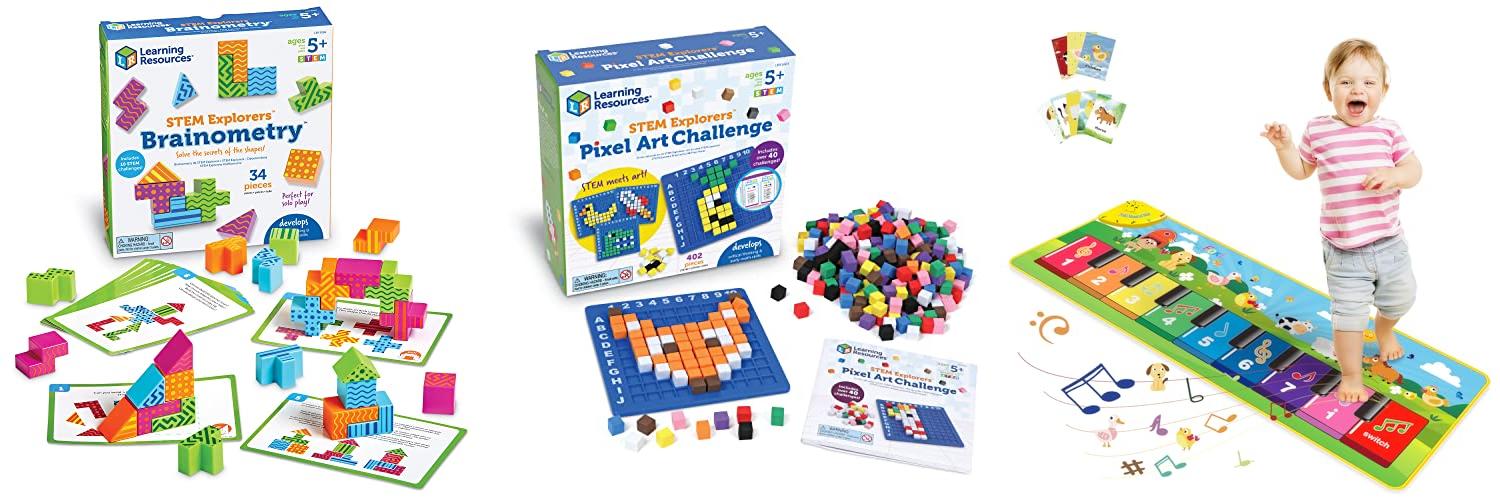
Imagine your child’s eyes lighting up as they build a towering castle, solve a tricky puzzle, or discover a new scientific principle – all through play! For five-year-olds, this magical age is a whirlwind of curiosity and rapid learning. They’re moving beyond basic exploration and are ready for toys that challenge their minds and spark their imaginations.
But let’s be honest, navigating the world of educational toys for this age group can feel overwhelming. You want to provide enriching experiences, but with so many choices – from STEM kits to art supplies and early literacy games – where do you even begin? The pressure to choose wisely can be immense, leaving parents wondering if they’re truly picking the best tools for their child’s development.
This is where we come in. This post will guide you through the exciting landscape of educational toys perfect for five-year-olds. We’ll break down what makes a toy truly beneficial, highlight fantastic options that cover a range of learning styles, and help you discover gifts that are not only fun but also foster essential skills like problem-solving, creativity, and critical thinking. Get ready to unlock a world of playful learning!
Our Top 5 Educational Toys For 5 Year Olds Recommendations at a Glance
Top 5 Educational Toys For 5 Year Olds Detailed Reviews
1. Learning Resources STEM Explorers Brainometry – 3d Puzzle

Rating: 8.9/10
Unleash your child’s inner genius with the Learning Resources STEM Explorers Brainometry! This exciting 3D puzzle and brain game set is designed to spark curiosity and build essential skills. It’s more than just a toy; it’s an engaging gateway to understanding logic, patterns, and spatial relationships. Perfect for curious minds aged 5 and up, Brainometry makes learning a thrilling adventure. This set offers a fantastic way to keep kids entertained and educated, fostering a love for STEM concepts through hands-on play.
What We Like:
- It significantly boosts critical thinking and math skills with fun, colorful pattern-matching activities.
- The tactile blocks encourage active exploration and help develop fine motor skills and an understanding of spatial relationships.
- Ten double-sided activity cards offer progressive challenges, ensuring the game grows with your child.
- It provides excellent screen-free entertainment, building concentration and focus in various settings.
- The blocks are sturdy and lightweight, and the cards are durable, built to last through lots of play.
- A robust storage box keeps all 34 pieces neatly organized and ready for the next session.
- This set brilliantly blends creative challenges with STEM activities, integrating art with science, technology, engineering, and math.
What Could Be Improved:
- While the activity cards offer progressive difficulty, some advanced learners might wish for even more complex challenges beyond the provided cards.
- The storage box, while robust, could potentially be slightly larger to accommodate potential future expansion sets or additional pattern blocks.
Overall, the Learning Resources STEM Explorers Brainometry is a standout educational toy that delivers on its promise of fun and learning. It’s a fantastic investment for any parent looking to encourage their child’s development in a captivating, hands-on way.
2. Learning Resources STEM Explorers Pixel Art Challenge – Math Puzzles

Rating: 8.6/10
The Learning Resources STEM Explorers Pixel Art Challenge offers a vibrant and engaging way for kids to dive into STEM concepts. This set combines art with essential math and coding skills, making learning feel like play. Children aged 5 and up will love the hands-on approach as they create colorful pixel art designs.
What We Like:
- It promotes critical thinking and problem-solving skills through 10 challenging, double-sided cards.
- The set provides a screen-free learning experience, building coding concepts and mathematical abilities.
- It boosts fine motor skills and hand-eye coordination as kids carefully place the foam pieces.
- The versatile design works well for classrooms, homeschooling, or individual fun, with levels that grow with the child.
- The 98 durable, lightweight foam pieces are safe and easy for little hands to manipulate.
- It seamlessly integrates art with STEM, creating a well-rounded educational tool.
What Could Be Improved:
- While the foam pieces are durable, some might find them less substantial than plastic building blocks.
- The “sensory bin” aspect is more implied through the tactile nature of the pieces rather than a dedicated bin.
This Pixel Art Challenge is a fantastic tool for fostering creativity and essential STEM skills in young learners. It’s a fun and effective way to introduce complex concepts through enjoyable, hands-on activities.
3. FOKI Floor Piano Mat for Toddlers

Rating: 9.0/10
Get ready for giggles and dancing feet with the FOKI Floor Piano Mat! This isn’t just a mat; it’s a vibrant playground for your little one’s senses. Designed for babies and toddlers from three months to five years old, this musical carpet sparks imagination and encourages active play. Bright colors, soft lights, and fun sounds make every step and tap a delightful discovery. It’s perfect for crawling, jumping, and dancing, turning playtime into a musical adventure.
What We Like:
- It’s incredibly fun and engaging, with bright colors and cute animal sounds that will captivate your child.
- The mat offers a rich variety of built-in sounds, including eight animal sounds and thirty-two total sounds that can be piano notes or children’s songs.
- It’s a fantastic early education tool, stimulating visual and auditory senses and helping develop coordination, color recognition, numbers, animals, and music understanding.
- The impressed gift package makes it a perfect, ready-to-go present for birthdays or any special occasion.
- Made from safe, non-toxic, anti-slip, and durable materials, it’s comfortable for babies and easy to clean.
- Its foldable design makes it super portable, perfect for taking on the go.
What Could Be Improved:
- While durable, the material might show wear and tear with very vigorous play over a long period.
- The mat size (39×14 inches) is great for younger toddlers, but older children might wish for a larger play area.
This FOKI Floor Piano Mat is a wonderful way to introduce music and movement to your child. It offers hours of entertainment and valuable learning opportunities in one colorful package.
4. School Zone Go Fish Alphabet Game Cards: Preschool

Rating: 9.2/10
The School Zone Go Fish Alphabet Game Cards offer a playful and educational way for young children to learn their ABCs. Designed for preschoolers through first graders, these cards make letter recognition and matching fun with vibrant animal illustrations. The set includes uppercase and lowercase letters, encouraging early literacy skills.
What We Like:
- Engaging Illustrations: Each card features unique and colorful animal flash card illustrations that capture children’s attention and make learning enjoyable.
- Clear Lettering: The letters are presented in a bold, block-style, making them easy for little eyes to see and distinguish.
- Smart Pairing: The ingenious division of upper- and lowercase letters by adult and baby animals provides a memorable and intuitive way to learn letter pairs.
- Durable Quality: Made from thick, glossy cardstock, these cards are built to withstand repeated play and handling by energetic preschoolers.
- Extra Value: An access code for the Golden Scholar Club provides a free online gift, adding even more educational fun to the package.
What Could Be Improved:
- Packaging Variation: The product description notes that packaging may vary, which could be a minor inconvenience for those expecting a specific look or design.
These Go Fish Alphabet Game Cards are an excellent resource for parents and educators. They effectively blend learning with play, making the journey of mastering the alphabet an exciting adventure for young learners.
5. Doctor Jupiter My First Science Kit for Kids Ages 4-5-6-7-8

Rating: 9.2/10
Ignite a passion for discovery with the Doctor Jupiter My First Science Kit! This exciting kit is designed for curious minds aged 4 to 8, offering over 100 engaging experiments that make learning science an adventure. It’s the perfect way to introduce young explorers to the wonders of STEM in a fun and hands-on way.
What We Like:
- Encourages a love for science with over 100 experiments that spark curiosity.
- Makes STEM learning fun and promotes critical thinking through active exploration.
- Provides over 100 days of screen-free entertainment, ideal for birthdays and holidays.
- Includes easy-to-follow, well-illustrated instruction manuals for a smooth experience.
- Meets U.S. safety standards and is backed by Doctor Jupiter’s commitment to quality and a 100% satisfaction guarantee.
- Kids feel like real scientists as they uncover amazing phenomena like “Water Fireworks” and “Walking Water.”
What Could Be Improved:
- While it offers over 100 experiments, some may require additional common household items not included in the kit.
- For younger children (4-5), adult supervision and assistance will be essential for most experiments.
This kit offers an incredible value, providing hours of educational fun and fostering a lifelong interest in science. It’s a fantastic gift that promises both entertainment and learning for young adventurers.
Choosing the Best Educational Toys for Your 5-Year-Old
Five years old is a magical age! Kids are bursting with curiosity, developing their fine motor skills, and starting to grasp more complex concepts. Educational toys can be fantastic tools to support their growth and make learning fun. This guide will help you find the perfect toys to spark your child’s imagination and learning.
1. Key Features to Look For
When selecting educational toys for a 5-year-old, keep these important features in mind:
- Age Appropriateness: Toys should be challenging enough to be engaging but not so difficult that they cause frustration. Look for toys specifically designed for ages 4-6 or 5+.
- Developmental Benefits: Does the toy encourage problem-solving, critical thinking, creativity, or fine motor skills? Toys that offer multiple ways to play have greater long-term value.
- Durability: Kids this age can be rough with their toys. Look for sturdy construction that can withstand enthusiastic play.
- Safety: This is paramount. Ensure the toy has no small parts that could be a choking hazard and is made from non-toxic materials.
- Open-Ended Play: Toys that allow for imaginative scenarios and don’t have a single “right” way to play are excellent. Building blocks, art supplies, and pretend play items fall into this category.
- Engagement Factor: Does the toy capture your child’s attention? Toys that are colorful, interactive, and offer a sense of accomplishment tend to be more engaging.
2. Important Materials
The materials used in educational toys significantly impact their safety, durability, and environmental footprint.
- Wood: Natural wood is a popular and excellent choice. It’s durable, non-toxic, and often beautifully crafted. Look for sustainably sourced wood.
- Plastic: High-quality, BPA-free plastic is common. It’s often durable and easy to clean. Avoid toys with a strong chemical smell.
- Fabric: Soft fabrics are great for plush toys, puzzles with fabric pieces, or sensory bins. Ensure they are washable and hypoallergenic.
- Cardboard/Paper: Sturdy cardboard is used for many puzzles, games, and craft kits. Thicker, more robust cardboard is better.
3. Factors That Improve or Reduce Quality
Several factors influence a toy’s overall quality and value.
Factors that Improve Quality:
- Thoughtful Design: Toys that are well-designed consider how children learn and play.
- High-Quality Construction: Solid joints, smooth finishes, and robust materials indicate a well-made toy.
- Educational Value: Toys that genuinely teach skills or concepts in an enjoyable way are high quality.
- Longevity of Play: Toys that can be used in multiple ways or grow with your child offer better value.
- Positive Reviews: Real-world feedback from other parents can highlight quality.
Factors that Reduce Quality:
- Flimsy Construction: Toys that break easily are frustrating and a waste of money.
- Toxic Materials: This is a major safety concern and reduces quality significantly.
- Limited Playability: Toys with only one or two ways to play can quickly become boring.
- Poorly Written Instructions: If a toy is difficult to assemble or use due to bad instructions, its quality suffers.
4. User Experience and Use Cases
The best educational toys seamlessly integrate into a child’s daily life, offering diverse play experiences.
- For Creative Expression: Art supplies like chunky crayons, washable markers, modeling clay, and construction paper encourage drawing, sculpting, and imaginative storytelling.
- For Building and Spatial Reasoning: Building blocks (LEGO Duplo, wooden blocks) help develop fine motor skills, spatial awareness, and problem-solving as children construct towers, houses, and vehicles.
- For Early Literacy and Numeracy: Simple board games, matching cards, and alphabet/number puzzles introduce letters, numbers, and basic math concepts in a playful way.
- For Pretend Play: Dress-up costumes, play kitchens, and doctor kits foster social skills, empathy, and imaginative role-playing.
- For Problem-Solving: Puzzles with larger pieces (12-48 pieces) and simple logic games challenge young minds to think critically.
Frequently Asked Questions (FAQ) for Educational Toys for 5-Year-Olds
Q: What are the most important skills to develop at age 5 with toys?
A: At age 5, children are developing fine motor skills, problem-solving abilities, critical thinking, creativity, and early literacy and numeracy. Toys that encourage these areas are very beneficial.
Q: Are wooden toys better than plastic toys for 5-year-olds?
A: Both can be excellent. Wooden toys are often very durable and eco-friendly. High-quality plastic toys are also safe, easy to clean, and can offer vibrant colors and complex designs. The key is the quality of the materials and the design of the toy itself.
Q: How can I tell if a toy is safe for my 5-year-old?
A: Always check for age recommendations. Ensure there are no small parts that could be a choking hazard. Look for labels indicating non-toxic materials. Reputable brands usually adhere to safety standards.
Q: My child gets bored with toys quickly. How can I choose toys that will last?
A: Look for open-ended toys that allow for multiple types of play. Building blocks, art supplies, and dress-up items can be used in countless ways. Toys that can grow with your child, like LEGOs that can be adapted for more complex builds, are also great.
Q: What are “open-ended” toys?
A: Open-ended toys don’t have a single way to be played with. They encourage imagination and creativity. Examples include blocks, play dough, art supplies, and dolls.
Q: Should I buy toys that are specifically labeled “educational”?
A: While “educational” toys can be great, many toys that aren’t explicitly labeled as such also provide significant learning opportunities. Focus on the play value and developmental benefits rather than just the label.
Q: How do I introduce a new educational toy to my child?
A: Play with your child! Show them different ways to use the toy. Ask open-ended questions to encourage their imagination and problem-solving. Let them explore and discover on their own.
Q: What is the role of puzzles in a 5-year-old’s development?
A: Puzzles help develop fine motor skills, spatial reasoning, problem-solving, and patience. For 5-year-olds, puzzles with 24 to 60 pieces are usually appropriate.
Q: Are screen-free toys still important for 5-year-olds?
A: Absolutely. Screen-free toys foster hands-on learning, imagination, and social interaction, which are crucial for development. They also help develop fine motor skills and problem-solving without digital distractions.
Q: How much should I spend on educational toys?
A: The price can vary greatly. Focus on quality and developmental value rather than just cost. A well-made, versatile toy that costs a bit more might offer better long-term play and learning than several cheaper, less durable options.
In conclusion, every product has unique features and benefits. We hope this review helps you decide if it meets your needs. An informed choice ensures the best experience.
If you have any questions or feedback, please share them in the comments. Your input helps everyone. Thank you for reading.