
Charging your electric bike (e-bike) battery is a simple process, but doing it safely and efficiently can extend your battery’s life and ensure you’re always ready for your next ride. Can you charge an e-bike anywhere? Yes, with the right equipment and access to a power outlet, you can charge at home, at designated public charging stations, or even on the go with a portable charger.
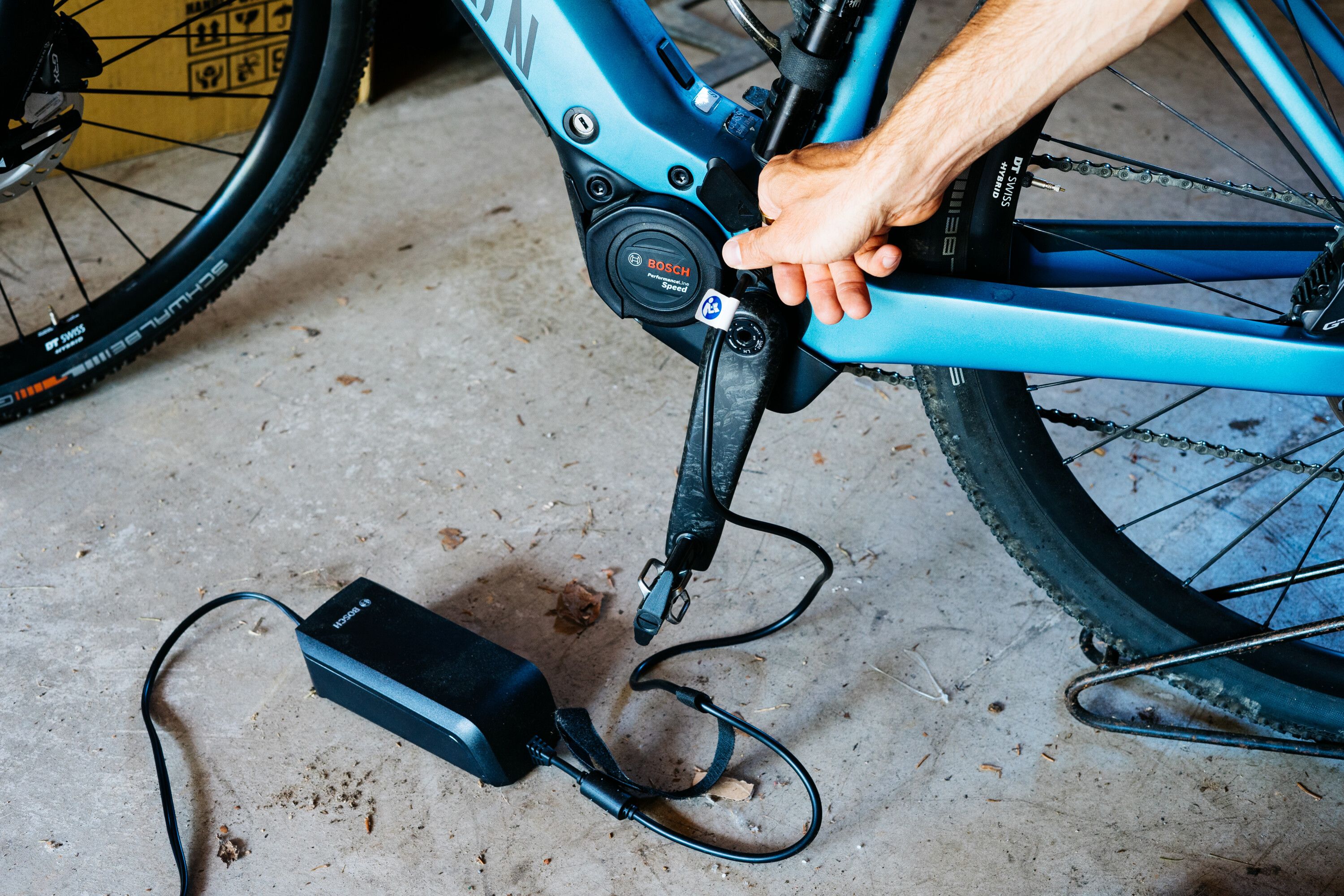
Image Source: hips.hearstapps.com
Getting Started with E-bike Charging
To charge your e-bike, you’ll need a few key things: your e-bike battery, the charger that came with your e-bike or a compatible one, and a standard electrical outlet. The process involves connecting the charger to the battery and then plugging it into the wall. It’s crucial to use the charger specifically designed for your e-bike battery to prevent damage.
Ensuring Safe Charging Practices
Safety is paramount when it comes to EV charging and, by extension, e-bike battery charging. Always follow the manufacturer’s guidelines. Avoid charging your battery in extreme temperatures, either hot or cold. Water and electricity don’t mix, so ensure the charging area is dry. Never leave a charging battery unattended for extended periods, especially overnight, and check the charger and battery for any signs of damage before plugging them in.
Different Charging Methods Explained
There are several ways to charge your electric bicycle, each with its own advantages.
Home Charging: The Most Common Method
Home charging is the most convenient and widely used method. Most e-bikes come with a charger that can be plugged into a standard household outlet.
- Process:
- Remove the e-bike battery from the bike (if it’s removable). Some batteries can be charged while still on the bike.
- Connect the charger’s plug to the battery’s charging port.
- Plug the charger into a grounded electrical outlet.
- The charger will usually have an indicator light showing the charging status (e.g., red for charging, green for fully charged).
- Benefits:
- Convenience: Charge anytime, day or night.
- Cost-effective: Uses standard household electricity.
- Battery care: Allows for a controlled charging environment.
- Considerations:
- Charging time: This can vary significantly depending on the battery’s capacity and the charger’s output.
- Battery health: Consistent charging practices contribute to battery health.
Public Charging Stations: For Rides on the Go
As e-bike adoption grows, public charging options are becoming more common, especially in urban areas and recreational parks.
- Types of Stations:
- Bicycle charging station facilities specifically designed for e-bikes.
- Standard EV charging stations that may be compatible with e-bike chargers.
- Charging points in cafes, bike shops, or rest stops.
- How to Use:
- Look for charging ports or outlets.
- You might need your own charger or the station may provide one.
- Some stations might require an app or payment.
- Benefits:
- Range extension: Allows for longer rides without worrying about running out of power.
- Convenience: Find a charge when you need it away from home.
- Considerations:
- Availability: Not as widespread as home charging.
- Compatibility: Ensure your charger or battery port is compatible.
- Speed: Charging speed can vary.
Portable Chargers: Charging Anytime, Anywhere
For the adventurous rider, a portable charger can be a lifesaver. These are often smaller, lighter versions of home chargers, designed for travel.
- Features to Look For:
- Compact size and weight.
- Efficiency and charging speed.
- Durability for outdoor use.
- Usage:
- Can be used at campsites with generator power or in a vehicle’s power outlet.
- Requires an available power source.
- Benefits:
- Freedom: Eliminates range anxiety on extended trips.
- Versatility: Can be used in various locations.
- Considerations:
- Charging speed might be slower than a standard home charger.
- Requires a power source, which might be limited in remote areas.
Maximizing Your E-bike Battery Lifespan
Your e-bike battery is the heart of your electric bike, and proper charging is key to its longevity. Understanding battery health and adopting good habits will ensure you get the most out of it.
What Affects E-bike Battery Lifespan?
Several factors can impact how long your e-bike battery lifespan lasts:
- Charging Habits: Overcharging or deep discharging can degrade the battery.
- Temperature: Extreme heat or cold damages the battery chemistry.
- Storage Conditions: Storing a fully depleted or fully charged battery for long periods is not ideal.
- Physical Damage: Dropping or puncturing the battery can be dangerous and reduce its life.
- Usage Patterns: Frequent full discharges and rapid charging can stress the battery.
Best Practices for Battery Health
To ensure optimal battery health and a longer e-bike battery lifespan, consider these practices:
- Avoid Deep Discharges: Try not to let the battery drain completely to 0%.
- Don’t Overcharge Constantly: While modern chargers have protections, it’s generally best to unplug the battery once it’s fully charged, especially if you’re not using it.
- Charge in Moderate Temperatures: Aim to charge your battery in a room-temperature environment (around 15-25°C or 60-77°F).
- Store Properly: If storing your e-bike for an extended period, aim for a charge level of around 40-60%. Store it in a cool, dry place.
- Use the Right Charger: Always use the charger supplied by the manufacturer or a certified compatible charger. Using the wrong charger can damage the battery and be a fire hazard.
- Regular Maintenance: Keep the battery contacts clean and free from debris.
Factors Affecting Charging Time
The time it takes to charge your e-bike battery depends on several variables.
Key Factors Influencing Charging Duration
- Battery Capacity (Wh – Watt-hours): A larger capacity battery will naturally take longer to charge. This is calculated by multiplying the battery’s voltage by its amp-hour rating.
- Charger Output (W – Watts): A higher wattage charger can deliver power faster, thus reducing charging time. Chargers are typically rated in watts (e.g., 50W, 100W, 200W).
- Battery’s State of Charge: Charging a nearly depleted battery will take longer than topping off a partially charged one.
- Battery Health: An older battery might not accept a charge as quickly as a new one.
- Temperature: Batteries charge more slowly in very cold or very hot conditions.
Estimating Charging Time
To estimate the charging time, you can use a simple formula:
Charging Time (hours) = Battery Capacity (Wh) / Charger Output (W)
For example:
* A 500Wh battery with a 2A, 36V charger (72W output) would take approximately: 500Wh / 72W = 6.94 hours.
* The same 500Wh battery with a 4A, 36V charger (144W output) would take approximately: 500Wh / 144W = 3.47 hours.
Note: This is an estimate. Actual charging times may be slightly longer due to charging management systems within the battery and charger.
Table: Common E-bike Battery Capacities and Estimated Charging Times
| Battery Capacity (Wh) | Typical Charger Output (W) | Estimated Charging Time (Hours) |
|---|---|---|
| 300 Wh | 72 W | ~4.2 |
| 300 Wh | 144 W | ~2.1 |
| 500 Wh | 72 W | ~6.9 |
| 500 Wh | 144 W | ~3.5 |
| 750 Wh | 144 W | ~5.2 |
These are approximate times and can vary.
Electric Bicycle Maintenance Beyond Charging
While charging is a critical part of electric bicycle maintenance, other aspects also contribute to a well-functioning e-bike.
Essential E-bike Maintenance Tips
- Keep it Clean: Regularly wash your e-bike to prevent dirt and grime from affecting components. Pay special attention to keeping the battery contacts clean.
- Check Tire Pressure: Properly inflated tires reduce rolling resistance, improving efficiency and range.
- Inspect Brakes: Ensure your brakes are in good working order for safe stopping.
- Lubricate the Chain: A well-lubricated chain ensures smooth pedaling and extends drivetrain life.
- Regularly Inspect Components: Check bolts, cables, and the motor for any signs of wear or damage.
- Software Updates: Some e-bikes have software that can be updated to improve performance or fix bugs. Consult your manufacturer’s guidelines.
Frequently Asked Questions (FAQ)
Q1: Can I leave my e-bike battery plugged in overnight?
A1: Most modern e-bike chargers and batteries have built-in protection to prevent overcharging. However, it’s generally recommended to unplug the battery once it’s fully charged to prolong its battery health and for safety reasons. Prolonged connection can sometimes lead to slight degradation over time.
Q2: Is it bad to charge my e-bike battery from 50% to 100%?
A2: No, it’s not inherently bad. Lithium-ion batteries, commonly used in e-bikes, don’t suffer from the “memory effect” of older battery technologies. Charging from any level is generally fine. However, for optimal e-bike battery lifespan, it’s best to avoid consistently deep discharges (letting it go to 0%) and extremely frequent full charges. Maintaining a charge level between 20% and 80% is often considered ideal for long-term storage or when not in frequent use, but daily top-ups are perfectly acceptable for regular riding.
Q3: How often should I charge my e-bike battery?
A3: You should charge your e-bike battery whenever it’s convenient and when it needs it. There’s no strict schedule. If you know you have a long ride planned, ensure it’s fully charged. For daily commutes, you can often get away with charging every few days, depending on your usage and the battery’s capacity. Avoid storing the battery for long periods in a completely depleted state.
Q4: What should I do if my e-bike battery gets wet?
A4: If your e-bike battery gets wet, do not attempt to charge it immediately. First, dry it thoroughly with a soft, absorbent cloth. Check the charging port and battery casing for any signs of moisture ingress or damage. If you suspect any internal moisture or damage, do not use or charge the battery and contact the manufacturer or a professional e-bike technician.
Q5: Can I use a car’s USB port to charge my e-bike?
A5: Generally, no. Most e-bike chargers require a higher voltage and amperage than a standard car USB port can provide. Attempting to use an incompatible charger or power source can damage both the charger and the battery, and may pose a fire risk. Always use the charger designed for your specific e-bike.
Q6: How do I know when my e-bike battery needs replacing?
A6: You’ll notice a decrease in the range you can travel on a full charge. The battery might also take longer to charge than it used to, or it might not hold a charge for as long. Some e-bikes have a battery management system (BMS) that can indicate battery health or error codes. If you experience a significant and sudden drop in performance, it’s time to consult your e-bike manual or a professional.
Q7: What is the average lifespan of an e-bike battery?
A7: The average e-bike battery lifespan is typically between 3-5 years or around 500-1000 charge cycles, whichever comes first. This can vary greatly depending on the quality of the battery, how it’s used, and how it’s maintained and charged. Proper electric bicycle maintenance, especially regarding charging habits, significantly impacts this lifespan.
Q8: Can I charge my e-bike in the rain?
A8: It is not advisable to charge your e-bike in the rain. The charging port and charger are typically designed to be water-resistant, not waterproof, and moisture can cause short circuits or corrosion. Ensure both the battery and the charging area are dry before connecting the charger.
Q9: How do I clean my e-bike battery?
A9: If your battery is removable, disconnect it from the bike. Wipe the exterior of the battery and its charging contacts with a dry or slightly damp (not wet) soft cloth. Avoid using any harsh chemicals or solvents. Ensure the battery is completely dry before reconnecting it or attempting to charge it.
Q10: Where can I find a public bicycle charging station?
A10: Public charging options are growing. Check with your local city council, parks and recreation departments, or dedicated e-bike advocacy groups. Many bike-friendly cities are installing charging infrastructure in parks, transit hubs, and popular cycling routes. Apps like PlugShare can sometimes list e-bike charging points, although dedicated listings are still less common than for electric cars. Asking at local bike shops can also provide information on available charging facilities.