
How many lumens do you need for a bike light? For general visibility and safety, a front bike light should have at least 400-800 lumens, while a rear light needs about 20-60 lumens. However, the ideal number of lumens for a bike light depends heavily on where and when you ride, as well as your personal preferences. This guide will help you decipher the complexities of bike light brightness and make an informed choice.
Choosing the right bike light lumens can be the difference between a safe, enjoyable ride and a potentially dangerous one. The world of bike lights can seem overwhelming with all the talk of lumens, modes, and battery life. But at its core, it’s about making sure you can see and be seen. This article is designed to demystify the lumen rating and provide you with the knowledge to select the best lumen output bike light for your specific needs.
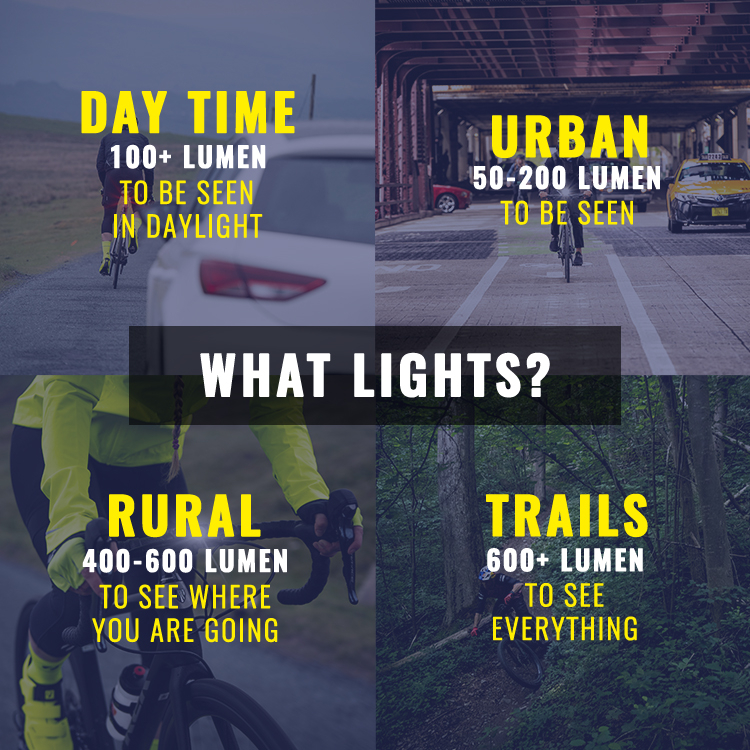
Image Source: www.cyclesuk.com
Deciphering Bike Light Lumens
Lumens are the standard unit of measurement for the total amount of visible light emitted by a source. Think of it as the “brightness” of the light. A higher lumen count means a brighter light. However, how bright should a bike light be isn’t just about the highest number. Many other factors come into play, like beam pattern, light quality, and the surrounding environment.
What Lumens Mean for Your Ride
When you’re looking at bike lights, the lumen rating is your primary indicator of how well the light will illuminate the path ahead or how visible you will be to others.
- Seeing the Path: If you ride on unlit paths or trails, you’ll need a brighter light to see obstacles, potholes, and the terrain ahead.
- Being Seen: If you primarily ride in areas with streetlights or during daylight hours, a lower lumen count might suffice for daytime visibility, but you’ll still need enough to be noticed by drivers.
Lumens for Night Riding: Illuminating Your Path
Lumens for night riding are crucial for safety and confidence. Riding in the dark requires a light that can cut through the darkness and reveal hazards well in advance.
Front Lights: Illuminating the Way
For night riding, your front bike light is your eyes. It needs to provide enough light to see the road or trail clearly, but also to be seen by others.
- Trail Riding: Mountain bikers often need the brightest lights because they encounter uneven terrain, roots, rocks, and drop-offs. For mountain bike light lumens, many riders opt for lights in the 1000-3000+ lumen range. This allows them to see far ahead and react quickly to changing conditions. Some specialized setups can go even higher.
- Road Riding: For road cyclists, the primary goal is often to illuminate the road surface and provide a clear beam pattern that doesn’t blind oncoming traffic. For road bike light lumen requirements, a good starting point is often 600-1000 lumens. This is usually sufficient for well-maintained roads and allows you to see potholes or debris.
- Commuting: Commuters might ride in various conditions. If you ride on unlit roads at night, a brighter light is advisable. For commuter bike light lumens, consider lights in the 500-1000 lumen range. If you stick to well-lit urban areas, a lower lumen count might be acceptable for seeing, but you’ll still need a good rear light.
Beam Patterns: More Than Just Brightness
It’s not just about how many lumens, but how those lumens are focused.
- Flood Beams: These are wider and spread light more evenly, good for seeing a broad area.
- Spot Beams: These focus light into a tighter, longer beam, ideal for seeing far down the road or trail.
- Combination Beams: Many lights offer a mix, providing both a wide flood and a focused spot.
Lumens for Urban Cycling and Commuting: Being Seen is Key
When cycling in urban environments, especially during daylight or in areas with ambient light, the focus shifts towards being seen. Lumens for urban cycling can be lower for your rear light, but your front light still plays a role in overall visibility.
Front Lights for Urban Visibility
While you might not need a super-bright light to navigate city streets, you still need to be visible to pedestrians, cyclists, and motorists.
- Daytime Running Lights (DRLs): Many modern bike lights offer a flashing mode specifically designed for daytime visibility. Even with lower lumen counts (around 200-500 lumens), a good flashing pattern can make you incredibly conspicuous.
- Evening Commutes: As dusk settles, the need for illumination increases. For commuter bike light lumens, a front light in the 400-800 lumen range with a good beam pattern that illuminates the immediate road surface and provides a visible flash can be ideal.
Rear Lights: Your Lifesaver
The rear light is arguably the most important for preventing accidents, especially in traffic. You need to be seen from a distance.
- Minimum Brightness: For rear lights, lumens for urban cycling and general commuting typically range from 20 to 60 lumens. This is usually enough to make you stand out in most conditions.
- Flashing Patterns: Similar to front lights, flashing rear lights are significantly more effective at grabbing attention. Look for versatile flashing modes.
- High Visibility: In bright daylight, even a 60-lumen rear light might struggle. For maximum safety, especially on busy roads or in sunny conditions, consider rear lights that offer higher lumen output (up to 100 lumens or more) in a focused, attention-grabbing flash.
Factors Influencing Effective Bike Light Lumens
The effective bike light lumens are not just the number printed on the box. Several other factors contribute to how well a light performs.
Light Quality and Color Temperature
- Color Temperature: Measured in Kelvin (K), this affects how the light appears. Cooler temperatures (bluer light) can sometimes appear brighter, while warmer temperatures (yellower light) can offer better contrast in certain conditions.
- Color Rendering Index (CRI): A higher CRI means the light shows colors more accurately, which is important for identifying road surfaces, painted lines, and potential hazards.
Beam Pattern and Focus
As mentioned earlier, the way the light is spread is critical. A tightly focused beam can have a higher perceived brightness over a longer distance, even if the total lumen output is lower than a widely dispersed light.
Runtime and Battery Life
A super-bright light is useless if its battery dies quickly. Consider how long you need your lights to last. Many lights offer different modes (e.g., high, medium, low, flashing) to balance brightness and runtime. For long night rides, a light with good battery life and the ability to switch to lower modes is essential.
Mounting and Placement
How and where you mount your lights also impacts their effectiveness. Front lights should be mounted securely on your handlebars or helmet. Rear lights are typically mounted on the seatpost. Ensuring the light is aimed correctly prevents wasted light and potential glare for others.
Environmental Conditions
- Fog or Rain: In poor weather, light scatters. Brighter lights with a focused beam can sometimes perform better, but you also need to be mindful of creating glare.
- Street Lighting: In areas with good street lighting, you may need less illumination for yourself but still require bright lights to be seen.
Choosing Bike Light Lumens: A Practical Approach
When you’re choosing bike light lumens, it’s helpful to think about your typical riding scenarios.
Commuter Bike Light Lumens: Balancing Safety and Practicality
For the everyday commuter, a reliable front and rear light are non-negotiable.
- Front Commuter Light: A 400-800 lumen front light with a good flashing mode for daytime visibility and a steady beam for nighttime is a solid choice. Look for lights with decent battery life and USB recharging for convenience.
- Rear Commuter Light: A 20-60 lumen rear light is often sufficient, but consider one that goes up to 100 lumens with a very distinct flash pattern for maximum impact in traffic.
Road Bike Light Lumen Requirements: Visibility and Clarity
Road cyclists need to see clearly and be seen by faster-moving traffic.
- Front Road Light: Aim for 600-1000 lumens for well-lit roads, and consider 1000-1500 lumens or more if you venture onto darker rural roads. Beam pattern is important to avoid blinding other road users.
- Rear Road Light: A bright, flashing rear light of 50-100 lumens is highly recommended.
Mountain Bike Light Lumens: Conquer the Darkness
Off-road riding demands superior illumination.
- Front Mountain Bike Light: For technical terrain and high speeds, lights in the 1000-3000 lumen range are common. Many mountain bikers use a combination of a helmet-mounted light (for steering) and a handlebar-mounted light (for broader illumination). Some professional setups can exceed 5000 lumens.
- Helmet Lights: These can be lighter and more focused, often in the 400-1000 lumen range, to help with steering and seeing around corners.
Putting It All Together: A Lumen Guide by Riding Type
Here’s a summary to help you in choosing bike light lumens:
| Riding Type | Front Light (Lumens) | Rear Light (Lumens) | Key Considerations |
|---|---|---|---|
| Urban Commuting | 400 – 800 | 20 – 60 | Daytime visibility, traffic, weather, battery life |
| Road Cycling (Lit) | 600 – 1000 | 50 – 100 | Being seen by cars, clear beam, road surface |
| Road Cycling (Dark) | 800 – 1500+ | 50 – 100 | Illuminating distance, battery life |
| Gravel/Light Trails | 800 – 1500 | 50 – 100 | Seeing trail details, versatility |
| Mountain Biking | 1000 – 3000+ | 50 – 100 | Seeing obstacles, high speeds, beam pattern |
| Daytime Visibility | 200 – 500 (flashing) | 20 – 60 (flashing) | Maximum conspicuity, distinct flash |
Important Note on Lumens:
- Advertised vs. Actual Lumens: Be aware that some manufacturers may exaggerate their lumen claims. Look for reputable brands and reviews that test light output.
- Beam Focus: A 1000-lumen light with a tightly focused beam will illuminate further than a 1000-lumen light with a very wide, unfocused beam.
Frequently Asked Questions (FAQ)
Q1: Do I really need a bright bike light for commuting?
A1: Yes, even in well-lit areas, a bright bike light, especially a flashing one, significantly increases your visibility to drivers, cyclists, and pedestrians, enhancing your safety.
Q2: Can I use a flashlight as a bike light?
A2: While a powerful flashlight might seem bright, it’s generally not ideal for cycling. Bike lights are designed with specific beam patterns to illuminate the road or trail effectively without causing excessive glare, and they often have features like multiple modes and long-lasting rechargeable batteries.
Q3: How many lumens is enough for daytime riding?
A3: For daytime riding, the focus is on being seen. A front light with 200-500 lumens in a highly visible flashing mode is usually sufficient. For rear lights, 20-60 lumens in a flashing mode is also effective.
Q4: What is the best lumen output for a rear bike light?
A4: For rear bike lights, the “best” lumen output is usually in the 20-60 lumen range for consistent visibility, but for maximum impact, especially in bright daylight or busy traffic, lights that can reach up to 100 lumens with a very distinct flashing pattern are excellent.
Q5: How bright should a bike light be to see in the dark?
A5: To effectively see in the dark, especially on unlit roads or trails, you’ll want a front bike light that outputs at least 600-800 lumens. For more demanding situations like mountain biking, 1000-3000+ lumens are recommended.
Q6: Are more lumens always better?
A6: Not necessarily. While more lumens mean more light, the effectiveness of a bike light depends on its beam pattern, quality, runtime, and how it’s used. A poorly focused bright light can be less useful and more distracting than a moderately bright light with an excellent beam.
Q7: What does “ANSI FL1 Standard” mean for bike lights?
A7: The ANSI FL1 Standard is a set of guidelines for testing and reporting the performance of lighting products. When a bike light is certified to this standard, it means its lumen output, beam distance, runtime, and impact resistance have been measured and reported consistently, making comparisons between different lights more reliable. Always look for lights that adhere to this standard for accurate lumen ratings.
By considering your riding habits and the information provided here, you can confidently select the bike lights that will keep you safe and seen on every journey. Happy riding!