
Can you lock a bike with a U-lock safely? Yes, absolutely! Using a U-lock correctly is one of the most effective ways to prevent bike theft and ensure your bicycle remains secure. This guide will walk you through the best practices for securing your ride.
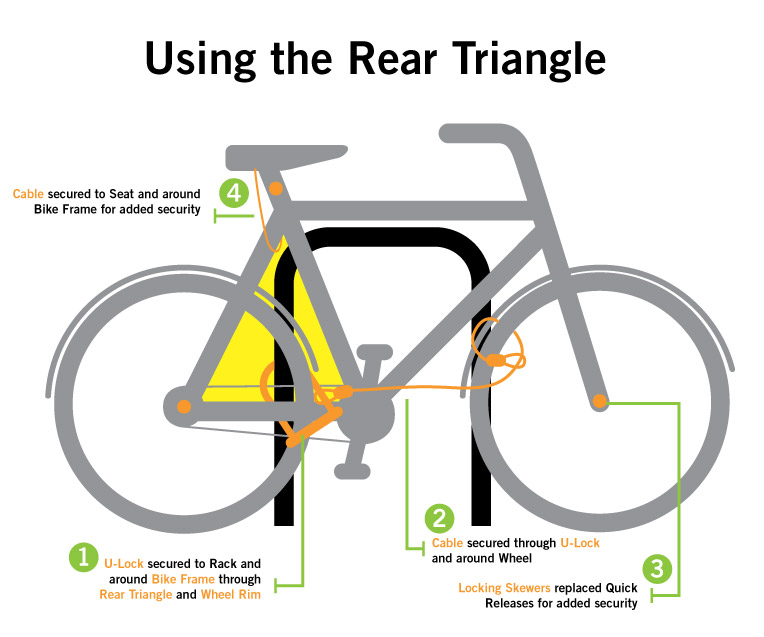
Image Source: sfbike.org
Why U-Locks Are Your Best Friend for Bike Security
When it comes to bike security, the U-lock, often called a D-lock, stands out as a top choice for bike anti-theft. Unlike flimsy cable locks or even some chain locks, a good quality U-lock offers robust protection against common theft methods like bolt cutters. Their solid construction makes them difficult to cut through quickly, which is the primary goal of bike locking techniques. While no lock is completely impenetrable, a U-lock paired with smart locking habits significantly boosts your secure bicycle readiness.
The Superiority of U-Locks Over Other Locks
Let’s look at why U-locks often win the battle for bike security:
- Resistance to Cutting: The thick, hardened steel shackle of a U-lock is much harder to cut than the cables found on many locks. Bolt cutters, the most common tool for bike thieves using cable locks, struggle with U-locks.
- Durability: U-locks are built to last. They are less prone to damage from weather or everyday use compared to some other lock types.
- Visibility: A well-placed U-lock can deter opportunistic thieves. It’s a clear signal that you’ve taken steps to protect your bike.
We’ll compare it to other options briefly:
| Lock Type | Pros | Cons | Best For |
|---|---|---|---|
| U-Lock | Very secure, durable, resistant to cutting | Can be heavy, limited in what you can lock to | High-risk areas, locking frame and at least one wheel to a solid object |
| Chain Lock | More flexible than U-locks, good security | Can be heavy, potentially weaker links than a U-lock | Locking frame and wheels to larger objects, moderate to high-risk areas |
| Cable Lock | Lightweight, flexible, cheap | Low security, easily cut, best for low-risk areas | Very low-risk areas, very temporary locking, or as a secondary deterrent |
How To Use A U-Lock Effectively: Step-by-Step
Knowing how to use a U-lock is crucial for maximizing its effectiveness. It’s not just about having a good lock; it’s about using it correctly.
Step 1: Choosing the Right U-Lock
Before you even think about locking your bike, ensure you have a quality U-lock. Look for locks that are:
- Hardened Steel: This is the key material for strength.
- Thick Shackle: Generally, thicker is better. Aim for at least 13mm (0.5 inches) for good security.
- Reputable Brands: Brands like Kryptonite, Abus, and OnGuard have a good track record for bike security.
- Sold Secure Rating: Look for locks with a Gold or Diamond rating from Sold Secure, a UK-based independent testing organization. This indicates a high level of resistance to theft.
Step 2: Identifying a Secure Locking Spot
The location where you lock your bike is as important as the lock itself. This is a core part of bike locking techniques.
What Makes a Good Locking Spot?
- Fixed Objects: Look for sturdy, immovable objects like metal bike racks, thick lampposts, or signposts that cannot be easily lifted or dismantled.
- Visibility: Choose well-lit areas with high foot traffic. Thieves prefer to work unseen.
- Ground Level: Avoid locking your bike low to the ground where a thief might have more leverage or cover.
What to Avoid When Locking Your Bike
- Anything Removable: Don’t lock your bike to fences that can be lifted, small trees, or anything that a thief could pick up and carry away.
- Unlit or Isolated Areas: These are prime spots for thieves to operate without being noticed.
- Insecure Racks: Some bike racks are not securely bolted to the ground and can be removed.
Step 3: The Art of Locking Your Bike Properly
This is where the actual how to use U-lock steps come into play. The goal is to secure the most valuable parts of your bike and make it as difficult as possible for a thief.
Locking the Frame and Rear Wheel
The rear wheel is often more valuable than the front wheel due to the gears and derailleur. Therefore, prioritizing its security is wise.
- Position the U-lock: Place the U-lock around the rear wheel’s spokes and the frame, then loop it through the designated locking point on your chosen secure object (e.g., a bike rack).
- Secure the Shackle: Close the U-lock, ensuring the shackle is fully engaged in the locking mechanism.
- Snug Fit: Aim for a snug fit. Too much space within the U-lock can give a thief leverage to use tools like car jacks or pry bars to break the lock.
Securing the Front Wheel
The front wheel is often easier to remove than the rear.
- Option 1: Second Lock: The best bike anti-theft strategy for securing both wheels is to use a second lock. If you have another U-lock or a strong chain lock, use it to secure the front wheel to the same object as the frame and rear wheel. This is the ideal scenario for a secure bicycle.
- Option 2: Locking Through the Wheel: If you only have one U-lock, lock your frame and rear wheel as described above. Then, try to position the U-lock so it also passes through the front wheel. This might mean placing the U-lock in a “U” shape with the shackle going through the frame, rear wheel, and the secure object, and then using a secondary cable lock (less ideal, but better than nothing) or a quick-release lever lock for the front wheel. Better yet, use the U-lock to secure the frame and rear wheel, and then consider a cable lock that goes through the front wheel and around the frame to deter casual theft of the wheel.
Locking Techniques to Maximize Security
- Lock to the Frame: Always ensure the U-lock goes through the main triangle of your bike frame. This is the most critical part to protect.
- Minimize Gaps: As mentioned, a tight fit makes it harder for thieves to attack the lock. If there’s a large gap, try repositioning the lock or using the U-lock in a different orientation.
- Lock High: When locking to a rack, position the lock as high as possible. This makes it harder for a thief to get leverage against the ground.
- Locking to the Seatpost: If you have a quick-release seatpost, consider removing it and bringing it with you. If you must leave it, try to loop your lock through the seatpost as well.
Step 4: Using a Secondary Lock (Recommended)
While a single U-lock is good, two locks are significantly better for robust bike security.
When to Consider a Second Lock
- High-Risk Areas: If you are in a city with a high rate of bike theft, or if you’re leaving your bike for an extended period, a second lock is a wise investment.
- Valuable Bikes: For expensive bicycles, adding a second layer of security is essential.
- Securing Both Wheels: To prevent wheel theft, a second lock is almost mandatory.
Types of Secondary Locks
- Another U-Lock: This offers the highest level of security.
- Chain Lock: A heavy-duty chain lock can be a good secondary option, offering more flexibility in what you can lock to. However, ensure it’s a thick, hardened steel chain.
- Cable Lock (Less Recommended): While better than nothing, cable locks offer minimal security and are easily cut. Use them only as a deterrent for casual theft or for securing less valuable components if absolutely necessary.
Step 5: Storage and Transport
Even when you’re not locking your bike, how you store and transport your lock matters.
- Carry Securely: Most U-locks come with mounting brackets for your bike frame. Ensure it’s attached securely so it doesn’t rattle loose and fall off while you’re riding.
- Don’t Leave it on the Bike: Never leave your lock attached to your bike when it’s not locked. A thief could easily remove the bike from the lock and take both.
Common U-Lock Mistakes to Avoid
Even with the best intentions, people make mistakes that compromise their bike security. Being aware of these pitfalls can help you lock your bike properly.
Mistake 1: Leaving Too Much Gap
- Problem: A large gap between the frame, wheel, and the U-lock shackle provides a thief with leverage. They can use tools like car jacks, pry bars, or even their own body weight to try and snap the lock.
- Solution: Position the U-lock so it’s snug. If you have a lot of slack, try orienting the lock differently or locking around a smaller diameter object.
Mistake 2: Locking Only the Wheel
- Problem: Thieves can easily remove a wheel and take the rest of the bike. Some may even carry a spare wheel!
- Solution: Always lock the frame to a secure object. The frame is the most valuable part of your bike.
Mistake 3: Using a Poor Quality Lock
- Problem: Cheap, thin U-locks are often made with softer metals that can be cut with basic tools in seconds.
- Solution: Invest in a reputable, hardened steel U-lock with a high security rating. Your bike is worth protecting.
Mistake 4: Locking to Insecure Objects
- Problem: Locking to a flimsy pole, a tree that can be cut, or a fence that can be lifted renders your strong U-lock useless.
- Solution: Always assess the security of the object you’re locking to. If it seems questionable, find another spot.
Mistake 5: Locking Only One Wheel
- Problem: If you only secure your frame and one wheel, a thief can easily steal the other wheel, especially if it’s a quick-release model.
- Solution: Use a second lock to secure your second wheel, or at the very least, use a cable lock to deter wheel theft.
Advanced Bike Locking Techniques
For those who want to go the extra mile in bike security, here are some advanced bike locking techniques.
High-Security U-Lock Placement
- Center of the Frame: Try to position the U-lock so it encircles the main triangle of your frame and at least one wheel. This makes it harder to use a leverage attack on the lock itself.
- Vertical vs. Horizontal: Sometimes, orienting the U-lock vertically (shackle pointing up) can make it harder for a thief to get their tools into the mechanism. Experiment with what works best for your bike and the object you’re locking to.
The Two-U-Lock Strategy
- Full Coverage: Use one U-lock to secure the frame and rear wheel to a stationary object. Use a second U-lock to secure the front wheel and the frame to the same object. This makes your bike extremely difficult to steal quickly.
- Combined Locking: If you have two U-locks, you can often interlock them to create a more robust locking system that is harder to cut through.
Integrating Cable Locks (with Caution)
While cable locks are weak on their own, they can serve as a secondary deterrent for less valuable parts.
- Wheel Deterrent: Use a thin cable lock to thread through both wheels and then around the frame. This won’t stop a determined thief, but it can deter someone looking for a quick grab-and-go.
- Seat Security: If your seat is easily removed, use a cable lock to secure it to the frame.
What is a “Good” Bicycle Lock?
A “good” bicycle lock is one that provides sufficient protection against the most common theft methods for the environment you’re in.
- Material: Hardened steel is paramount.
- Thickness: Generally, thicker is better, but the quality of the steel matters more.
- Security Ratings: Sold Secure (Gold or Diamond) and ART (3 or 4 stars) are excellent benchmarks.
- Brand Reputation: Established brands often invest more in research and development for better bike anti-theft solutions.
Can I Lock My Bike with Just a Cable Lock?
While you can, it’s highly not recommended for most situations. Cable locks offer very little resistance to bolt cutters, the most common tool for bike thieves. They are best suited for very low-risk situations, like a quick stop in a very public, well-monitored area, or as a secondary lock to deter casual theft of wheels or seats. For securing your frame and wheels, a U-lock or a heavy-duty chain lock is far superior for ensuring a secure bicycle.
Who is a Bike Thief?
Bike thieves are opportunistic. They look for easy targets. They are often looking to steal bikes to sell quickly for cash. They might be skilled with tools or may rely on speed and surprise. Your goal in bike locking techniques is to make your bike a much harder, slower, and riskier target than the bike next to it.
Frequently Asked Questions (FAQ)
Q1: How tight should my U-lock be?
A: Your U-lock should be as snug as possible. There should be very little to no gap between the shackle and the object you are locking your bike to, and between the frame and the lock. This minimizes leverage for thieves.
Q2: Can I lock my bike to a tree?
A: While you can, it’s generally not ideal. Trees can be cut down, or a thief might try to break the tree. Always opt for a more permanent, unmovable object like a sturdy bike rack or a thick metal pole.
Q3: Is it okay to leave my bike locked overnight?
A: It’s best to avoid leaving your bike locked outdoors overnight if possible, especially in urban areas. Even the best locks can be overcome with enough time and specialized tools. If you must, use multiple high-quality locks and choose a very secure location.
Q4: What are quick-release wheels?
A: Quick-release wheels have levers that allow you to remove them from the bike without tools. While convenient for maintenance, they are also a security risk as a thief can easily remove them. Always secure quick-release wheels with your lock, or use locking skewers.
Q5: Should I buy a cheap U-lock to save money?
A: It’s a false economy. A cheap U-lock offers minimal bike security and your expensive bicycle is at high risk of theft. Investing in a quality U-lock from a reputable brand is a much better use of your money in the long run. It’s a crucial part of bike anti-theft.
By following these bike locking techniques and ensuring you lock your bike properly with a quality U-lock, you significantly increase your chances of keeping your bicycle safe and sound. Happy cycling!