
A 125cc motorcycle can typically reach a top speed of around 60 to 75 miles per hour (mph), or about 96 to 120 kilometers per hour (km/h). Can you go faster? While some highly tuned or aerodynamic models might push slightly beyond this, these figures represent the general range for most standard 125cc bikes.
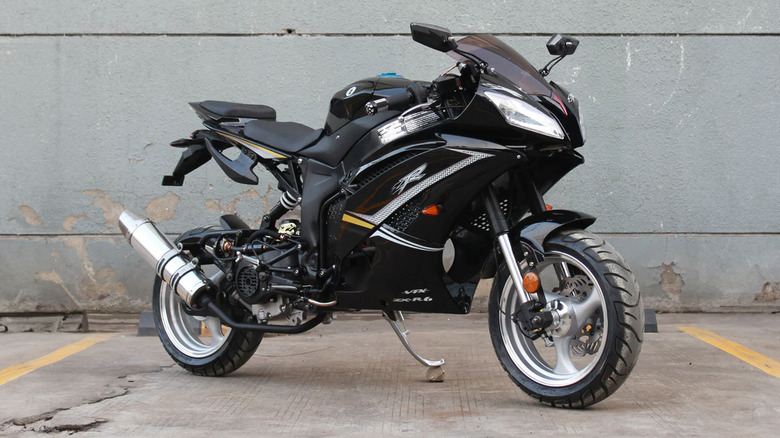
Image Source: www.slashgear.com
Deciphering 125cc Bike Performance
The world of motorcycles is vast, offering everything from roaring superbikes to nimble city commuters. Among these, the 125cc class holds a special place, particularly for new riders or those seeking economical and practical transportation. But how fast can these smaller-displacement machines really go? The answer isn’t a single number; it’s a fascinating interplay of engine size, bike design, and rider skill. Let’s dive deep into what determines the 125cc motorcycle top speed and explore the secrets behind their performance.
The Heart of the Matter: The 125cc Engine
At the core of any motorcycle’s capability lies its engine. For a 125cc bike, this means an engine with a displacement of approximately 125 cubic centimeters. This size is a sweet spot for many manufacturers, balancing manageable power with good fuel efficiency.
Key Engine Characteristics Affecting Speed:
- Engine Power (HP/kW): The most direct indicator of an engine’s potential. A higher horsepower output generally translates to a higher top speed. For 125cc bikes, power figures typically range from around 10 horsepower for basic commuter models to 15 horsepower or more for sportier versions.
- Torque: While horsepower dictates top speed, torque is about pulling power. Good low-end torque helps a 125cc bike accelerate quickly, which can indirectly aid in reaching its top speed faster.
- Engine Speed (RPM): The 125cc engine speed is measured in revolutions per minute (RPM). Engines are designed to operate efficiently and produce peak power within a certain RPM range. The gearing of the motorcycle also plays a crucial role in how the engine’s speed translates to the wheel’s speed.
- Cooling System: Air-cooled engines are simpler but can overheat under sustained high speeds, potentially limiting performance. Liquid-cooled systems manage heat better, allowing for more consistent power output.
- Fueling System: Carbureted engines are common on older or simpler 125cc bikes. Fuel-injected engines (FI) generally offer better throttle response, fuel atomization, and can optimize power delivery across the RPM range.
Factors Influencing Maximum Speed 125cc Motorbike
It’s not just the engine that dictates how fast a 125cc motorbike can go. Many other elements contribute to its overall maximum speed 125cc motorbike:
- Aerodynamics: The shape of the motorcycle and the rider’s position significantly impact air resistance. A sleek, faired sportbike will cut through the air more efficiently than a naked bike or a cruiser. A rider tucking down can shave precious miles per hour off the top speed due to reduced drag.
- Gearing: The final drive ratio (sprocket sizes) and the gearbox ratios are crucial. Taller gearing (larger rear sprocket or smaller front sprocket) allows the engine to spin slower at higher road speeds, potentially increasing top speed but sacrificing acceleration. Shorter gearing improves acceleration but limits top speed.
- Weight: A lighter motorcycle requires less power to accelerate and maintain speed. This is why 125cc dirt bikes, often built for agility, might feel quick but generally have lower top speeds than their road-going counterparts due to different gearing and less aerodynamic design.
- Tires: Tire grip and pressure can influence how effectively power is put to the ground. Properly inflated tires with good tread offer better stability and reduce rolling resistance.
- Rider Skill and Position: An experienced rider can maintain a tuck position, anticipate shifts, and manage the throttle more effectively, all contributing to reaching the bike’s maximum potential.
Types of 125cc Bikes and Their Speed Capabilities
The general category of “125cc bike” encompasses a surprisingly diverse range of styles, each with its own typical speed profile.
125cc Sportbike Speed
Sportbikes, even in the 125cc class, are designed with performance and aerodynamics in mind. They often feature:
- Fairings: These body panels are shaped to reduce wind resistance, allowing the bike to slice through the air more effectively at higher speeds.
- Aggressive Riding Position: The rider leans forward, tucking in behind the fairing, which further minimizes drag.
- Higher-Revving Engines: Many 125cc sportbikes are built to rev higher, extracting more power from their small displacement.
These factors mean a 125cc sportbike is likely to achieve the higher end of the 125cc top speed spectrum, often touching or exceeding 70 mph (112 km/h) in optimal conditions. Brands like Yamaha (YZF-R125), Honda (CBR125R), and KTM (RC 125) are prime examples, showcasing impressive 125cc sportbike speed for their engine size.
125cc Cruiser Top Speed
Cruisers, on the other hand, prioritize comfort, relaxed riding, and often a classic aesthetic over outright speed.
- Upright Riding Position: This position is comfortable but less aerodynamic, creating more drag.
- Lower-Revving Engines: Cruisers often have engines tuned for low-end torque, making them feel responsive at city speeds but less suited for high-RPM performance.
- Less Aerodynamic Bodywork: Typically they have minimal fairings, if any.
As a result, a 125cc cruiser’s 125cc cruiser top speed will generally be lower than a sportbike, often in the 60-65 mph (96-105 km/h) range. Their strength lies in their comfortable ride and style, not their velocity.
125cc Scooter Top Speed
Scooters are designed for practicality and urban commuting. They share many characteristics with cruisers in terms of riding position and intended use, but with a step-through frame and automatic transmission.
- Automatic Transmission (CVT): Continuously Variable Transmissions (CVTs) keep the engine in its power band for smooth acceleration but can sometimes limit top-end speed compared to a well-shifted manual gearbox.
- Urban Focus: Many 125cc scooters are optimized for city riding, with excellent acceleration from a standstill and nimble handling.
- Aerodynamics: While some scooters have leg shields and small fairings, they are usually not as aerodynamically efficient as a sportbike.
The 125cc scooter top speed typically falls between 60-70 mph (96-112 km/h). Their ease of use and impressive 125cc fuel economy make them excellent choices for city dwellers.
125cc Dirt Bike Speed
Dirt bikes are built for off-road use, and their design prioritizes durability, suspension travel, and maneuverability over outright top speed.
- Knobby Tires: These tires provide grip on loose surfaces but create significant drag on pavement, reducing top speed.
- Long-Travel Suspension: This is essential for absorbing bumps but can make the bike less stable at very high speeds on smooth surfaces.
- Off-Road Gearing: Dirt bikes usually have shorter gearing for quick acceleration and climbing ability, which limits their top speed on asphalt.
- Minimal Bodywork: They often lack aerodynamic fairings.
Consequently, the 125cc dirt bike speed on paved roads is generally lower than road-going 125cc bikes. Expect top speeds in the 50-65 mph (80-105 km/h) range, depending heavily on the specific model and conditions. Their 125cc bike performance is judged differently – by their ability to tackle trails and obstacles.
Exploring 125cc Engine Power and Performance
The 125cc engine power is the foundation upon which all other performance aspects are built. While 10-15 horsepower might not sound like much compared to larger motorcycles, in a lightweight 125cc chassis, it’s enough for spirited riding, especially in urban environments.
Interpreting 125cc Bike Performance Metrics:
- 0-60 mph (0-96 km/h) Acceleration: For many riders, how quickly a 125cc bike gets up to speed is more important than its absolute top speed. Good acceleration makes city riding enjoyable and merging into traffic safer.
- Braking Performance: Effective braking is crucial for safety, especially when riding at higher speeds. Well-designed braking systems are a key part of a 125cc bike’s overall performance.
- Handling and Agility: The nimble nature of most 125cc bikes is a major selling point. Their light weight and smaller dimensions make them easy to maneuver through traffic and around corners.
- Fuel Economy: One of the biggest advantages of 125cc motorcycles is their exceptional 125cc fuel economy. Riders can expect to achieve anywhere from 70 to over 100 miles per gallon (MPG), making them incredibly cost-effective to run. This efficiency is a direct result of their smaller engines and lighter weight.
Pushing the Limits: Modifications and Tuning
For enthusiasts looking to extract more speed from their 125cc machines, modifications are an option, though often with limitations.
Common Modifications:
- Exhaust Systems: Aftermarket exhausts can reduce weight and improve exhaust gas flow, potentially offering a small power increase.
- Air Filters: High-flow air filters can improve air intake, complementing exhaust upgrades.
- ECU/Fueling Re-maps: For fuel-injected bikes, reprogramming the Engine Control Unit (ECU) or adjusting fuel delivery can optimize the air-fuel mixture for better performance.
- Sprocket Changes: As mentioned, altering the gearing can trade acceleration for top speed, or vice versa.
- Performance Tuning: More advanced tuning might involve porting and polishing the cylinder head, upgrading the camshaft, or even increasing the bore size (though this moves beyond the typical 125cc classification).
However, it’s important to remember that due to strict emissions regulations in many regions, the 125cc engine power output is often capped at a legal limit (e.g., 15 hp in Europe for A1 license holders). Pushing beyond this often requires significant, specialized tuning and may affect reliability and legality.
Real-World Considerations
When talking about the 125cc motorcycle top speed, it’s vital to consider real-world conditions.
- Altitude: At higher altitudes, the air is thinner, meaning less oxygen for combustion, which can reduce engine power and thus top speed.
- Temperature: Extreme heat can lead to engine heat soak, potentially reducing performance.
- Wind: Headwinds can significantly slow a bike down, while tailwinds can provide a slight boost.
- Road Surface: A smooth, flat road is ideal for achieving maximum speed. Bumps or inclines will inevitably reduce it.
- Rider’s Weight: A heavier rider will require more power to reach the same speed as a lighter rider.
Frequently Asked Questions (FAQ)
Q1: Can a 125cc bike do highway speeds?
A1: Yes, most 125cc bikes can comfortably maintain highway speeds (around 60-70 mph or 96-112 km/h) for sustained periods, especially if they are sportbike or touring-oriented models. However, they may struggle to keep up with faster traffic or overtake slower vehicles on the highway.
Q2: Is a 125cc bike good for beginners?
A2: Absolutely. 125cc bikes are ideal for new riders due to their manageable power, light weight, and lower running costs. They are forgiving and help build confidence and essential riding skills.
Q3: How much horsepower does a typical 125cc motorcycle have?
A3: A typical 125cc motorcycle engine produces between 10 and 15 horsepower. Some sportier models might reach up to 15 hp, which is often a regulatory limit in many countries for learner riders.
Q4: What is the difference in top speed between a 125cc sportbike and a 125cc scooter?
A4: A 125cc sportbike, due to its aerodynamic fairings and more performance-oriented engine tuning, will generally have a higher top speed than a 125cc scooter, which is typically designed for urban comfort and economy. The sportbike might reach 70-75 mph, while the scooter might top out around 60-70 mph.
Q5: How does rider weight affect a 125cc bike’s top speed?
A5: Rider weight is a significant factor. A heavier rider will require more power to overcome inertia and air resistance, resulting in a slightly lower top speed compared to a lighter rider on the same 125cc motorcycle.
Q6: What contributes most to a 125cc bike’s top speed?
A6: The primary factors are the 125cc engine power output, the bike’s aerodynamics (influenced by its design and rider position), and the gearing.
By carefully considering these elements, you can gain a comprehensive grasp of the 125cc motorcycle top speed and the factors that influence it. Whether you’re drawn to the sporty lines of a 125cc sportbike, the practical nature of a 125cc scooter, or the ruggedness of a 125cc dirt bike, these versatile machines offer an accessible entry into the world of motorcycling, blending performance with excellent 125cc fuel economy.