
An electric bike battery can typically last anywhere from 10 to 50 miles in a single day, depending on a multitude of factors. This range is a broad estimate, and to truly understand your e-bike’s daily potential, we need to dive deeper into what influences its e-bike battery life.
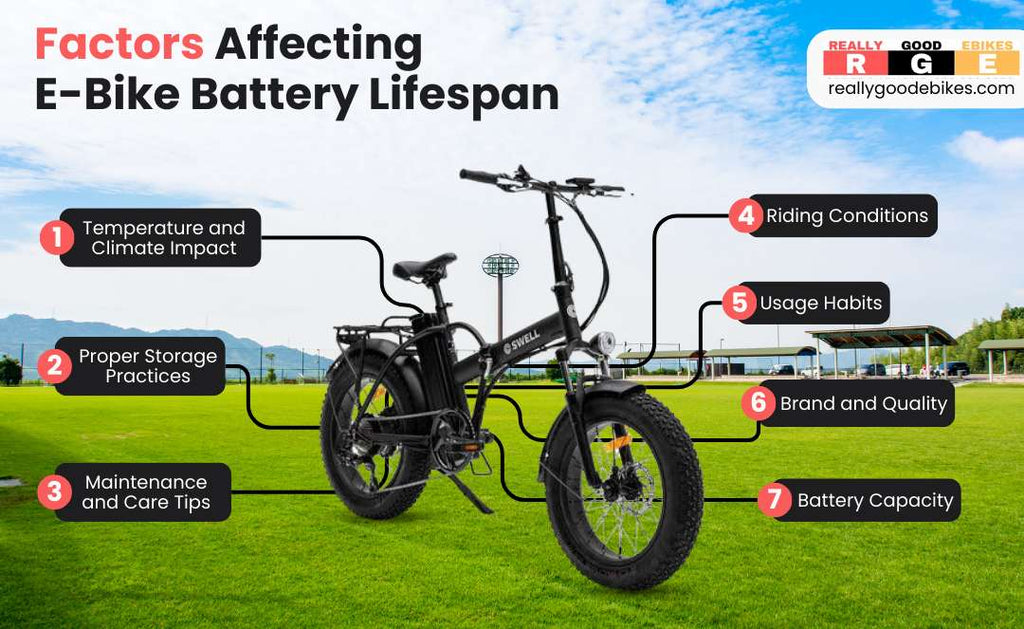
Image Source: cdn.shopify.com
Delving into E-bike Battery Range and Daily Usage
The question of “how long does an electric bike battery last in a day?” is one of the most common inquiries from both prospective and current e-bike owners. It directly impacts how far you can travel, how often you need to recharge, and ultimately, the practicality of your electric bicycle for your daily commute or recreational rides. This e-bike battery range is not a fixed number; it’s a dynamic figure influenced by several interconnected elements.
Factors Affecting E-bike Battery Life
Several key factors play a significant role in determining the e-bike battery duration and how many miles you can expect on one e-bike charge. Let’s break them down:
1. E-bike Battery Capacity (Watt-hours – Wh)
The most crucial factor influencing your e-bike’s daily range is its e-bike battery capacity. This is measured in Watt-hours (Wh). Think of Watt-hours as the “fuel tank” size for your e-bike. A higher Wh rating means a larger battery and, generally, a longer range.
- Typical E-bike Battery Capacities:
- 250 Wh: Often found on lighter, less powerful commuter bikes. Expect a shorter range.
- 300-400 Wh: A common capacity for many mid-range e-bikes, offering a balanced performance.
- 500-600 Wh: Larger batteries that provide greater e-bike mileage, ideal for longer commutes or touring.
- 700+ Wh: High-capacity batteries found on premium e-bikes, designed for extensive exploration.
To calculate an approximate range based on capacity, a general rule of thumb is that a typical e-bike motor uses about 10-15 Watt-hours per mile. Therefore, a 400 Wh battery might offer:
- 400 Wh / 10 Wh/mile = 40 miles (ideal conditions)
- 400 Wh / 15 Wh/mile = 26.7 miles (more demanding conditions)
However, this is a simplification, as other factors significantly impact this calculation.
2. Motor Power and Efficiency
The power output of your e-bike’s motor and its overall efficiency also play a critical role. A more powerful motor might drain the battery faster if used at its maximum setting, but its efficiency can also mean it utilizes the available energy more effectively under certain conditions.
- Motor Classes:
- 250W Motors: Common in Europe, regulated for pedal-assist up to 25 km/h. Generally more energy-efficient for moderate speeds.
- 500W+ Motors: Often found in North America, offering more torque and higher top speeds, which can consume battery power more rapidly.
3. Pedal Assist Level Used
Most e-bikes feature multiple levels of pedal assistance. This is perhaps the most controllable factor for riders to manage their e-bike battery duration.
- Eco/Low Assist: Conserves battery power, offering minimal motor support. This maximizes your e-bike mileage.
- Normal/Medium Assist: Provides a good balance of support and battery life.
- Boost/High Assist: Delivers maximum power, but significantly reduces e-bike battery range.
Riding consistently on the highest assist level will drastically shorten your e-bike riding time compared to using lower settings. Many riders find a sweet spot on a mid-level setting for their daily commute.
4. Terrain and Inclines
The type of terrain you ride on is a massive determinant of battery consumption.
- Flat Terrain: Requires less motor effort, leading to longer e-bike battery range.
- Hilly or Mountainous Terrain: Steep inclines demand much more power from the motor, draining the battery considerably faster. If your daily commute involves significant elevation changes, your e-bike battery life will be shorter.
5. Rider Weight and Cargo
The total weight being propelled by the e-bike directly influences how much energy the motor needs to expend.
- Rider’s Weight: A heavier rider will naturally put more strain on the motor.
- Cargo: Carrying groceries, a child, or other heavy items will reduce your e-bike battery range.
- Bike Weight: The inherent weight of the e-bike itself also contributes. Heavier e-bikes require more energy to accelerate and maintain speed.
6. Tire Pressure and Tread
Simple as it may seem, proper tire inflation can make a noticeable difference in efficiency.
- Underinflated Tires: Create more rolling resistance, forcing the motor to work harder.
- Overinflated Tires: Can lead to a harsher ride and reduced traction, though generally more efficient than underinflated ones.
- Tire Tread: Aggressive treads designed for off-road use can increase rolling resistance on paved surfaces, impacting e-bike battery performance.
7. Riding Style and Speed
How you ride your e-bike significantly affects battery life.
- Frequent Acceleration and Braking: Consumes more energy than smooth, consistent riding.
- High Speeds: E-bikes have a top speed limit for pedal assist (often 20 mph or 28 mph depending on class). Riding consistently at or near this limit will drain the battery faster than cruising at a moderate speed.
- Using the Motor as a Crutch: Relying solely on the motor without contributing with your own pedaling will lead to a shorter range.
8. Environmental Conditions
External environmental factors can also play a role in e-bike battery duration.
- Wind: Riding against a strong headwind requires significantly more effort from the motor, reducing range. A tailwind, conversely, can extend your e-bike mileage.
- Temperature: Extreme cold can temporarily reduce battery e-bike battery performance. Batteries generally perform best in moderate temperatures.
9. Battery Age and Health
Like all rechargeable batteries, e-bike batteries degrade over time and with use.
- Capacity Degradation: As a battery ages, its maximum capacity decreases. An older battery might not hold as much charge as it did when new, thus reducing its e-bike battery range.
- Cell Quality: The quality of the lithium-ion cells used in the battery pack also affects its longevity and overall e-bike battery performance. Reputable manufacturers use high-quality cells.
How Many Miles on One E-bike Charge? Estimating Your Daily Range
To provide a more concrete idea of how many miles on one e-bike charge you can expect, let’s look at some scenarios based on typical e-bike setups:
| E-bike Battery Capacity (Wh) | Typical Terrain | Pedal Assist Level | Rider Weight (lbs) | Estimated Range (Miles) |
|---|---|---|---|---|
| 300 Wh | Flat, paved | Eco | 160 | 25 – 35 |
| 300 Wh | Flat, paved | Medium | 160 | 18 – 28 |
| 300 Wh | Hilly, paved | Medium | 160 | 15 – 22 |
| 500 Wh | Flat, paved | Eco | 180 | 40 – 55 |
| 500 Wh | Flat, paved | Medium | 180 | 30 – 45 |
| 500 Wh | Hilly, paved | Medium | 180 | 25 – 35 |
| 500 Wh | Hilly, mixed terrain | High | 200 | 20 – 30 |
| 600 Wh | Flat, paved | Medium | 200 | 35 – 50 |
| 600 Wh | Hilly, mixed terrain | Medium | 200 | 30 – 40 |
Important Note: These are estimates. Your actual e-bike mileage may vary significantly.
Maximizing Your E-bike Battery Life for Daily Use
To ensure you get the most out of your electric bicycle’s battery for your daily e-bike usage, consider these tips for maximizing e-bike battery life:
Smart Charging Habits
- Avoid Full Discharges: Try not to let your battery drain completely to 0%. Lithium-ion batteries prefer to be kept between 20% and 80% charge for optimal long-term health, though modern e-bike batteries are quite robust.
- Charge After Use: If you’ve used a significant portion of the battery, it’s generally good practice to charge it.
- Use the Correct Charger: Always use the charger supplied with your e-bike or a compatible, certified charger. Using an incorrect charger can damage the battery and reduce its e-bike battery performance.
- Storage: If storing your e-bike for an extended period (more than a month), charge the battery to about 60-70% and store it in a cool, dry place. Avoid storing it in extreme temperatures.
Riding Techniques
- Utilize Lower Assist Levels: For longer rides or when you want to conserve battery, stick to Eco or lower pedal assist settings.
- Maintain Consistent Speed: Avoid rapid acceleration and braking. Smooth riding is more energy-efficient.
- Anticipate the Road: Look ahead to anticipate stops, turns, and inclines to minimize unnecessary braking and acceleration.
- Use Gears Effectively: Shift gears like you would on a regular bicycle. Use lower gears for starting and climbing, and higher gears for cruising on flat surfaces.
- Build Momentum: If you see an upcoming incline, try to build up a little speed on the flatter section before hitting the hill.
- Minimize Coasting: While coasting saves your energy, the motor won’t be engaged. If you are in a situation where you can gain speed with the motor, it might be more efficient than feathering the throttle or pedal assist.
Maintenance
- Keep Tires Inflated: Properly inflated tires reduce rolling resistance, allowing the motor to work less. Check your tire pressure regularly.
- Keep Your E-bike Clean: A clean drivetrain runs more smoothly and efficiently.
- Regular Servicing: Have your e-bike professionally serviced periodically to ensure all components are working optimally.
E-bike Battery Performance Over Time
It’s natural for any battery to degrade over time. Your e-bike battery performance will decline gradually.
- Cycle Life: E-bike batteries are rated for a certain number of charge cycles (typically 500-1000 cycles). A cycle is counted each time the battery is fully discharged and recharged.
- Capacity Loss: After a certain number of cycles, you will notice a reduction in the maximum e-bike battery range. For example, a battery that once offered 40 miles might now offer 32 miles.
- Battery Management System (BMS): Modern e-bike batteries are equipped with a BMS, which protects the battery from overcharging, over-discharging, short circuits, and overheating, thereby contributing to better e-bike battery performance and longevity.
Frequently Asked Questions (FAQ) about E-bike Battery Life
Q1: How long does an electric bike battery last in terms of years?
A1: With proper care and regular use, an e-bike battery can last anywhere from 3 to 5 years, or roughly 500 to 1000 charge cycles. After this period, you might notice a significant decrease in its capacity and range.
Q2: Can I ride my e-bike in the rain?
A2: Most modern e-bikes are designed to be water-resistant, and you can typically ride them in light to moderate rain. However, it’s crucial to avoid submerging the battery or motor in water. Always check your specific e-bike’s manual for its water resistance rating. After riding in the rain, dry your bike, especially the electrical components.
Q3: What is the average lifespan of an e-bike battery?
A3: The average lifespan is typically measured in charge cycles, often between 500 to 1000 cycles. In terms of years, this usually translates to 3-5 years of regular use.
Q4: How can I extend the life of my e-bike battery?
A4: To extend battery life, practice smart charging habits (avoiding full discharges and overcharging), store the battery in moderate temperatures, keep tires inflated, ride smoothly, and maintain your e-bike regularly.
Q5: My e-bike battery doesn’t seem to last as long as it used to. What could be wrong?
A5: Battery degradation over time is normal. If the decrease in range is sudden or significant, it could be due to age, damage, extreme temperature exposure, or issues with the battery management system. It might be time to consult your dealer or a battery specialist.
Q6: How many miles can I expect on a single charge if I have a 500 Wh battery?
A6: With a 500 Wh battery, you can typically expect anywhere from 25 to 55 miles on a single charge, depending heavily on terrain, assist level, rider weight, and riding style.
Q7: Is it bad to charge my e-bike battery every night?
A7: For most modern lithium-ion e-bike batteries, charging them every night is perfectly fine. Their advanced Battery Management Systems (BMS) prevent overcharging. However, to maximize long-term health, some experts suggest not keeping it plugged in for days on end after reaching 100%, but overnight charging is generally not harmful.
Q8: Does pedaling help my e-bike battery last longer?
A8: Absolutely! The electric motor provides assistance to your pedaling. The more you pedal, the less work the motor has to do, and the longer your e-bike battery range will be. This is the core principle of pedal-assist e-bikes.
In conclusion, the e-bike battery life in a day is a multifaceted metric. By carefully considering the e-bike battery capacity, understanding the various factors affecting e-bike battery life, and adopting smart riding and charging practices, you can significantly influence your e-bike mileage and enjoy your electric bicycle to its fullest potential.