
The electric bike charging time can vary, but most e-bikes take between 3 to 6 hours to fully charge.
Charging an electric bike is a common question for anyone considering making the switch to pedal-assist cycling. Gone are the days of being tethered to gas stations; electric bikes offer a cleaner, greener, and often more enjoyable way to travel. But like any electronic device, they need to be recharged. So, how long does it really take to get your e-bike back up to full power? The answer, as with many things in life, is not a simple one-size-fits-all. Several factors influence the e-bike battery charge duration, and understanding these will help you manage your riding and charging routine effectively.
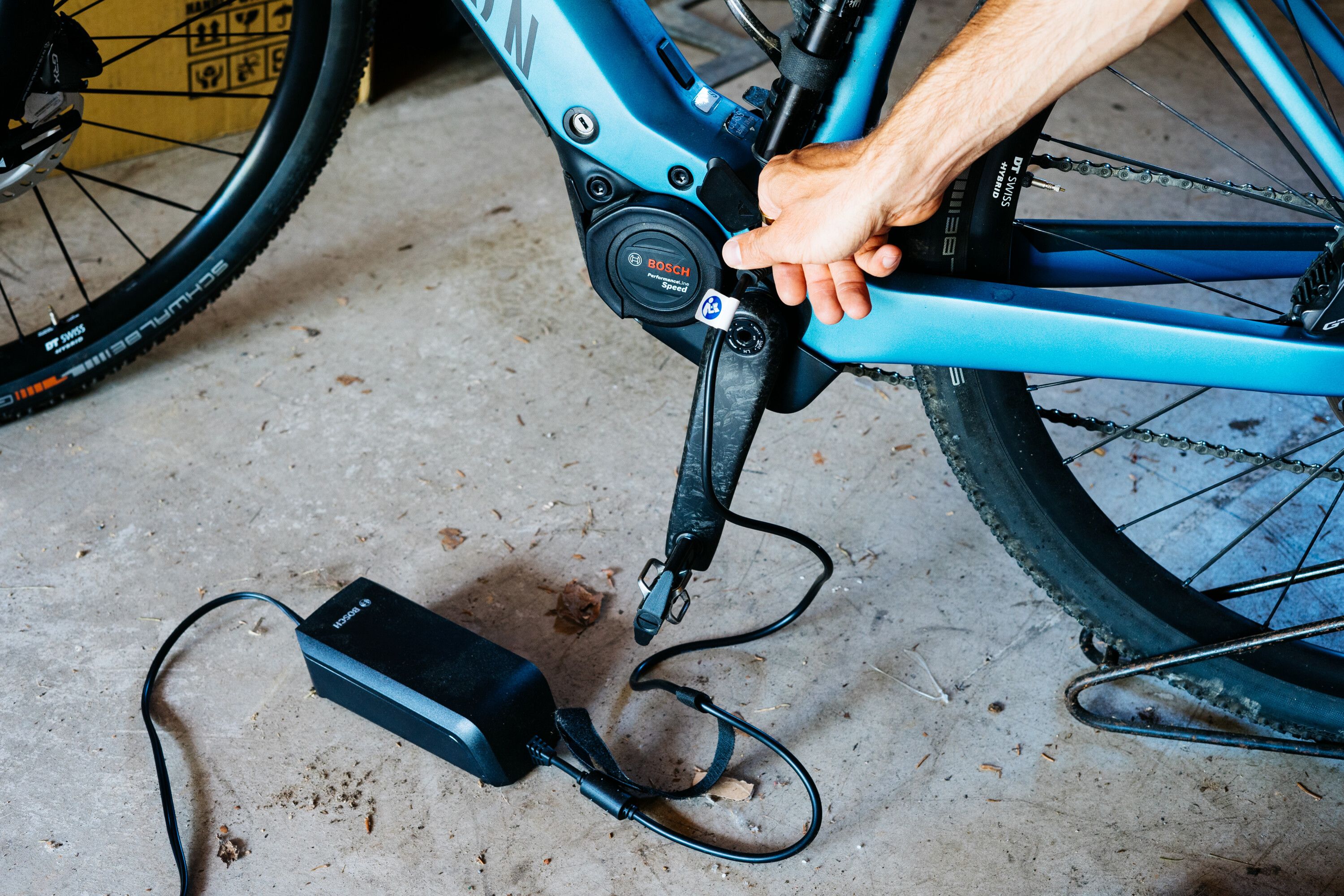
Image Source: hips.hearstapps.com
Factors Affecting E-Bike Charging Speed
Several key elements play a role in determining how long it takes to charge your electric bike battery. Think of it like filling a bucket with water – the size of the bucket and the width of the hose both matter.
Battery Capacity (Ampere-hours and Watt-hours)
The most significant factor is the size of the battery itself. E-bike batteries are measured in ampere-hours (Ah) and watt-hours (Wh).
- Ampere-hours (Ah): This measures the battery’s capacity in terms of current over time. A higher Ah rating means the battery can supply more current for a longer period, leading to a longer range.
- Watt-hours (Wh): This is a more comprehensive measure, combining voltage (V) and ampere-hours (Ah) (Wh = V x Ah). Watt-hours give a clearer picture of the total energy stored in the battery. A larger Wh capacity means more energy, and therefore, typically a longer riding range and longer charging time.
Example: A 500Wh battery will generally take longer to charge than a 300Wh battery, assuming all other factors are equal.
Charger Output (Amps)
The charger’s output, measured in amps (A), directly impacts charging speed. A higher amperage charger can deliver more power to the battery, thus reducing electric bicycle charging speed to fully charge.
- Standard Chargers: Most e-bikes come with a charger that outputs around 2 amps (A). These are designed to be safe for the battery and often take 4-6 hours for a full charge.
- Fast Chargers: Some manufacturers offer optional faster chargers, often with outputs of 3A or even 4A. These can significantly reduce how long to charge e-bike battery by 1-2 hours. However, it’s crucial to ensure your battery is designed to handle faster charging to avoid premature wear or damage.
Battery State of Charge
The starting point matters. If your battery is completely depleted (0%), it will naturally take longer to charge than if it’s at 50% or 80%. Most charging cycles are less about going from 0% to 100% and more about topping up from a partially used state.
Battery Age and Health
As batteries age, their ability to hold a charge can diminish. An older battery might take slightly less time to reach its (now reduced) maximum capacity, but its overall performance will be compromised. Proper charging habits and avoiding extreme temperatures can help maintain e-bike battery lifespan.
Temperature
Battery charging is sensitive to temperature.
- Cold Temperatures: Charging in very cold conditions can slow down the charging process and potentially damage the battery if charged below freezing (0°C or 32°F).
- Hot Temperatures: Similarly, charging in very hot conditions can also slow charging and stress the battery. It’s best to charge your e-bike in a moderate temperature range, typically between 10°C and 25°C (50°F and 77°F).
E-bike Charger Compatibility
Ensuring your charger is compatible with your e-bike battery is paramount. Using the wrong charger can lead to inefficient charging, damage to the battery, or even a fire hazard. Always use the charger provided by the manufacturer or a certified replacement that matches the battery’s voltage and connector type. This is a critical aspect of e-bike charger compatibility.
Typical Charging Times for Electric Bikes
Let’s break down some common scenarios based on battery size and charger output. These are e-bike charge time estimates and can vary slightly.
Standard Charging (2A Charger)
| Battery Capacity (Wh) | Typical Charge Time (Hours) | Notes |
|---|---|---|
| 300Wh | 3 – 4 | Ideal for shorter commutes and recreational rides. |
| 400Wh | 4 – 5 | A good balance for moderate daily use. |
| 500Wh | 5 – 6 | Common for longer-range commuters and touring. |
| 600Wh | 6 – 7 | Offers extended range, often for advanced e-MTBs or cargo bikes. |
| 700Wh+ | 7 – 8+ | For extreme range needs; less common but available on some models. |
Fast Charging (e.g., 4A Charger)
Using a faster charger can shave off significant time.
| Battery Capacity (Wh) | Typical Charge Time with 4A Charger (Hours) | Notes |
|---|---|---|
| 300Wh | 1.5 – 2 | Quick top-up for a short ride. |
| 400Wh | 2 – 3 | Significantly faster turnaround. |
| 500Wh | 3 – 4 | A substantial time saving for daily riders. |
| 600Wh | 3.5 – 4.5 | Efficient charging for longer-range batteries. |
| 700Wh+ | 4.5 – 5.5+ | Even with faster chargers, larger batteries still require more time. |
Important Note: Many e-bike batteries have internal Battery Management Systems (BMS) that regulate charging speed. Even with a higher amperage charger, the BMS might limit the charging rate to protect the battery, especially as it gets closer to full. This means the last 10-20% of charging often takes disproportionately longer than the initial charge.
How Does E-Bike Charging Compare?
It’s helpful to contextualize electric bike charging time with other forms of electric transportation.
Electric Scooter Charging Time
Electric scooters, with their typically smaller batteries, often charge much faster than e-bikes. A scooter with a 300-500Wh battery might charge fully in 2-4 hours using its standard charger. This is generally quicker than an e-bike with a similar capacity due to fewer cells and simpler power management.
Electric Motorcycle Battery Charging Time
Electric motorcycles, on the other hand, often have much larger batteries (akin to electric cars) and are designed for faster charging capabilities. While a standard Level 1 charger (similar to a typical e-bike charger) might take many hours, DC fast charging can significantly reduce the electric vehicle charging time for motorcycles, sometimes achieving an 80% charge in under an hour for high-performance models. This is a different league compared to e-bikes.
Electric Car Charging Time
Electric cars have the largest batteries among these examples.
- Level 1 Charging: Uses a standard household outlet and can take 8-20+ hours for a full charge, depending on battery size. This is the slowest but most accessible method.
- Level 2 Charging: Uses a dedicated 240V outlet (like for a clothes dryer) and can charge an EV in 4-10 hours, making it suitable for overnight charging.
- DC Fast Charging: Utilizes high-voltage direct current to deliver power rapidly, often charging an EV from 10% to 80% in 20-60 minutes.
The charging times for EVs highlight the scale difference; e-bike batteries are considerably smaller, hence their comparatively shorter charging durations.
Best Practices for Charging Your E-Bike Battery
To maximize your battery’s e-bike battery lifespan and ensure safe, efficient charging, follow these tips:
Charge After Every Ride (or Regularly)
It’s generally better to top up your battery after each ride, rather than letting it drain completely. Lithium-ion batteries don’t have a “memory effect,” so partial charges are fine. This also means you’re less likely to be caught with a dead battery on your next outing.
Avoid Complete Discharges
While modern e-bike batteries are robust, repeatedly draining them to 0% can put unnecessary stress on the cells and shorten their lifespan. Aim to charge when the battery indicator shows around 20-30% remaining.
Use the Correct Charger
As mentioned, e-bike charger compatibility is crucial. Always use the charger that came with your bike or a manufacturer-approved replacement. Never use a charger designed for a different type of battery or a significantly different voltage/amperage.
Charge in a Moderate Environment
Avoid charging in extreme heat or cold. Ideally, charge your battery at room temperature (around 15-25°C or 59-77°F). If your battery is very cold from riding in winter, let it warm up to room temperature before charging.
Don’t Leave it Plugged In Indefinitely
While most modern chargers have auto-shutoff features to prevent overcharging, it’s not recommended to leave the battery plugged in for weeks on end after it’s reached 100%. A good practice is to unplug it once it’s fully charged or within a few hours of it being full.
Store Properly
If you plan to store your e-bike for an extended period (e.g., over winter), charge the battery to about 50-70% and store it in a cool, dry place. Avoid storing it fully charged or completely empty. Check the charge level every few months and top it up if necessary.
Clean Battery Contacts
Occasionally, check the battery’s connection points and the bike’s charging port for dirt or debris. A gentle wipe with a dry, lint-free cloth can ensure a good connection for efficient charging.
Factors That Can Slow Down Charging
Sometimes, even with the right charger, charging can seem slow. Here are reasons why:
- Battery Health Degradation: Over time, the capacity of any rechargeable battery decreases. An older battery might reach 100% charge faster, but it will hold less energy. This isn’t necessarily a problem with the charger, but with the battery itself.
- Internal Resistance: As batteries age, their internal resistance can increase. This can lead to more energy being lost as heat during charging, potentially slowing the process.
- BMS Intervention: The Battery Management System (BMS) is a sophisticated electronic system within the battery pack. It monitors voltage, current, and temperature. If it detects any of these parameters are outside the optimal range for safe charging, it will slow down or even temporarily halt the charging process.
- Charger Malfunction: While less common, a faulty charger can also lead to slower charging. If you suspect your charger isn’t working correctly, it’s best to have it checked by a professional or replaced.
Extending Your E-Bike Battery Lifespan
Understanding e-bike battery lifespan is key to long-term enjoyment of your electric bike. Lithium-ion batteries, the most common type used in e-bikes, typically last for several hundred charge cycles. A charge cycle is one complete discharge and recharge.
- Cycles: Most e-bike batteries are rated for 500-1000 charge cycles before their capacity drops significantly (usually to around 80% of their original capacity).
- Longevity: With proper care and charging habits, a good quality e-bike battery can last anywhere from 3 to 5 years or even longer.
The charging habits discussed earlier – avoiding deep discharges, charging in moderate temperatures, and using the correct charger – are the most effective ways to preserve your battery’s health and extend its usable life.
Frequently Asked Questions (FAQ)
Can I use any charger for my e-bike?
No, it is crucial to use the charger specifically designed for your e-bike model or a manufacturer-approved replacement. Using an incompatible charger can damage the battery, the bike’s electronics, or pose a safety risk. Always check for e-bike charger compatibility.
How often should I charge my e-bike battery?
It’s generally recommended to charge your e-bike battery after most rides, or at least regularly, rather than waiting for it to be completely depleted. This keeps the battery topped up and is better for the overall health of lithium-ion batteries.
Will fast charging damage my e-bike battery?
Fast charging can potentially reduce the lifespan of a battery if it’s not designed to handle it, as it generates more heat and puts more stress on the cells. However, many modern e-bike batteries and their accompanying fast chargers are engineered to manage this. Always check your e-bike manufacturer’s recommendations regarding fast chargers.
What does it mean if my e-bike battery charges faster sometimes than others?
This can be due to several factors, including the battery’s current state of charge, its temperature, and the internal Battery Management System (BMS) regulating the charging rate for optimal health and safety.
How do I know if my e-bike battery needs replacing?
Signs that your e-bike battery might need replacing include a significant decrease in riding range, the battery not holding a charge for as long as it used to, or the battery showing visible signs of damage (swelling, leakage). A battery that repeatedly fails to charge fully or shuts down unexpectedly during a ride is also a strong indicator.
Does the voltage of my charger matter?
Yes, the voltage of the charger must match the voltage of your e-bike battery. Using a charger with the wrong voltage can cause severe damage to the battery and electronic components.
How does the “state of charge” affect charging time?
A battery that is nearly empty will take longer to charge than a battery that is only partially depleted. The last 10-20% of a charge typically takes longer than the initial 80% because the charging rate is often reduced to protect the battery cells as they reach full capacity.
By understanding these nuances, you can ensure your electric bike is always ready for your next adventure, and its valuable battery component lasts for many rides to come.