
Choosing the right bike light is crucial for your safety and the safety of others on the road. But how many lumens do you actually need? For general visibility and riding in well-lit urban areas, a front bike light with at least 100-300 lumens is a good starting point. For serious night riding on unlit roads or trails, you’ll want to aim much higher, often 800 lumens or more for your headlight.
This guide will help you decipher the world of bike light lumens and ensure you have the best illumination for every riding scenario. We’ll cover everything from the basics of lumens to specific recommendations for different types of cycling.
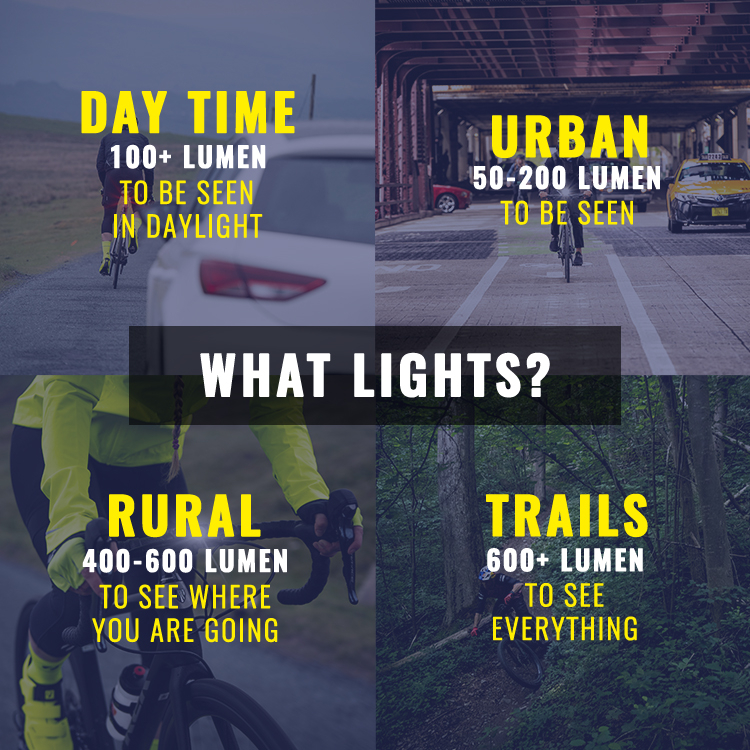
Image Source: www.cyclesuk.com
Deciphering Bike Light Brightness: What Are Lumens?
Lumens measure the total amount of visible light emitted by a light source. Think of it like the “brightness” of the bulb. The higher the lumen number, the brighter the light. It’s important to know that lumens measure the output of the light, not how it’s directed. This is why a well-designed light with a focused beam can appear brighter than a less focused light with the same lumen output.
Why Lumens Matter for Cycling Safety
When you’re cycling, especially in low-light conditions, your bike lights serve two primary purposes:
- Visibility to Others: This is the most critical aspect. Your lights need to be bright enough for drivers, pedestrians, and other cyclists to see you from a distance. This helps prevent collisions.
- Illumination of the Path: If you’re riding on unlit roads or trails at night, your light needs to be bright enough to clearly illuminate the path ahead, allowing you to avoid obstacles like potholes, debris, or uneven terrain.
Lumens Needed for Cycling: A Breakdown by Scenario
The “how many lumens for bike light” question doesn’t have a single answer. The ideal lumen output depends heavily on where and when you ride.
Minimum Lumens Bike Safety: The Bare Essentials
Even during the day, cycling with a light can significantly increase your visibility. For daytime visibility, a front light in the 80-150 lumen range is often sufficient to catch the eye of motorists. A flashing mode can further enhance this. For rear lights, the brightness can be slightly lower, but a strong flash is key.
What Lumen Level for Bike Visibility?
For general visibility, especially during dawn, dusk, or overcast conditions, aim for a front light in the 200-400 lumen range. This level of brightness is usually enough to make you stand out to other road users without being blinding.
How Many Lumens for Urban Cycling?
Urban environments often have ambient street lighting. Therefore, the primary goal of your bike light is to make you more visible than the surrounding lights.
- Front Light: For urban cycling, a front light between 300-600 lumens is typically adequate. This provides a good balance between visibility and battery life. A light with a good beam pattern that illuminates the road ahead without dazzling oncoming traffic is ideal.
- Rear Light: A rear light with 50-100 lumens in a strong flashing pattern is excellent for urban visibility.
Lumen Recommendations for Night Riding: Illuminating Your Path
Night riding requires more powerful lights to see and be seen.
- Front Light (Low Beam/Commuting): If you’re riding on well-lit streets at night but want to be extra visible, 400-800 lumens is a good range.
- Front Light (High Beam/Unlit Roads): For riding on unlit roads or in areas with very little ambient light, you’ll need a more powerful setup.
- 800-1500 Lumens: This is a good starting point for general night riding on paved, unlit roads. It provides enough light to see a reasonable distance ahead.
- 1500-2500+ Lumens: For serious night riding, gravel paths, or technical trails, higher outputs are recommended. This allows you to see obstacles at a greater distance and at speed.
Mountain Bike Light Lumens: Conquering the Trails
Mountain biking at night presents unique challenges. You need to see the trail in detail, spot obstacles, and navigate technical terrain.
- Primary Headlight: For mountain biking, a powerful headlight is essential. 1000-2000 lumens is a common recommendation for a primary headlight to illuminate the trail effectively. Many experienced night riders opt for 1500-3000 lumens or even more.
- Helmet Light (Secondary): A secondary light mounted on your helmet is highly beneficial. This light follows your gaze, helping you to see around corners and into dips in the trail. A helmet light in the 500-1000 lumen range is usually sufficient.
- Combined Output: The best approach for mountain biking at night is often a combination of a powerful handlebar light and a helmet light. This provides excellent illumination and redundancy.
Best Lumen Output for Road Biking: Balancing Speed and Safety
Road cyclists often ride at higher speeds and may encounter vehicles approaching from behind or the side. Visibility is paramount.
- Front Light: For road biking, especially on roads with traffic, a front light in the 400-800 lumen range is a good baseline for visibility. If you often ride on unlit roads or at higher speeds, consider 800-1200 lumens. The beam pattern is crucial here to avoid blinding other road users.
- Rear Light: A bright rear light is non-negotiable for road cyclists. 100-200 lumens in a powerful, attention-grabbing flash mode is ideal. Some riders even use two rear lights for maximum impact.
How Bright Should Headlights Be?
The answer to “how bright should headlights be” for cycling depends on the context.
- Daytime Visibility: For being seen by others during the day, 100-300 lumens is sufficient, especially with a flashing mode.
- Urban Night Riding: 300-600 lumens is typically enough for urban roads with streetlights.
- Unlit Roads & Trails: 800 lumens and above, up to 2000+ lumens for technical terrain, is recommended for illuminating your path effectively.
Bicycle Lighting Lumens Guide: Putting It All Together
Here’s a summary table to help you choose the right lumen output:
| Riding Scenario | Front Light Lumens | Rear Light Lumens | Notes |
|---|---|---|---|
| Daytime Visibility | 80-150 | 50-100 | Focus on flashing modes for maximum attention. |
| Dusk/Dawn/Overcast | 200-400 | 50-100 | Increase visibility in lower light conditions. |
| Urban Cycling (Lit Roads) | 300-600 | 50-100 | Stand out from ambient street lighting. Good beam pattern is important. |
| Unlit Roads (Commuting) | 400-800 | 100-200 | Provide some illumination and excellent visibility. |
| Night Riding (Paved) | 800-1500 | 100-200 | Essential for seeing the road and being seen by approaching traffic. |
| Mountain Biking (Trails) | 1000-2000+ | 100-200 | Powerful light needed to navigate technical terrain. Consider helmet light. |
| High-Speed Road Riding | 800-1200 | 100-200 | Ensure you can see far ahead and are highly visible to vehicles. |
Beyond Lumens: Other Important Factors
While lumens are a primary measure of brightness, they aren’t the only factor to consider.
Beam Pattern
A light’s beam pattern determines how the light is distributed.
- Spot Beam: Concentrates light into a narrow, long-range beam. Good for seeing far ahead on unlit roads or trails.
- Flood Beam: Spreads light over a wide area. Useful for illuminating your immediate surroundings, especially off-road.
- Hybrid Beam: Combines elements of both spot and flood, offering a balance for general riding.
For urban cycling, a beam pattern that illuminates the road ahead without glaring into the eyes of oncoming pedestrians or drivers is crucial. Many modern lights feature cut-off lines in their beam patterns to prevent upward glare.
Runtime
How long does the light last on its brightest setting? For longer rides, especially at night, a long runtime is essential. Many lights offer different modes (e.g., eco, medium, high, strobe) that affect runtime. Check the manufacturer’s specifications for realistic runtime estimates in each mode.
Battery Type and Charging
Most modern bike lights use rechargeable lithium-ion batteries. USB rechargeable lights are very convenient. Consider whether the battery is integrated or replaceable.
Durability and Waterproofing
Your bike lights need to withstand the elements and occasional bumps. Look for lights with good build quality and a water-resistance rating (e.g., IPX4 or higher) to handle rain and splashes.
Mounting System
A secure and versatile mounting system is important. Some lights come with universal mounts, while others have specific mounts for handlebars or helmets.
FAQs About Bike Light Lumens
Here are some common questions about bike light brightness:
Q: Can I use a flashlight as a bike light?
A: While a powerful flashlight might seem bright, it’s usually not ideal. Flashlights typically have a wide, unfocused beam that can scatter light inefficiently and dazzle oncoming traffic without providing good illumination of the road ahead. Dedicated bike lights are designed with specific beam patterns and mounting systems for safety and effectiveness.
Q: Are lumens the only thing that matters for bike lights?
A: No. While lumens indicate brightness, beam pattern, runtime, battery life, and durability are also very important. A well-designed light with a good beam pattern at 500 lumens can be more effective than a poorly designed light at 1000 lumens.
Q: How many lumens does a rear bike light need?
A: For rear visibility, a rear light typically needs 50-200 lumens, with a strong flashing pattern being more important than sheer continuous brightness. The goal is to be seen by traffic from behind, especially in daylight.
Q: Is it possible to have too many lumens?
A: Yes, it is possible. Using an extremely bright light (e.g., 2000+ lumens) in an urban environment with streetlights can be overkill and may even be illegal in some areas due to its potential to blind other road users. It also drains the battery much faster. Always consider the environment you’re riding in.
Q: How do I know if my bike light is bright enough?
A: If you’re riding on unlit roads at night and can clearly see potholes, debris, and the road surface for at least 20-30 feet ahead, your headlight is likely bright enough for illumination. For visibility, if you feel confident that drivers and pedestrians can easily spot you from a good distance, even in daylight, your lights are serving their purpose.
Q: What is the difference between lumens and lux?
A: Lumens measure the total amount of light emitted by a source. Lux measures the amount of light that falls on a specific area at a specific distance from the light source. So, while lumens tell you how bright the bulb is, lux tells you how well that light illuminates the path ahead. A focused beam will have a higher lux reading at a distance than a scattered beam with the same lumen output.
Choosing the right bike light lumens is an important step in ensuring your safety on the road or trail. By considering your riding environment and the specific needs for visibility and illumination, you can make an informed decision that will help you ride with confidence, day or night. Remember to always check local regulations regarding bicycle lighting to ensure compliance.