
For many people, the answer to “how many miles should I bike a day?” depends on their specific goals, current fitness level, and overall health. For general fitness, even a short ride of 5-10 miles can offer significant cycling health benefits mileage. If weight loss is the primary objective, longer distances and higher intensity are generally more effective.
Cycling is a fantastic way to boost your fitness and shed unwanted pounds. It’s a low-impact exercise that can be adapted to almost any fitness level, making it an excellent choice for those looking to move away from a sedentary lifestyle cycling. But the big question on many people’s minds is: how much cycling is enough? The answer isn’t a simple one-size-fits-all number. It’s a journey that depends on you. This guide will help you decipher the optimal daily biking mileage for your personal health and weight loss aspirations.
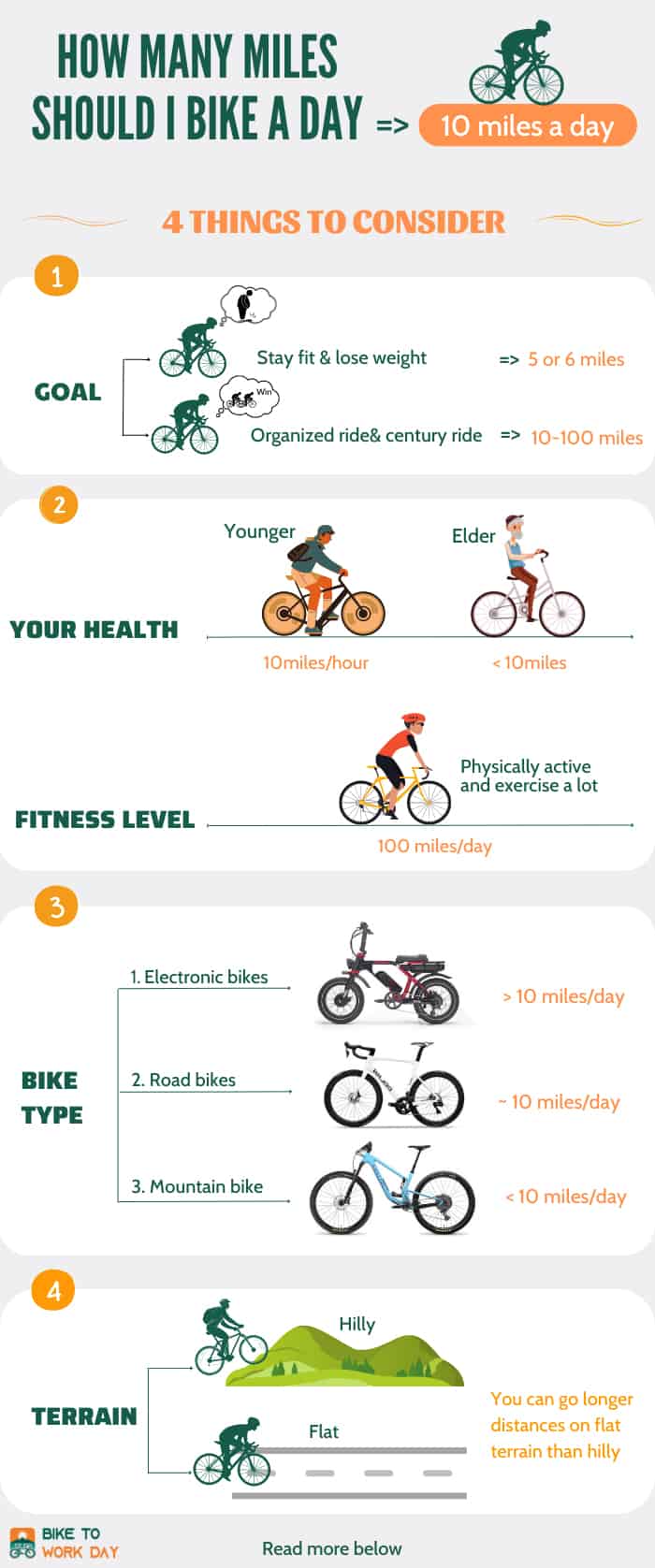
Image Source: biketoworkday.us
Setting Your Cycling Fitness Goals
Before you even think about hitting the road or trail, it’s crucial to define what you want to achieve. Are you aiming for a general improvement in cardiovascular health? Do you want to increase your strength and stamina? Or is weight loss your main driver? Your cycling fitness goals will dictate your training plan, including your daily biking mileage.
Why Define Your Goals?
- Motivation: Having clear goals keeps you motivated. Knowing why you’re riding helps you push through tough days.
- Direction: Goals provide a roadmap. They help you determine the right intensity, duration, and frequency of your rides.
- Progression: Goals allow you to track your progress. Seeing how far you’ve come is incredibly rewarding.
- Safety: Setting realistic goals prevents overtraining and potential injury.
The Beginner’s Guide to Daily Biking Mileage
If you’re new to cycling, starting with a high daily biking mileage can be daunting and counterproductive. The key is to start slow and build up gradually. This approach helps your body adapt and reduces the risk of injury.
What is a Good Beginner Cycling Distance?
For absolute beginners, the average cycling distance might be as little as 3-5 miles. The focus at this stage is on getting comfortable on the bike, learning proper pedaling technique, and building a base level of endurance.
Starting Your Cycling Journey
- Frequency: Aim to ride 2-3 times a week.
- Duration: Keep your rides between 20-30 minutes.
- Intensity: Ride at a comfortable pace where you can still hold a conversation.
- Focus: Get used to the feeling of riding. Enjoy the scenery!
As you gain confidence and your body adapts, you can slowly increase your daily biking mileage by a mile or two each week. Listen to your body. If you feel pain, rest.
Sample Beginner Progression
| Week | Days per Week | Average Distance (Miles) | Duration (Minutes) |
|---|---|---|---|
| 1 | 2-3 | 3-5 | 20-30 |
| 2 | 2-3 | 4-6 | 25-35 |
| 3 | 3 | 5-7 | 30-40 |
| 4 | 3 | 6-8 | 35-45 |
This gradual increase ensures you’re not shocking your system and allows for consistent improvement. The goal is to make cycling a sustainable habit.
Cycling for Weight Loss: How Many Miles to Ride?
Weight loss is a common goal for many cyclists. While cycling itself burns calories, the amount of weight you lose is influenced by your daily biking mileage, intensity, diet, and metabolism.
The Calorie Burn Equation
To lose one pound of fat, you need to create a deficit of approximately 3,500 calories. Cycling is an efficient way to burn calories. The number of calories burned depends on:
- Your Weight: Heavier individuals burn more calories.
- Cycling Speed/Intensity: Faster and more intense cycling burns more calories.
- Terrain: Riding uphill burns more calories than riding on flat ground.
- Duration: Longer rides burn more calories.
Estimating Calories Burned Cycling
| Activity | Calories Burned per Hour (155 lb person) | Calories Burned per Hour (185 lb person) |
|---|---|---|
| Leisurely (10 mph) | 300-400 | 350-500 |
| Moderate (12-14 mph) | 500-700 | 600-800 |
| Vigorous (15-17 mph) | 700-900 | 850-1100 |
To achieve significant weight loss through cycling, you’ll likely need to incorporate longer rides and/or higher intensity intervals. For cycling for weight loss mileage, aiming for at least 15-20 miles per ride, 3-5 times a week, is a good starting point for many.
Achieving a Calorie Deficit
Let’s say you aim to burn an extra 500 calories per day through cycling. To do this, you might need to cycle for:
- 1 hour at a moderate pace (12-14 mph): Burns roughly 600-800 calories. This would achieve your goal and contribute to a calorie deficit. A ride of this duration might cover 12-14 miles.
- 1.5 hours at a leisurely pace (10 mph): Burns roughly 450-600 calories. This also helps create a deficit. This ride would cover about 15 miles.
Remember, diet plays a huge role. Combining a healthy diet with your daily biking mileage is the most effective strategy for weight loss.
Building Endurance: Long Distance Cycling Strategy
For those looking to tackle longer rides, such as centuries (100 miles) or multi-day tours, a more structured approach to endurance cycling training is necessary. This involves progressively increasing your daily biking mileage and incorporating longer rides into your weekly schedule.
Progressive Overload for Endurance
The principle of progressive overload applies here: gradually increasing the demands on your body to stimulate adaptation.
Key Components of Endurance Training
- Base Mileage: This forms the foundation of your training. It involves consistent riding at a moderate intensity for extended periods.
- Long Rides: Gradually increase the distance of one ride per week. This teaches your body to sustain effort for longer durations.
- Intensity Work: Incorporate interval training or tempo rides to improve your speed and efficiency.
- Recovery: Adequate rest is crucial for muscle repair and adaptation. Don’t underestimate the power of rest days.
What is the Average Cycling Distance for Endurance?
The average cycling distance for someone training for endurance events will vary greatly. However, many endurance cyclists will regularly ride 30-50 miles, with their weekly long ride extending to 60, 80, or even over 100 miles as they progress.
Sample Endurance Training Progression (Monthly)
| Month | Weekly Long Ride (Miles) | Other Rides (Miles) | Frequency (Rides/Week) |
|---|---|---|---|
| 1 | 20-30 | 10-15 per ride | 3-4 |
| 2 | 30-40 | 15-20 per ride | 3-4 |
| 3 | 40-50 | 20-25 per ride | 4 |
| 4 | 50-60 (or more) | 25-30 per ride | 4-5 |
This is a simplified example. A proper long distance cycling strategy would involve periodization, where training intensity and volume are varied throughout the year.
Optimizing Your Daily Biking Mileage
Finding the “sweet spot” for your daily biking mileage involves a balance of consistency, intensity, and recovery.
Factors Influencing Your Optimal Mileage
- Age: Younger individuals often recover faster and can handle higher mileage than older adults.
- Health Conditions: Any pre-existing health issues might necessitate a more conservative approach. Consult your doctor before starting or significantly increasing your cycling.
- Time Availability: Be realistic about how much time you can dedicate to cycling each day or week.
- Bike Type: A road bike is designed for speed and distance, while a mountain bike is better suited for off-road trails. Your bike choice can influence your average cycling distance.
- Environment: Riding in hilly terrain will require more effort and potentially cover fewer miles in the same amount of time compared to flat terrain.
The Importance of Consistency
Riding a moderate distance consistently is generally more beneficial than sporadic, very long rides. Aim for a recommended bike ride length that you can comfortably maintain several times a week.
Tips for Consistent Riding
- Schedule it: Treat your rides like important appointments.
- Find a Buddy: Riding with others can increase motivation and accountability.
- Vary Your Routes: Keep things interesting by exploring new places.
- Invest in Gear: Comfortable cycling shorts, gloves, and a well-fitting helmet can make a big difference.
Deciphering Cycling Health Benefits Mileage
Beyond weight loss and endurance, cycling offers a wealth of cycling health benefits mileage. Regular cycling can improve your heart health, strengthen your legs and core, and boost your mood.
Cardiovascular Health
Cycling is an excellent aerobic exercise. Consistent riding can:
- Lower Blood Pressure: Regular cycling can help reduce hypertension.
- Improve Cholesterol Levels: It can help increase HDL (good cholesterol) and decrease LDL (bad cholesterol).
- Strengthen the Heart: A stronger heart pumps blood more efficiently, reducing the risk of heart disease.
Even shorter rides, say 10-15 miles at a moderate pace, contribute significantly to these benefits. The key is consistency.
Muscular Strength and Endurance
Cycling primarily works your:
- Quadriceps: The large muscles at the front of your thighs.
- Hamstrings: The muscles at the back of your thighs.
- Glutes: Your buttock muscles.
- Calves: Muscles in your lower legs.
- Core: Your abdominal and back muscles are engaged to stabilize your body.
A recommended bike ride length of 30-60 minutes, 3-4 times a week, is sufficient to build and maintain strength in these muscle groups.
Mental Well-being
The benefits extend beyond the physical:
- Stress Reduction: The rhythmic motion and outdoor environment can be incredibly therapeutic.
- Improved Mood: Cycling releases endorphins, natural mood boosters.
- Cognitive Function: Studies suggest that regular aerobic exercise can improve memory and cognitive abilities.
The cycling health benefits mileage aren’t solely about the distance covered, but also about the act of engaging in the activity regularly.
Can I Bike Every Day?
Yes, you can bike every day, but it depends on the intensity and duration of your rides, as well as your body’s ability to recover. For beginners, daily high-mileage riding is not recommended. It’s crucial to allow your muscles time to repair and rebuild.
Active Recovery vs. Rest Days
- Active Recovery: On days where you don’t do a hard workout, a very light spin (e.g., 5-10 miles at a very easy pace) can be beneficial. This helps blood flow to muscles and can aid recovery.
- Rest Days: Crucial for preventing burnout and injury. Listen to your body. If you feel fatigued or sore, a complete rest day is in order.
For most people aiming for fitness and weight loss, cycling 3-5 days a week with a mix of moderate and longer rides, plus active recovery or rest days, is an effective approach. If you are committed to endurance cycling training, you might ride daily, but you’ll need to vary the intensity significantly.
What is the Average Cycling Distance for a Commuter?
Commuters typically ride shorter distances, focusing on transportation rather than exercise. The average cycling distance for a commuter might range from 2 to 15 miles each way, depending on their work location and preferred route. While not always strenuous, daily commuting provides consistent activity that combats a sedentary lifestyle cycling.
Frequently Asked Questions (FAQ)
Q1: Is cycling for an hour a day enough for weight loss?
A: Cycling for an hour a day can definitely contribute to weight loss, especially if you maintain a moderate to high intensity. If you’re looking to lose a significant amount of weight, pairing this with a healthy diet is essential. For a 155 lb person, an hour of cycling at 12-14 mph burns around 600-800 calories. This can create a substantial calorie deficit over time.
Q2: How many miles should I bike a day if I want to build muscle?
A: Cycling primarily builds muscular endurance rather than bulk muscle mass. While it strengthens your leg muscles, it’s not the most efficient way to build significant muscle. For muscle building, strength training exercises like squats and lunges are more effective. However, incorporating hill climbs or interval training into your daily biking mileage can help increase muscle strength and power.
Q3: I have a sedentary lifestyle. What’s a good starting daily biking mileage?
A: If you’re transitioning from a sedentary lifestyle cycling, start very gently. A beginner cycling distance of 3-5 miles, 2-3 times a week, is a great starting point. Focus on enjoying the ride and getting comfortable on the bike. Gradually increase the distance by 1-2 miles each week as you feel stronger. The goal is consistency, not immediate high mileage.
Q4: Can cycling too much be bad?
A: Yes, cycling too much, especially without adequate rest and nutrition, can be detrimental. Overtraining can lead to fatigue, increased risk of injury (like stress fractures or overuse injuries), hormonal imbalances, and burnout. It’s important to listen to your body and incorporate rest days or active recovery into your routine.
Q5: What is a good recommended bike ride length for general fitness?
A: For general fitness, a recommended bike ride length of 30-60 minutes, 3-4 times a week, is a good target. This duration allows you to get a solid cardiovascular workout without overexerting yourself. The daily biking mileage will depend on your speed, but this typically falls in the 10-20 mile range for most riders.
Q6: How does terrain affect my daily biking mileage?
A: Terrain significantly impacts the distance you can cover. Riding on flat, paved roads is generally easier and allows for higher speeds and greater daily biking mileage. Uphill cycling requires more effort, burns more calories, and will naturally result in lower mileage within the same timeframe. Rougher terrain, like mountain biking trails, also requires more energy and can reduce your average speed and distance.
Q7: What are the cycling health benefits mileage for less than 10 miles a day?
A: Even riding less than 10 miles a day can provide substantial cycling health benefits mileage. Short rides of 5-10 miles, done consistently several times a week, can improve cardiovascular health, strengthen leg muscles, aid in weight management, reduce stress, and improve overall mood. The key is regularity.
Q8: How do I plan a long distance cycling strategy?
A: A long distance cycling strategy involves gradual progression. Start by building a solid base of regular riding. Then, progressively increase the length of one ride per week. Incorporate different types of rides, such as tempo efforts and interval training, to improve speed and efficiency. Proper nutrition, hydration, and recovery are paramount for successful endurance cycling training.
By carefully considering your goals and listening to your body, you can determine the optimal daily biking mileage to achieve your fitness and weight loss aspirations. Happy riding!