
So, how many miles should you cycle a day? For most beginners and casual riders, aiming for 10-20 miles (16-32 km) is a great starting point. However, the ideal daily cycling mileage varies greatly depending on your fitness level, goals, type of riding, and even the terrain. For seasoned cyclists with long distance cycling goals, or those undertaking a touring trip, daily mileage can be significantly higher, ranging from 50-100 miles (80-160 km) or even more.
Deciding how far to cycle daily isn’t a one-size-fits-all answer. It’s a journey of progression, listening to your body, and setting realistic goals. Whether you’re looking to improve your fitness, embark on a multi-day cycling adventure, or simply find out your average biking distance per day, this guide will help you chart your course.
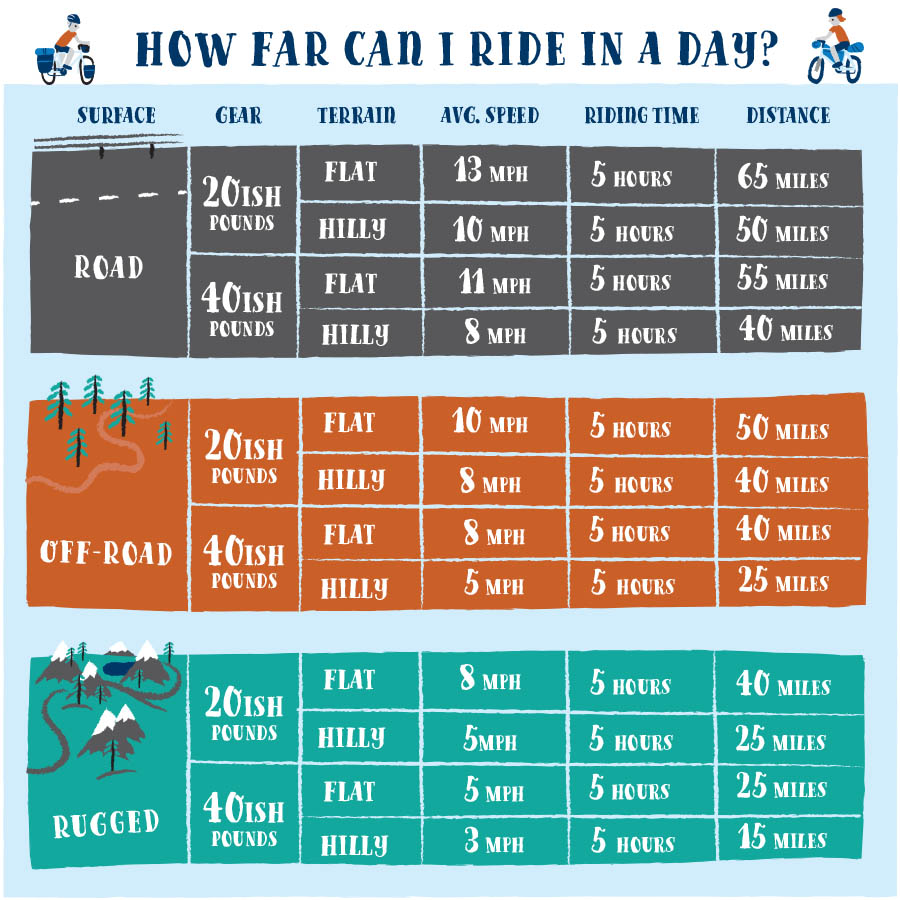
Image Source: www.adventurecycling.org
Setting Your Daily Cycling Mileage Compass
Your personal cycling journey dictates your daily mileage. Are you cycling for leisure, fitness, or a grand adventure? Each of these pursuits will have a different impact on how many miles you can comfortably and effectively bike a day.
Fitness Cycling Distance
If your primary goal is to boost your physical fitness, your recommended daily bike distance will likely start smaller and gradually increase. Fitness cycling focuses on building cardiovascular health, strength, and stamina.
- Beginners: Start with 5-10 miles (8-16 km) a few times a week. Focus on maintaining a consistent pace and form.
- Intermediate Riders: As your fitness improves, you can gradually increase your daily cycling mileage to 15-25 miles (24-40 km). Incorporate some varied terrain or intervals.
- Advanced Riders: For those focused on significant fitness gains, 30-50 miles (48-80 km) or more per day can be beneficial, especially if you’re training for events.
Endurance Cycling Mileage
Endurance cycling is about building the capacity to ride for extended periods and covering greater distances. This often involves longer rides that build up your stamina and mental fortitude.
- Building Base Endurance: Start by consistently hitting the 20-30 mile (32-48 km) mark regularly. This helps your body adapt to longer efforts.
- Developing Stamina: Once you’re comfortable, aim to extend your rides to 40-60 miles (64-96 km) once a week or every other week. This is where you truly start building endurance cycling mileage.
- Pushing Limits: For serious endurance cyclists, daily mileage can easily reach 70-100 miles (112-160 km) or even surpass that, especially during training camps or long-distance events.
Daily Mileage for Touring
Cycling tours involve carrying gear and navigating different environments, which significantly influences how far you can travel each day. The focus here is on sustainable progress and enjoying the journey.
- Light Touring: For a relaxed tour with minimal luggage, 30-50 miles (48-80 km) per day is very achievable and allows ample time for sightseeing.
- Standard Touring: With moderate luggage, 40-70 miles (64-112 km) is a common daily mileage for touring cyclists. This balances distance with the need to manage your energy and the bike’s load.
- Fast Touring/Credit Card Touring: If you’re traveling light and have fewer stops, you might comfortably cover 60-100+ miles (96-160+ km) per day.
Training Mileage Cycling
If you’re training for a specific event, such as a century ride (100 miles) or a multi-day race, your training mileage cycling will be structured to prepare your body for the demands. This often involves varying your mileage throughout the week and season.
- Base Training: Early in your training, focus on building consistent volume with shorter, more frequent rides. Your daily mileage might be in the 20-40 mile (32-64 km) range.
- Build Phase: As the event approaches, you’ll increase your long ride distance and overall weekly mileage. This could mean hitting 50-80 miles (80-128 km) on your longest rides.
- Peak and Taper: In the weeks leading up to the event, you’ll typically hit your highest training mileage cycling, followed by a taper where you reduce volume to allow your body to recover and be ready for race day.
Factors Influencing Your Daily Cycling Mileage
Several elements play a crucial role in determining your average biking distance per day and how far to cycle daily. Recognizing these will help you set achievable targets and avoid overexertion.
Your Current Fitness Level
This is perhaps the most significant factor. Someone who rides regularly will naturally be able to cover more miles than someone just starting out.
- Assessing Your Fitness: Before setting a mileage goal, consider your recent activity. How many miles have you been comfortably riding per week?
- Gradual Progression: If you’re new to cycling, don’t jump into 50-mile rides. Start with what feels manageable and gradually increase your distance by no more than 10-15% per week.
Terrain and Elevation Gain
Riding on flat, smooth roads is vastly different from tackling rolling hills or steep mountain climbs.
- Flat Terrain: You’ll cover more miles with less effort. Expect higher daily mileage here.
- Hilly Terrain: Each hill requires more energy. Your average biking distance per day will likely be lower, but you’ll still get a great workout. The added elevation gain is a significant factor.
- Off-Road: Trail riding often involves slower speeds due to technical sections and varied surfaces, meaning lower daily mileage compared to road cycling.
Bike Type and Condition
The type of bicycle you ride and its maintenance status can affect your efficiency and comfort.
- Road Bikes: Designed for speed and efficiency on pavement, allowing for higher daily mileage.
- Hybrid Bikes: A good all-rounder, suitable for moderate distances on varied surfaces.
- Touring Bikes: Built for comfort and carrying loads, they can handle long distances but might be slower than road bikes.
- Mountain Bikes: Best suited for off-road, they are less efficient on pavement, leading to lower daily mileage for road-focused rides.
- Bike Maintenance: Properly inflated tires, a well-lubricated chain, and good brakes contribute to smoother, more efficient riding, enabling you to cover more miles.
Weather Conditions
The elements can be a friend or foe to your cycling efforts.
- Tailwinds: Can significantly boost your speed and distance.
- Headwinds: Will slow you down considerably and require more effort to maintain speed, reducing your potential daily mileage.
- Rain and Cold: Can make riding uncomfortable and potentially dangerous, often leading to shorter, more cautious rides.
- Heat: Dehydration and heat exhaustion are serious risks. Riding in hot weather requires more frequent breaks, more fluids, and often shorter distances to stay safe.
Your Goals and Objectives
As discussed earlier, your purpose for riding dictates your recommended daily bike distance.
- Commuting: Daily mileage is usually dictated by your route to work.
- Recreation: You might choose shorter, more scenic routes for enjoyment.
- Training: This is where structured increases in daily cycling mileage are most common.
Time Available
Simply put, the more time you have, the more miles you can potentially cover.
- Daily Commute: Limited by your work schedule.
- Weekend Rides: You might have several hours, allowing for longer excursions.
- Touring: Days are often structured around covering a certain distance before sunset or reaching a planned stop.
How to Increase Daily Bike Distance Safely and Effectively
Want to boost your daily cycling mileage? It’s a process that requires patience, consistency, and smart training. Here’s how to increase your daily bike distance without burning out.
1. Start with a Solid Base
- Consistency is Key: Ride regularly, even if the distances are short. This builds your aerobic capacity and muscle memory.
- Establish a Baseline: Figure out what distance you can comfortably ride right now without feeling completely exhausted. This is your starting point.
2. Gradual Progression
- The 10% Rule: A widely accepted guideline is to increase your total weekly mileage by no more than 10% each week. This applies to your longest ride as well.
- Example: If your longest ride currently is 30 miles, aim for 33 miles next week. Don’t jump to 50 miles overnight.
3. Incorporate Longer Rides Periodically
- The “Long Ride” Strategy: Designate one ride per week as your “long ride.” Gradually extend this ride over time.
- Listen to Your Body: If a long ride feels too taxing, shorten it or take an extra rest day. Pushing too hard too soon can lead to injury or burnout.
4. Fuel and Hydrate Properly
- Before the Ride: Eat a balanced meal a few hours beforehand.
- During the Ride: For rides longer than an hour, you’ll need to consume calories (energy bars, gels, fruit) and fluids regularly. Aim for water or electrolyte drinks.
- After the Ride: Replenish your energy stores with a mix of carbohydrates and protein within 30-60 minutes.
5. Invest in Comfortable Gear
- Padded Shorts: A good pair of cycling shorts with a chamois can make a huge difference in comfort on longer rides.
- Proper Saddle: Ensure your saddle is adjusted correctly for your anatomy. If it’s causing discomfort, consider trying different saddles.
- Handlebar Position: Experiment with handlebar height and position to find a comfortable riding posture that reduces strain on your back and arms.
6. Practice Pacing
- Avoid Going Too Hard, Too Soon: On longer rides, it’s tempting to start fast. Instead, aim for a steady, sustainable pace that you can maintain for the duration.
- Use a Heart Rate Monitor or Power Meter: These tools can help you stay within specific training zones, ensuring you’re training effectively without overexerting yourself.
7. Rest and Recovery
- Rest Days are Crucial: Your body builds muscle and adapts during rest. Don’t skip your rest days!
- Active Recovery: Light activities like walking or gentle stretching can aid recovery.
- Sleep: Aim for 7-9 hours of quality sleep per night, as this is when most of your physical repair happens.
8. Mental Preparation
- Break Down Long Rides: Mentally divide a long ride into smaller segments. Focus on reaching the next landmark or town rather than the entire distance.
- Stay Positive: Cycling long distances is as much a mental game as a physical one. Positive self-talk and focusing on the enjoyment of riding can help.
Tracking Your Progress and Setting Realistic Goals
To effectively manage your daily cycling mileage and progress, tracking is essential. This helps you see how far you’ve come and adjust your training plan.
Why Track Your Rides?
- Monitoring Progress: See how your average biking distance per day changes over time.
- Identifying Patterns: Notice what factors (weather, terrain, nutrition) affect your performance.
- Motivation: Looking back at past rides can be a great motivator.
- Goal Setting: Provides data to inform your future goals.
Tools for Tracking
- Cycling Computers: Devices like Garmin, Wahoo, or CatEye can record speed, distance, time, cadence, and heart rate.
- Smartphone Apps: Strava, Ride with GPS, Komoot, and MapMyRide are popular choices that use GPS to track your rides and often have social features.
- Pen and Paper: A simple logbook can be effective if you prefer a low-tech approach. Record date, distance, time, and how you felt.
Setting Your Recommended Daily Bike Distance Goal
When setting your goal for how far to cycle daily, consider:
- Your “Why”: Are you training for an event, improving health, or touring?
- Your Current Capacity: Be honest about your present fitness.
- Time Commitment: How much time can you realistically dedicate to cycling each day or week?
- Incremental Steps: Break down larger goals into smaller, achievable milestones. For example, if your goal is a 100-mile ride, aim to consistently ride 50 miles first.
Common Daily Mileage Scenarios
Let’s look at some typical daily mileage targets for different types of cyclists. These are averages and can be adjusted based on the factors we’ve discussed.
| Rider Type | Typical Daily Mileage (Miles) | Typical Daily Mileage (Kilometers) | Key Considerations |
|---|---|---|---|
| Beginner/Casual | 5-15 | 8-24 | Focus on comfort, consistency, and enjoyment. |
| Fitness Cyclist | 15-30 | 24-48 | Building endurance and cardiovascular health. |
| Enthusiast/Club Rider | 30-50 | 48-80 | Pushing for longer distances, group rides. |
| Touring Cyclist | 40-70 | 64-112 | Carrying gear, varied terrain, sightseeing. |
| Endurance Cyclist | 50-100+ | 80-160+ | Focused training for long-distance events. |
| Commuter | Varies greatly (1-20) | Varies greatly (2-32) | Determined by route to work/errands. |
These numbers are flexible. A beginner might have a day where they feel great and push to 20 miles, while an experienced rider might opt for a short 15-mile recovery ride.
Frequently Asked Questions (FAQ)
Q1: Is it bad to cycle the same distance every day?
No, it’s not inherently bad, especially if you’re a beginner or your goal is consistent fitness. However, to continue progressing and improving your endurance, you’ll want to gradually increase your daily cycling mileage or vary your intensity and duration. Consistency is more important than always pushing for maximum distance.
Q2: Can I cycle 100 miles a day?
Yes, many cyclists can cycle 100 miles a day, but it requires significant training and conditioning. For most people, this is a long-distance cycling goal that takes time to build up to. Factors like fitness level, terrain, bike, and preparation play a huge role. If you’re not used to long rides, attempting 100 miles without preparation can be uncomfortable and potentially harmful.
Q3: How much should I increase my daily mileage?
As a general rule, aim to increase your weekly mileage by no more than 10% each week. This applies to your longest ride of the week as well. This gradual approach allows your body to adapt and reduces the risk of overuse injuries.
Q4: What’s a good recovery ride distance?
A recovery ride is typically shorter and at a much lower intensity than your main training rides. For most cyclists, a recovery ride might be anywhere from 5 to 20 miles (8 to 32 km) at an easy pace. The goal is to promote blood flow and aid muscle repair without causing further fatigue.
Q5: How do I train for long distance cycling goals?
To train for long-distance cycling goals, you need to progressively increase your mileage and endurance. This involves:
* Building a consistent base of regular riding.
* Gradually increasing the length of your longest ride each week.
* Incorporating interval training to improve speed and efficiency.
* Focusing on proper nutrition and hydration for longer efforts.
* Prioritizing rest and recovery to allow your body to adapt.
* Strength training can also be beneficial for supporting your muscles and preventing injury.
Q6: What is the average biking distance per day for a touring cyclist?
The average biking distance per day for a touring cyclist can range from 40 to 70 miles (64 to 112 km). However, this varies greatly depending on the cyclist’s experience, the amount of luggage they are carrying, the terrain, and the desired pace of the tour. Some touring cyclists aim for higher daily mileage, while others prefer to cover less ground to enjoy the scenery and cultural experiences.
By carefully considering these guidelines and listening to your body, you can find the right daily cycling mileage for your fitness, your goals, and your adventures on two wheels. Happy riding!