
So, how much does it cost to charge an e-bike? The answer is surprisingly little! For most people, charging an e-bike costs just a few cents per charge. This article will help you figure out your e-bike electricity cost, understand your electric bicycle charging expenses, and calculate the cost per charge e-bike. We’ll look at the e-bike battery charging price and the average cost to charge electric bike. We’ll also explore e-bike electricity consumption and electricity cost for e-bike. You can also learn about charging an e-bike budget and e-bike power usage cost, and answer the question, “how much electricity does an e-bike use?”
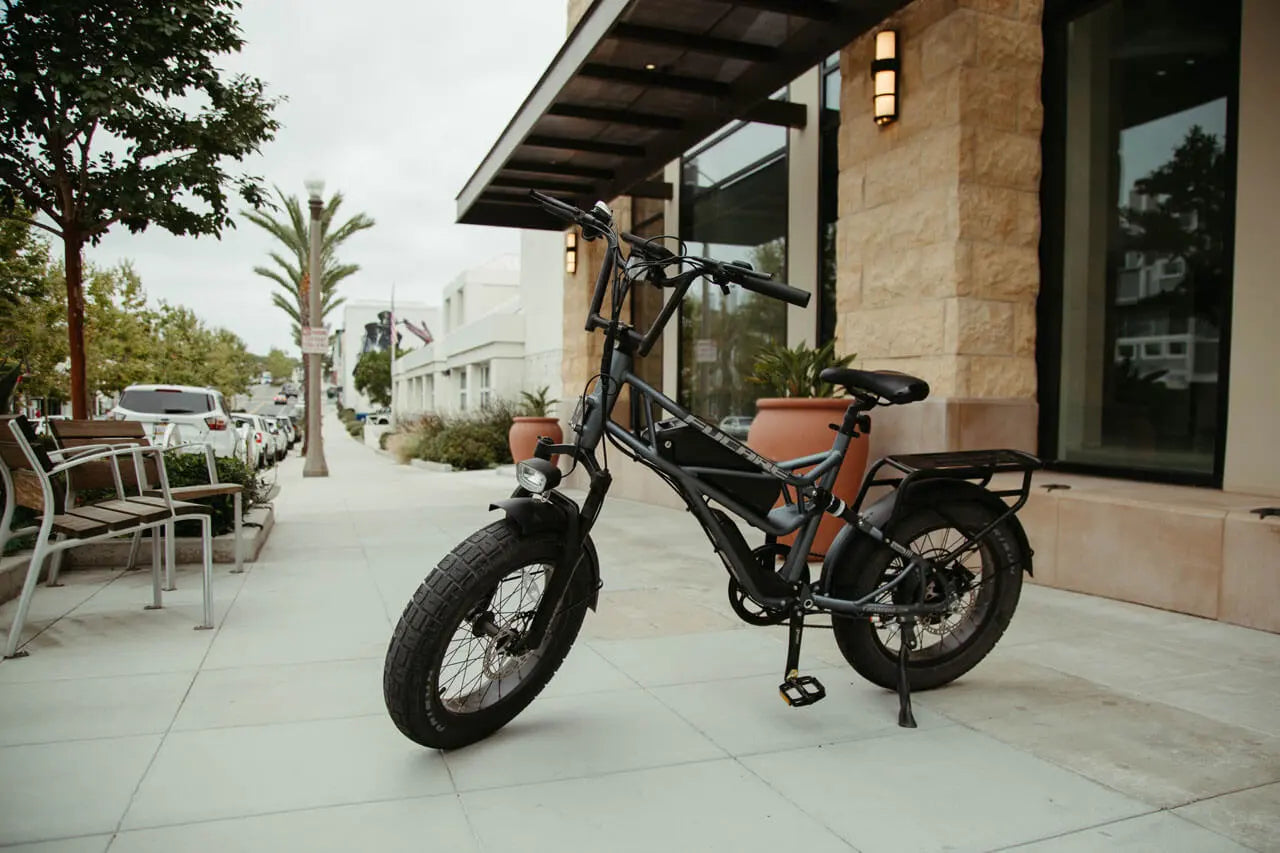
Image Source: fucarebike.com
Fathoming Your E-Bike’s Energy Needs
Electric bicycles, or e-bikes, have become incredibly popular. They offer a fun, eco-friendly way to get around. Many people wonder about the cost of keeping them powered up. The good news is that charging an e-bike is very inexpensive. You won’t see a big jump in your electricity bill.
How Much Electricity Does An E-Bike Use?
E-bikes use very little electricity. Think about it this way: you use a lot more power to run a refrigerator or a television for a whole day than an e-bike uses to get fully charged.
- Battery Size Matters: The amount of electricity an e-bike uses depends mainly on its battery size. Batteries are measured in watt-hours (Wh) or amp-hours (Ah) and voltage (V). The bigger the battery, the more power it can store and the more it costs to charge.
- Efficiency of the Motor: E-bikes have motors that help you pedal. Different motors have different levels of efficiency. A more efficient motor will use less electricity to travel the same distance.
- Riding Style: How you ride your e-bike also affects its electricity use. Riding uphill often, using the highest assist levels, or carrying heavy loads will use more battery power than riding on flat ground with less assist.
Deciphering E-Bike Electricity Consumption
To figure out how much electricity your e-bike uses, we need to look at its battery capacity. A typical e-bike battery might range from 250 Wh to 750 Wh or even more.
Let’s break down how to estimate this:
1. Find Your Battery’s Watt-Hours (Wh):
If your battery is labeled with Amp-hours (Ah) and Voltage (V), you can calculate Watt-hours (Wh) using this simple formula:
Watt-hours (Wh) = Amp-hours (Ah) × Voltage (V)
- Example: If your battery is 10 Ah and 36V, then:
10 Ah × 36V = 360 Wh
2. Convert Watt-hours to Kilowatt-hours (kWh):
Your electricity bill is usually measured in kilowatt-hours (kWh). There are 1000 Wh in 1 kWh.
kWh = Wh / 1000
- Continuing the example:
360 Wh / 1000 = 0.36 kWh
This means a full charge of a 360 Wh battery uses 0.36 kWh of electricity.
Calculating the Cost: E-Bike Electricity Cost
Now, let’s connect the electricity used to the cost. The cost depends on your local electricity rates. Electricity prices vary significantly by region and utility provider.
The Formula for Cost:
Cost per Charge = (Battery Wh / 1000) × Cost per kWh
1. Find Your Electricity Rate (Cost per kWh):
Look at your electricity bill. You should find a rate for electricity, often shown as dollars per kilowatt-hour ($/kWh). For example, let’s say your electricity costs $0.15 per kWh.
2. Calculate the Cost Per Charge:
Using our previous example of a 360 Wh battery (0.36 kWh) and an electricity rate of $0.15 per kWh:
Cost per Charge = 0.36 kWh × $0.15/kWh = $0.054
So, charging this e-bike battery would cost about 5.4 cents.
Let’s consider a larger battery, say 750 Wh, and a slightly higher electricity rate of $0.20 per kWh:
- Battery kWh: 750 Wh / 1000 = 0.75 kWh
- Cost per Charge: 0.75 kWh × $0.20/kWh = $0.15
In this case, a full charge would cost about 15 cents.
Interpreting Electric Bicycle Charging Expenses
As you can see, electric bicycle charging expenses are minimal. Even with a larger battery and a higher electricity rate, the cost remains very low.
Let’s look at some common e-bike battery sizes and their estimated charging costs.
Table: Estimated E-Bike Charging Costs
| Battery Size (Wh) | Typical Voltage (V) | Approx. Amp-hours (Ah) | Battery kWh | Electricity Rate ($/kWh) | Cost Per Charge ($) |
|---|---|---|---|---|---|
| 250 | 36V | 7 Ah | 0.25 | $0.15 | $0.0375 (3.75 cents) |
| 350 | 36V | 10 Ah | 0.35 | $0.15 | $0.0525 (5.25 cents) |
| 400 | 48V | 8.3 Ah | 0.40 | $0.15 | $0.06 (6 cents) |
| 500 | 48V | 10.4 Ah | 0.50 | $0.15 | $0.075 (7.5 cents) |
| 600 | 48V | 12.5 Ah | 0.60 | $0.15 | $0.09 (9 cents) |
| 750 | 52V | 14.4 Ah | 0.75 | $0.15 | $0.1125 (11.25 cents) |
| 250 | 36V | 7 Ah | 0.25 | $0.25 | $0.0625 (6.25 cents) |
| 500 | 48V | 10.4 Ah | 0.50 | $0.25 | $0.125 (12.5 cents) |
| 750 | 52V | 14.4 Ah | 0.75 | $0.25 | $0.1875 (18.75 cents) |
Note: Battery Ah figures are approximate for common voltage ranges. Actual Ah will vary.
E-Bike Power Usage Cost: A Comparison
To put the e-bike power usage cost into perspective, let’s compare it to other common household appliances.
- Hair Dryer: A typical hair dryer uses 1500-1800 watts. Charging an e-bike (around 100-300 watts for the charger) is much, much less.
- Microwave: A microwave uses about 1000-1500 watts.
- Laptop: A laptop charger uses around 50-100 watts.
- Smartphone: A smartphone charger uses about 5-15 watts.
An e-bike charger uses a modest amount of power, often less than a laptop charger, and only for a few hours. The energy consumed is very small compared to appliances that run for extended periods.
This means the electricity cost for e-bike charging is a fraction of what you might spend on other activities.
Charging an E-Bike Budget: What to Expect
When thinking about charging an e-bike budget, it’s reassuring to know that the impact is minimal. Let’s say you ride your e-bike every day and charge it fully each night.
- Scenario: You have a 500 Wh battery and your electricity rate is $0.15/kWh.
- Cost per charge: $0.075 (7.5 cents).
- Cost per week (7 days): 7 × $0.075 = $0.525 (52.5 cents).
- Cost per month (30 days): 30 × $0.075 = $2.25.
Even if you charge your e-bike every single day for a year, the total cost would only be around $27.38. This is incredibly low when you consider the benefits of e-bike riding: saving money on gas, public transport, and gym memberships.
The Cost Per Charge E-Bike Reality
The cost per charge e-bike is consistently low. This is a significant advantage of owning an electric bicycle. You get the convenience and enjoyment of powered cycling without a substantial energy expense.
E-Bike Battery Charging Price: Beyond Electricity
While the e-bike battery charging price in terms of electricity is low, it’s important to note that the upfront cost of the battery itself is a significant part of the e-bike’s total price. E-bike batteries can range from a few hundred dollars to over a thousand dollars, depending on their capacity, quality, and brand. However, these batteries are designed to last for many years and thousands of charge cycles, so the cost per charge remains low over their lifespan.
Factors Influencing Your E-Bike Electricity Cost
Several factors can subtly influence your e-bike electricity cost:
- Charger Efficiency: E-bike chargers vary in how efficiently they convert AC power from the wall to DC power for the battery. Most modern chargers are quite efficient, but older or lower-quality ones might waste a small amount of energy as heat.
- Charging Habits: Do you always charge your battery from completely empty to full? Or do you top it up frequently? While it doesn’t change the cost of a full charge, frequent topping up can mean the charger is plugged in more often, even if it’s only drawing minimal power when the battery is full.
- Time of Day Charging: In some areas with “time-of-use” electricity rates, charging your e-bike during off-peak hours (e.g., overnight) can be even cheaper.
Average Cost to Charge Electric Bike: Summing It Up
Based on typical battery sizes and electricity rates, the average cost to charge electric bike is typically between $0.05 and $0.20 per full charge. This is incredibly affordable, making e-bikes a very cost-effective mode of transportation.
Fostering Your E-Bike’s Lifespan Through Charging Practices
While the e-bike battery charging price for electricity is low, maintaining your battery’s health is crucial for its longevity. Proper charging habits can extend the life of your expensive battery.
- Avoid Extreme Temperatures: Don’t charge your battery in freezing cold or scorching hot conditions. Extreme temperatures can damage the battery cells and reduce their capacity over time.
- Use the Correct Charger: Always use the charger that came with your e-bike or a certified replacement. Using an incompatible charger can be dangerous and damage the battery.
- Don’t Leave It Plugged In Indefinitely: While most modern chargers have overcharge protection, it’s generally a good practice not to leave the battery plugged in for days on end after it’s fully charged. Unplug it once it reaches 100%.
- Storage: If you plan to store your e-bike for an extended period (e.g., winter), charge or discharge the battery to about 50-70% capacity. Store it in a cool, dry place.
- Partial Charges are Fine: Lithium-ion batteries, common in e-bikes, don’t have a “memory effect.” You don’t need to fully discharge them before recharging. Partial charges are perfectly healthy for the battery.
E-bike Electricity Cost: A Green Advantage
Not only is the e-bike electricity cost low, but charging your e-bike with electricity is also far more environmentally friendly than powering a gasoline-powered vehicle. You’re contributing to cleaner air and reducing your carbon footprint, all while enjoying a pleasant ride.
Frequently Asked Questions (FAQ)
Q1: How much does it cost to charge an e-bike battery?
A1: The cost is very low, typically ranging from $0.05 to $0.20 per full charge, depending on battery size and your local electricity rates.
Q2: How much electricity does an e-bike use?
A2: An e-bike uses a small amount of electricity, generally between 0.25 kWh and 0.75 kWh for a full charge, depending on battery capacity.
Q3: What is the cost per charge for an e-bike?
A3: The cost per charge e-bike is very minimal, often just a few cents.
Q4: Can I charge my e-bike at a public charging station, and what does it cost?
A4: Some public charging stations exist, but most e-bike riders charge at home. If you find a public station, costs can vary – some might be free, while others might charge a fee similar to EV charging.
Q5: Does charging an e-bike significantly increase my electricity bill?
A5: No, the e-bike electricity cost is so low that it will have a negligible impact on your overall electricity bill.
Q6: How long does it take to charge an e-bike battery?
A6: Charging times typically range from 3 to 7 hours for a full charge, depending on the battery’s capacity and the charger’s output.
Q7: What is the lifespan of an e-bike battery?
A7: E-bike batteries typically last between 3 to 5 years or between 500 to 1000 charge cycles, whichever comes first.
Q8: Is it better to charge my e-bike battery every night?
A8: For convenience and ensuring you always have a full charge, charging every night is generally fine. Modern chargers prevent overcharging.
In conclusion, the average cost to charge electric bike is remarkably low. When you consider the convenience, health benefits, and environmental advantages of owning an e-bike, the minimal e-bike electricity cost makes it an incredibly smart and economical choice for transportation.