
What is the weight of the Riverside 500 Hybrid Bike 700c? The weight of the Riverside 500 Hybrid Bike 700c typically falls within the range of 13-15 kilograms (approximately 28.7-33 pounds), depending on the specific size and exact component configurations. This makes it a reasonably balanced option within the hybrid bike category, offering a good mix of sturdiness and manageable heft for everyday cycling.
Navigating the world of bicycles can sometimes feel like deciphering a secret code. With so many different types, models, and specifications, it’s easy to get lost. One crucial detail that often influences a cyclist’s decision is weight. Specifically, for those considering a versatile ride like the Riverside 500 Hybrid Bike 700c, knowing its heft is paramount. This article aims to provide a comprehensive look at the Riverside 500 hybrid bike weight, delving into what makes up its mass and how it stacks up against similar bikes.
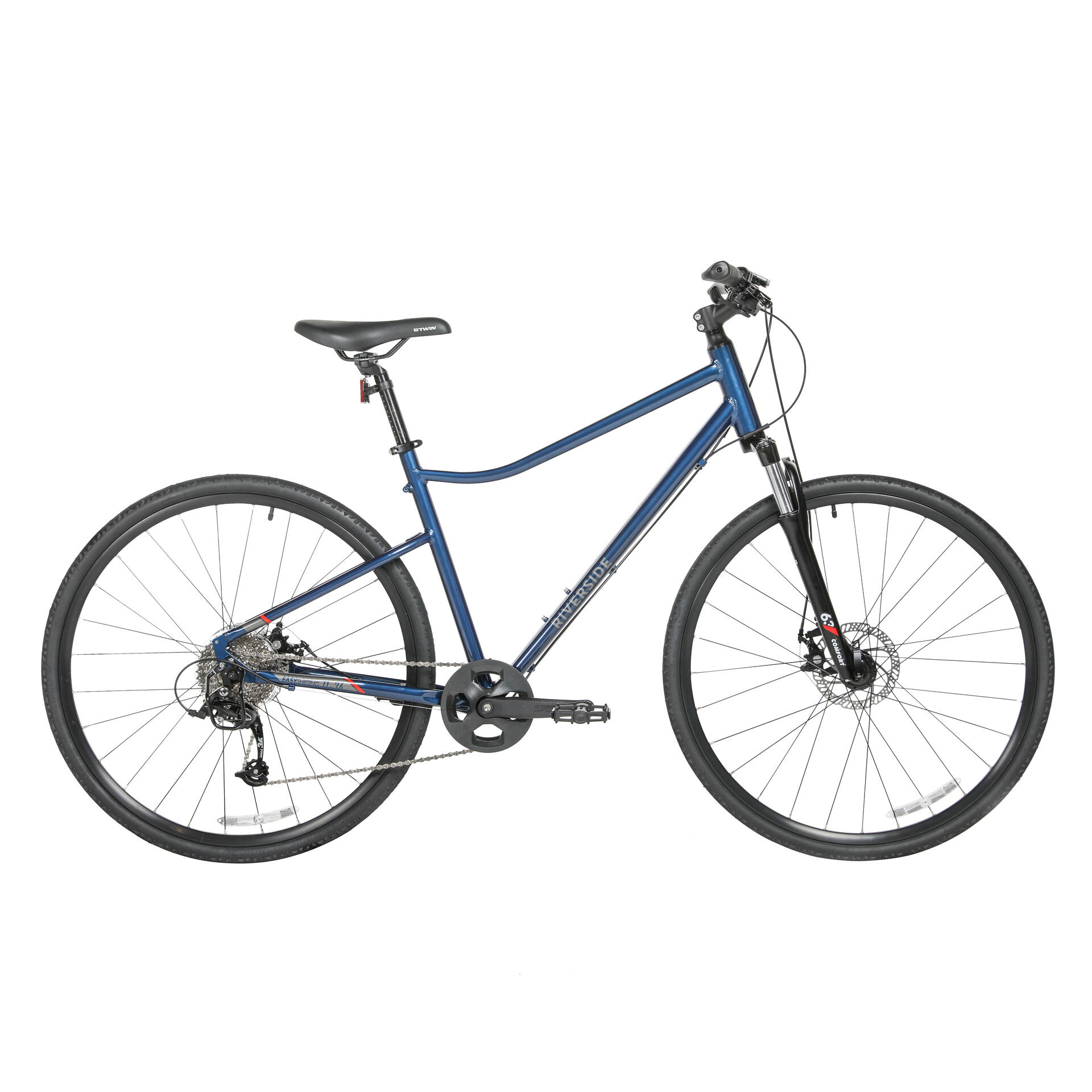
Image Source: contents.mediadecathlon.com
The Riverside 500 Hybrid Bike Weight: A Closer Look
The Riverside 500 Hybrid Bike, often associated with the Decathlon brand, is designed as a do-it-all machine. It’s built for comfort, practicality, and adaptability, making it suitable for commuting, light trail riding, and recreational cycling. The weight of this bike is a direct reflection of its intended use and the materials used in its construction.
Deciphering Riverside 500 Bike Specifications
To accurately gauge the Riverside 500 hybrid bike weight, we must first examine its core Riverside 500 bike specifications. Decathlon, the manufacturer, aims to balance performance, durability, and affordability. This often means employing materials that offer good value without compromising too heavily on weight.
The Riverside 500 bike components are key to its overall mass. These include:
- Frame Material: The backbone of any bike.
- Fork: Often made of steel or aluminum.
- Wheels: Rims, hubs, spokes, and tires.
- Drivetrain: Crankset, chainrings, cassette, derailleurs, and shifters.
- Brakes: Calipers, levers, and rotors (or rim brake pads).
- Handlebars, Stem, Seatpost, and Saddle: Contact points that add to the overall weight.
Each of these parts contributes to the final figure of the Riverside 500 hybrid bike weight.
Decathlon Riverside 500 Weight: Manufacturer Insights
Decathlon typically provides weight information on their product pages, though sometimes this can be a general estimate. When we look at the Decathlon Riverside 500 weight, we’re looking for a benchmark that helps potential buyers gauge its suitability for their needs. It’s not uncommon for manufacturers to list weights based on a medium frame size.
Factors that can cause variations in the Decathlon Riverside 500 weight include:
- Frame Size: Larger frames naturally use more material and are heavier.
- Accessory Additions: While the base bike might be a certain weight, adding racks, fenders, or a kickstand will increase it.
- Component Updates: Over time, models may receive component upgrades that subtly alter their weight.
The Riverside 500 Bike Frame Material: A Primary Contributor
The Riverside 500 bike frame material is arguably the most significant factor influencing its weight. Hybrid bikes commonly utilize aluminum or steel for their frames.
- Aluminum Alloy: This is a popular choice for hybrid bikes due to its good strength-to-weight ratio and corrosion resistance. Aluminum frames are generally lighter than steel frames, contributing to a more manageable overall bike weight. The specific grade and tubing butting (how the thickness of the tubes varies) can also impact the final weight. Decathlon often opts for 6061 aluminum or similar alloys for its durability and cost-effectiveness.
- Steel: While traditionally heavier, steel frames can offer a smoother ride and greater durability. However, for a bike like the Riverside 500, which aims for a balance, aluminum is the more likely choice to keep the Riverside 500 hybrid bike weight in a competitive range.
Understanding the Riverside 500 bike frame material helps us appreciate why it sits where it does in the weight spectrum.
Fathoming the Riverside 500 Hybrid Bike Dimensions
While weight is crucial, the Riverside 500 hybrid bike dimensions also play a role in how the bike feels and handles. The geometry of the frame, influenced by its dimensions, affects rider position and overall stability. However, dimensions themselves don’t directly contribute to weight, but they are intrinsically linked to the frame material and size, which do.
The 700c wheel size is standard for this model, offering a good balance of rolling efficiency and comfort. The larger wheel diameter contributes to smoother rides over varied surfaces, a characteristic of hybrid bikes.
Weighing Your Options: 700c Hybrid Bike Weight Comparison
To truly appreciate the Riverside 500 hybrid bike weight, it’s helpful to place it in context with other 700c hybrid bike weight comparison options. Hybrid bikes occupy a middle ground between road bikes (typically lighter) and mountain bikes (often heavier, especially full-suspension models).
Here’s a general idea of how the Riverside 500 fits in:
- Road Bikes: Can weigh as little as 7-10 kg (15-22 lbs) for performance models, or 10-12 kg (22-26 lbs) for endurance or entry-level models.
- Hybrid Bikes: As discussed, the Riverside 500 typically falls in the 13-15 kg (28.7-33 lbs) range. Other hybrids might be slightly lighter (11-13 kg) if they feature lighter components or more advanced frame materials, or slightly heavier (15-18 kg) if they are more robustly built or equipped with accessories.
- Mountain Bikes: Hardtail mountain bikes can range from 11-14 kg (24-31 lbs) for lighter, more performance-oriented models, up to 15-18 kg (33-40 lbs) or more for entry-level or trail-focused bikes. Full-suspension mountain bikes are often significantly heavier, starting around 13-14 kg and going upwards of 20 kg (44 lbs).
The Riverside 500 hybrid bike weight positions it as a solid mid-range option within the hybrid category. It’s heavier than most pure road bikes but generally lighter than many mountain bikes, making it a versatile choice for mixed-terrain use.
Examining Hybrid Bike Weight Specifications
When looking at hybrid bike weight specifications generally, several factors influence the final number:
- Frame Construction: As noted, aluminum is common, but carbon fiber is used in higher-end hybrids, significantly reducing weight but increasing cost. Steel is still found in some commuter-focused hybrids.
- Suspension: Some hybrid bikes come with front suspension forks. While this adds comfort, it also adds weight. The Riverside 500 typically features a rigid fork, which contributes to its manageable weight and often better power transfer for general riding.
- Gearing and Drivetrain: The complexity and material of the drivetrain components (number of gears, type of derailleurs) can affect weight.
- Braking System: Disc brakes, while offering superior stopping power, can sometimes be slightly heavier than rim brakes due to the added components (rotors, calipers).
- Tires: Wider, knobbier tires tend to be heavier than narrower, slicker ones.
The Riverside 500 bike components are chosen to balance these factors for its intended use.
Decathlon 700c Bike Weight: A Broader Perspective
When considering the Decathlon 700c bike weight across their range, it’s important to remember that Decathlon offers a wide variety of bikes. The Riverside series is known for its value and practicality. Other Decathlon lines, like the Triban (road-oriented) or Rockrider (mountain bike-oriented), will have different weight profiles. The Riverside 500 hybrid bike weight is representative of a well-rounded hybrid designed for everyday use rather than peak performance or extreme off-road capability.
Components Contributing to the Riverside 500 Hybrid Bike Weight
Let’s break down the typical Riverside 500 bike components and how they contribute to the overall Riverside 500 hybrid bike weight:
The Frame: The Foundation of Weight
As mentioned, the frame is the largest single component by mass. The Riverside 500 bike frame material is almost certainly an aluminum alloy. This choice allows for a frame that is robust enough for daily use, resistant to rust, and relatively light.
The Fork: Adding to the Load
The Riverside 500 typically comes with a rigid fork, often made of steel or aluminum.
- Steel Fork: Offers excellent vibration absorption and durability but is generally heavier than aluminum.
- Aluminum Fork: Lighter than steel, contributing to a lower overall bike weight.
The specific material of the fork on the Riverside 500 hybrid bike will have a noticeable impact on its Riverside 500 hybrid bike weight.
Wheels and Tires: Rolling Mass
The 700c wheels themselves, comprising rims, hubs, spokes, and tires, are a significant contributor to rotational mass.
- Rims: Typically aluminum on the Riverside 500.
- Hubs: Often aluminum, housing the bearings.
- Spokes: Usually steel, with the number of spokes affecting both strength and weight.
- Tires: The width and tread pattern of the tires will influence their weight. The Riverside 500 usually has tires suitable for a mix of pavement and light gravel, which are generally wider and more robust than road tires.
The Riverside 500 bike components in the wheelset are selected for durability and grip over absolute lightness.
Drivetrain: The Gears and Chains
The drivetrain, including the crankset, cassette, chain, derailleurs, and shifters, adds substantial weight.
- Crankset: Usually alloy.
- Cassette: Typically steel, with the number of cogs and their size influencing weight.
- Derailleurs: Often made of a mix of plastic and metal.
- Shifters: Can be trigger shifters or grip shifters, with varying materials.
The gearing range of the Riverside 500, often featuring a triple or double crankset and a wide-range cassette, is designed for versatility across various terrains, which can add slightly to the weight compared to a simpler, single-chainring setup.
Braking System: Stopping Power and Mass
The Riverside 500 commonly features V-brakes or sometimes mechanical disc brakes.
- V-Brakes: Generally lighter than mechanical disc brakes.
- Mechanical Disc Brakes: Offer better all-weather performance but add a small amount of weight due to the caliper, rotor, and cable actuation.
The choice of braking system directly affects the Riverside 500 hybrid bike weight.
Contact Points: Bars, Seat, and Post
The handlebars, stem, seatpost, and saddle, while not the heaviest components individually, all add up. These are typically made of aluminum or steel, with lighter, more expensive options being carbon fiber.
What Makes a Hybrid Bike “Lightweight”?
The term “lightweight hybrid bikes 700c” is relative. For a hybrid, a weight below 13 kg (28.7 lbs) would be considered quite light, often achieved through more advanced frame materials like carbon fiber or premium aluminum alloys, and higher-end, lighter components.
The Riverside 500, with its target price point and focus on durability and versatility, prioritizes a robust build over ultra-lightness. Therefore, its Riverside 500 hybrid bike weight of 13-15 kg is standard for its class.
Factors Differentiating Lightweight Hybrids:
- Frame Material: Carbon fiber frames are the gold standard for lightweight bikes, but they come at a significant cost. High-grade aluminum can also be used to create lighter frames.
- Componentry: Lighter wheels, tires, drivetrain parts, and contact points made from premium alloys or carbon fiber can shave off considerable weight.
- Suspension: Rigid forks are lighter than suspension forks. Bikes without any suspension will inherently be lighter.
- Simplicity: Fewer gears or simpler braking systems can sometimes lead to lighter bikes.
The Riverside 500 bike specifications are geared towards a balance that makes it accessible and practical for a wide range of users.
Optimizing the Riverside 500 Hybrid Bike Weight
While the base weight of the Riverside 500 is as it is, a cyclist can make modifications to potentially reduce its heft, though this often comes at an increased cost.
Simple Modifications for Weight Reduction:
- Tires: Switching to lighter-weight touring or commuter tires can reduce rotational mass.
- Inner Tubes: Lighter-weight inner tubes can offer a small saving.
- Saddle: Aftermarket saddles can be significantly lighter than stock ones.
- Pedals: If the bike comes with basic plastic pedals, upgrading to lighter alloy pedals can make a difference.
- Accessories: Removing unnecessary accessories like heavy water bottle cages, large saddlebags, or even fenders (if not needed) can reduce weight.
However, for most users of the Riverside 500, the focus is more on its overall utility and comfort rather than shaving off every possible gram. The Riverside 500 hybrid bike weight is a trade-off for its robust construction and affordable price point.
Frequently Asked Questions (FAQ)
Here are some common questions related to the Riverside 500 Hybrid Bike 700c weight:
Q1: Is the Riverside 500 Hybrid Bike considered heavy for a hybrid?
A1: No, the Riverside 500 hybrid bike weight of 13-15 kg is generally considered average to slightly on the lighter side for a hybrid bike that prioritizes durability and versatility. It’s not as light as a performance road bike, but it’s not as heavy as many entry-level mountain bikes.
Q2: What is the most significant factor affecting the Riverside 500’s weight?
A2: The Riverside 500 bike frame material (likely aluminum alloy) is the most significant contributor to the bike’s overall mass, followed by the wheels and drivetrain components.
Q3: Can I make the Riverside 500 lighter?
A3: Yes, you can make small reductions to the Riverside 500 hybrid bike weight by upgrading components like tires, saddle, or pedals, and by removing unnecessary accessories. However, major weight reductions would require substantial component changes that might not be cost-effective.
Q4: Does the wheel size (700c) affect the weight?
A4: The 700c wheel size itself isn’t inherently heavier or lighter than other common bike wheel sizes like 26-inch or 650b, once comparable components are used. What matters more are the rim, spokes, hub, and tire choices that make up the wheelset, and these are part of the overall Riverside 500 bike components.
Q5: Where can I find the official weight of the Riverside 500?
A5: The most accurate weight information is usually found on the official Decathlon product page for the Riverside 500 hybrid bike. Be aware that listed weights are often for a specific frame size (e.g., medium) and may not include pedals or accessories.
Conclusion
The Riverside 500 Hybrid Bike 700c weight is a key characteristic that defines its place in the cycling world. Falling within the 13-15 kg range, it strikes a commendable balance between durability, functionality, and manageable heft. This weight is a direct result of its construction, primarily its aluminum frame and carefully selected Riverside 500 bike components, designed to offer a reliable and comfortable ride for a variety of purposes.
When engaging in a 700c hybrid bike weight comparison, the Riverside 500 consistently performs well within its category, offering a practical solution for commuters, casual riders, and those looking for an all-around dependable bicycle. While not aiming to be among the ranks of lightweight hybrid bikes 700c that prioritize minimalist design and advanced materials at a higher cost, its Decathlon Riverside 500 weight is a testament to its value proposition. For anyone seeking a versatile, comfortable, and robust hybrid, the weight of the Riverside 500 is a figure that aligns perfectly with its intended role on the road and beyond.