
Can I jumpstart a motorcycle? Yes, you can jumpstart a motorcycle, provided you have the correct equipment and follow the proper safety procedures.
It’s a disheartening moment: you’re ready for a ride, you’ve got your helmet on, your favorite playlist queued, and then… nothing. The engine groans, sputters, and dies. Your motorcycle has a motorcycle dead battery. This is a common problem, especially if your bike has been sitting for a while or the battery is old. Fortunately, most of the time, a dead battery doesn’t mean you need a new one. It just means your battery needs a little help to get going again. Learning how to jumpstart a bike can save you time, money, and the frustration of a bike that won’t start.
This guide will walk you through the process of jumpstarting your motorcycle, covering everything from the tools you’ll need to the step-by-step procedure. We’ll also touch on what to do if jumpstarting doesn’t solve the problem, covering common troubleshooting motorcycle starting issues. Whether you ride a sporty cruiser or a zippy scooter, the principles are largely the same.
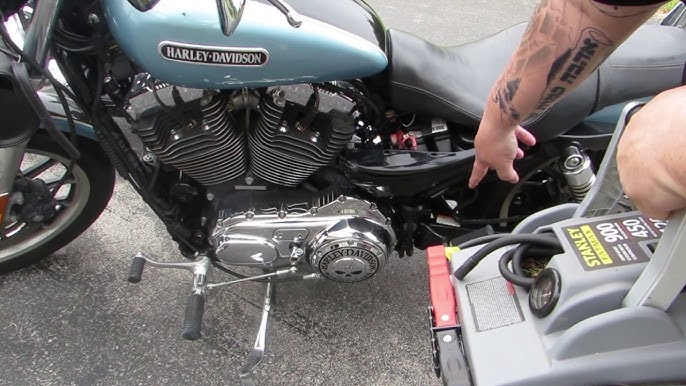
Image Source: i.ytimg.com
Why Does a Motorcycle Battery Die?
Before we dive into the “how,” let’s briefly touch on the “why.” Several factors can lead to a motorcycle dead battery:
- Age: Like all batteries, motorcycle batteries have a lifespan. As they age, their ability to hold a charge diminishes.
- Parasitic Drain: Some electrical components on your bike might continue to draw power even when the ignition is off. This is called a parasitic drain. If left unchecked, it can slowly deplete your battery.
- Infrequent Use: If your motorcycle sits for long periods without being ridden, the battery can discharge naturally. Short trips also don’t give the alternator enough time to fully recharge the battery.
- Faulty Charging System: The alternator or rectifier/regulator might not be working correctly, preventing the battery from being recharged while the engine is running.
- Extreme Temperatures: Both very hot and very cold temperatures can affect battery performance and lifespan.
- Left Lights or Accessories On: Accidentally leaving headlights, parking lights, or other accessories on overnight is a classic way to drain a battery.
What You’ll Need to Jumpstart Your Motorcycle
You can’t just use any old jumper cables. For a successful and safe jumpstart, you’ll need specific items:
Essential Equipment
- Jump Start Cables: These are specialized cables designed for jumpstarting vehicles. Look for jump start motorcycle cables specifically, as they are typically shorter and have lighter gauge wires than car jumper cables. This is important because motorcycles have smaller batteries and electrical systems. Using car cables can send too much current and damage your bike’s electronics.
- A Working Battery or Jump Pack: You need a power source to jumpstart your motorcycle. This can be:
- Another Motorcycle: This is the most straightforward option if you have a friend with a bike.
- A Car: While not ideal due to the larger battery capacity, a car can be used with extreme caution.
- A Portable Motorcycle Jump Starter: These are compact, dedicated devices designed specifically for jumpstarting motorcycles and other powersports vehicles. They are a convenient and safe option.
- Gloves and Eye Protection: Safety first! Protect your hands from potential sparks and your eyes from any battery acid.
Safety First!
- Never let the positive and negative clamps touch each other when connected to a battery. This can cause a short circuit, sparks, and damage to the batteries or the motorcycle’s electrical system.
- Ensure the donor vehicle (if using a car) is turned off before connecting the cables.
- Do not smoke or create sparks near the batteries. Batteries can release flammable hydrogen gas.
The Jumpstarting Process: Step-by-Step
The core of jumpstarting a motorcycle involves connecting a good battery to your dead one, allowing the good battery to provide the necessary power for your motorcycle starter motor to crank the engine. Here’s how to do it:
Step 1: Prepare Your Motorcycle
- Park the Donor Vehicle: If you’re using another vehicle, park it close enough so the jumper cables can reach both batteries comfortably. Ensure the vehicles are not touching. Turn off the ignition and all electrical accessories (lights, radio, etc.) of the donor vehicle.
- Locate Your Motorcycle Battery: This is usually under a seat, a side panel, or a fuel tank. Consult your owner’s manual if you’re unsure. You might need to remove a panel or seat to access it.
- Identify Battery Terminals: Once you’ve found the battery, locate the positive (+) and negative (-) terminals. They are usually marked. The positive terminal is often red or has a “+” symbol, and the negative terminal is often black or has a “-” symbol.
Step 2: Connect the Jump Start Cables
This is the most critical part. Connecting the cables in the wrong order can cause serious damage.
- Connect the Red (Positive) Cable:
- Attach one end of the red positive cable to the positive (+) terminal of the dead motorcycle battery.
- Attach the other end of the red positive cable to the positive (+) terminal of the donor battery (either the other motorcycle or the car/jump pack).
- Connect the Black (Negative) Cable:
- Attach one end of the black negative cable to the negative (-) terminal of the donor battery.
- Crucially, attach the other end of the black negative cable to an unpainted metal surface on the frame or engine block of your motorcycle, away from the battery and any moving parts. This is your ground point. Do NOT connect it directly to the negative terminal of your dead motorcycle battery. Connecting directly to the negative terminal of the dead battery can cause a spark that ignites hydrogen gas released by the battery, which is a serious safety hazard.
Table: Cable Connection Order
| Cable Color | Connects To | Donor Battery Side | Your Motorcycle Side |
|---|---|---|---|
| Red (+) | Positive (+) Terminal | Positive (+) | Positive (+) |
| Black (-) | Negative (-) Terminal | Negative (-) | Unpainted Metal Frame/Engine Block |
Step 3: Start the Donor Vehicle (If Applicable)
If you are using a car or another motorcycle as the donor, start its engine. Let it run for a few minutes to allow the dead battery to receive some charge. It’s often recommended to rev the donor vehicle’s engine slightly (to about 2000 RPM) to ensure adequate power transfer.
Step 4: Start Your Motorcycle
- Try to start your motorcycle. Turn the ignition key to the “ON” position.
- Press the starter button. If your bike has an electric start motorcycle, use that. If it has a motorcycle kick start, you’ll need to use that after the jumpstart process is initiated and the battery has received some charge.
- If it starts: Great! Let both engines run for a few minutes.
- If it doesn’t start: Wait a few more minutes with the donor vehicle running, then try again. Don’t crank for more than 5-10 seconds at a time to avoid overheating your motorcycle starter motor. If it still won’t start after a couple of tries, there might be another issue.
Step 5: Disconnect the Cables
Once your motorcycle is running, disconnect the cables in the reverse order of how you connected them. This minimizes the risk of sparks.
- Disconnect the black negative cable from your motorcycle’s frame.
- Disconnect the black negative cable from the donor battery.
- Disconnect the red positive cable from the donor battery.
- Disconnect the red positive cable from your motorcycle’s battery.
Step 6: Keep Your Motorcycle Running
After jumpstarting, it’s essential to keep your motorcycle running for at least 20-30 minutes. Ride it around, or let it idle. This allows your motorcycle’s alternator to recharge the battery sufficiently. If you shut it off too soon, it might not have enough charge to start again on its own.
Jump Starting a Scooter
The process for jump starting a scooter is very similar to that of a motorcycle. Scooters, especially those with larger engines, often have similar battery requirements.
- Accessing the Battery: Scooter batteries are often located under the seat, in a compartment accessed by removing a panel, or sometimes under the floorboard.
- Cable Connections: Follow the same red-to-red, black-to-unpainted-metal procedure as with motorcycles.
- Donor Source: You can use another scooter, a motorcycle, a car (with caution), or a jump pack.
The key is ensuring the voltage is compatible (typically 12V for most modern scooters and motorcycles) and that the jumper cables are of appropriate gauge.
What if Jumpstarting Doesn’t Work?
If your motorcycle still won’t start after a successful jumpstart, or if the battery dies again shortly after disconnecting the cables, it’s time to look into other troubleshooting motorcycle starting issues:
- The Battery Itself: The battery might be completely dead or internally damaged. If it’s old or has been deeply discharged many times, it might not hold a charge anymore. In this case, you’ll need a new motorcycle battery.
- Loose Connections: Check all battery cable connections and any other electrical connections to ensure they are clean and tight. Corrosion can prevent good contact.
- Faulty Charging System: If the battery is getting charged properly, the alternator (which generates power while the engine is running) or the rectifier/regulator (which converts AC power from the alternator to DC power and regulates voltage) might be faulty.
- Starter Motor Issues: The motorcycle starter motor itself could be failing.
- Ignition System Problems: Issues with the spark plugs, ignition coils, or the motorcycle ignition system can prevent the engine from firing even with a good battery.
- Fuel System Issues: The engine needs fuel to run. Problems with the fuel pump, fuel filter, or carburetor/fuel injectors can prevent starting.
- Kick Start Issues: If your bike relies on a motorcycle kick start, ensure the mechanism is engaging properly and not slipping.
When to Use a Motorcycle Battery Charger
If your battery is just low on charge and not completely dead, or if you want to maintain your battery’s health, using a motorcycle battery charger is a better option than frequent jumpstarts. A good quality charger designed for motorcycles will:
- Safely recharge the battery without overcharging.
- Maintain the charge if left connected, preventing future dead batteries.
- Desulfate a battery that has been deeply discharged, potentially reviving it.
Always use a charger specifically designed for the type of battery your motorcycle uses (e.g., sealed lead-acid, AGM, lithium-ion).
Frequently Asked Questions (FAQ)
Q1: Can I use car jumper cables on my motorcycle?
A: It’s generally not recommended. Car jumper cables are much heavier gauge and designed for larger batteries and higher currents. Using them on a motorcycle can potentially damage your bike’s sensitive electronics or the battery itself due to excessive current flow. Always opt for jump start motorcycle cables designed for smaller engines.
Q2: How long should I let the donor vehicle run before trying to start my motorcycle?
A: Let the donor vehicle run for about 5-10 minutes. Revving its engine slightly (to around 2000 RPM) can help transfer more power to your dead battery.
Q3: What’s the difference between jumpstarting and using a motorcycle battery charger?
A: Jumpstarting provides an immediate surge of power to get the engine running, allowing your motorcycle’s alternator to start charging the battery. A motorcycle battery charger slowly and safely recharges the battery over a longer period, ideal for maintenance or reviving a low battery without running the engine.
Q4: Why should I connect the negative cable to the frame and not the battery?
A: Connecting the final negative clamp to an unpainted metal surface on the frame creates a ground connection. This is a safety precaution to prevent sparks from igniting any flammable hydrogen gas that might be escaping from the battery, which can happen during the charging process.
Q5: My motorcycle started after a jumpstart but died again. What could be wrong?
A: This usually indicates a problem with your motorcycle’s charging system. The alternator might not be producing enough power, or the rectifier/regulator might be faulty, preventing the battery from being recharged while the engine is running. It could also mean the battery itself is no longer capable of holding a charge.
Q6: How do I know if my motorcycle battery is bad?
A: Signs include the battery being unable to hold a charge even after being charged, swelling, leaking acid, or being very old (typically 3-5 years for lead-acid batteries). If jumpstarting works but the bike dies again soon after, the battery is a prime suspect.
Q7: Is jump starting a scooter the same as a motorcycle?
A: Yes, the fundamental process and safety precautions for jump starting a scooter are virtually identical to jumpstarting a motorcycle. The main difference lies in battery location and access.
Q8: My motorcycle has a kick starter. Do I still need to jumpstart it if the battery is dead?
A: Yes, even if your motorcycle has a motorcycle kick start, the kick starter mechanism is connected to the engine to manually turn the crankshaft. However, the ignition system, fuel pump (on fuel-injected bikes), and other electronics require electrical power from the battery to function. A dead battery means no spark, no fuel delivery, and therefore, the kick starter won’t be able to start the engine.
By following these steps and safety guidelines, you can confidently jumpstart your motorcycle and get back on the road. Remember, if you’re unsure about any part of the process, it’s always best to consult your owner’s manual or a qualified mechanic. Happy riding!