
What is the best way to prevent bike theft? The most effective strategy involves using a high-quality U-lock correctly and employing multiple layers of security. Can I use a U-lock on its own? While a U-lock is a cornerstone of bike security, combining it with other locking methods and secure storage significantly boosts your bicycle security tips. Who is most at risk of bike theft? Unfortunately, anyone with a bicycle can be a target, but those who don’t properly secure their bikes are at a higher risk.
Bike theft is a frustrating reality for cyclists. Knowing how to use your U-lock security effectively is crucial for keeping your ride safe. This guide will delve into the best practices for using U-locks, choosing the right one, and layering your security to deter even the most determined anti-theft bicycle criminals.
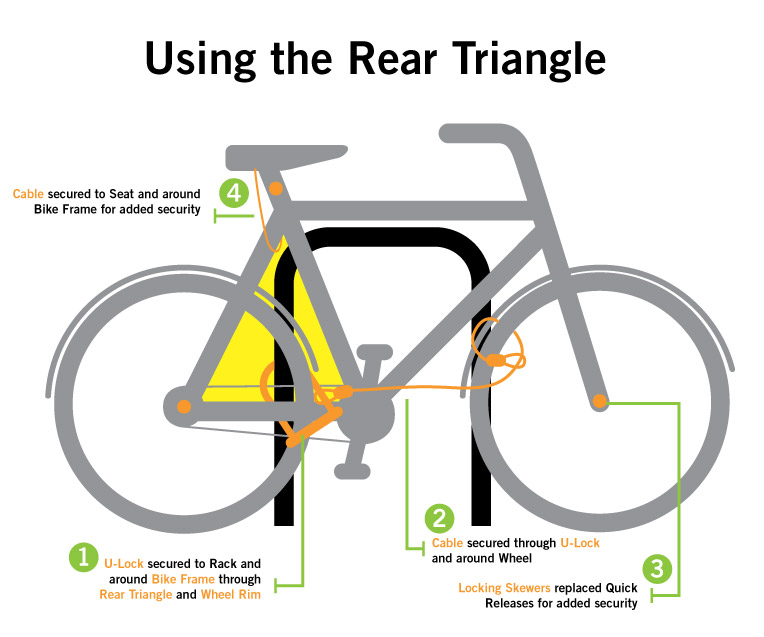
Image Source: sfbike.org
Choosing the Right U-Lock
Not all U-locks are created equal. The market offers a variety of U-lock types, each with different security ratings and features. When choosing a U-lock, consider these factors:
Material and Construction
The core of a U-lock’s strength lies in its material and how it’s made.
- Hardened Steel: This is the gold standard. Look for locks made from thick, hardened steel that can resist cutting tools like bolt cutters. The thicker the steel, generally the stronger the lock.
- Shackle Diameter: A wider shackle is harder to cut. Aim for a shackle at least 16mm thick.
- Crossbar Design: Some U-locks feature a double-locking mechanism, meaning both ends of the shackle lock into the crossbar. This adds significant U-lock security by preventing the thief from prying the shackle open.
Size and Shape
The size of your U-lock affects what you can lock it to and how.
- Internal Clearance: A smaller internal space makes it harder for thieves to get leverage with tools. However, it also limits what you can lock your bike to.
- Weight: Thicker, stronger locks tend to be heavier. This is a trade-off between security and portability.
Security Ratings
Many manufacturers provide security ratings for their locks. These can be a helpful indicator, but also do your own research.
- Manufacturer Ratings: Some brands have their own scales (e.g., 1-10).
- Independent Testing: Look for locks that have been tested and rated by independent organizations. Brands like Sold Secure (UK) and ART (Netherlands) offer recognized security standards.
Mastering the Art of Locking Your Bike Correctly
Simply owning a good U-lock isn’t enough; locking your bike correctly is paramount. This involves strategic placement and using the lock effectively to make your bike as unattractive a target as possible. Here are key bike lock best practices:
The Golden Rule: Lock to an Immovable Object
This seems obvious, but many cyclists make mistakes.
- What to Lock To:
- Sturdy, dedicated bike racks.
- Thick, solid metal poles that are securely anchored to the ground.
- Solid, immovable street furniture (ensure it’s not easily dismantled).
- What to Avoid:
- Thin poles that can be cut or bent.
- Wooden fences or benches.
- Anything that can be easily lifted or broken.
- Anything with large gaps that a thief could maneuver tools through.
Locking Technique: The Secure Fit
How you position the U-lock makes a difference.
- Minimize Gap: The goal is to make the U-lock as tight as possible around your bike frame and the immovable object.
- Lock the frame and rear wheel: This is the most common and effective method. Position the U-lock so it encircles the seat tube or down tube of your frame and the rear wheel. The rear wheel is more valuable than the front and harder to remove, making it a priority.
- Tight is Right: Aim for minimal space between the shackle and the frame/wheel. A tight fit makes it incredibly difficult for thieves to insert tools like pry bars or jacks.
- Lock Both Wheels (If Possible): If you have a large enough U-lock, or are using a second lock (highly recommended), try to secure both wheels and the frame.
- Consider Locking the Seatpost: If your seatpost is secured with a quick-release, a thief could steal your saddle and seatpost. Use a secondary cable or lock to secure these if they are valuable.
The Two-Lock Strategy: Doubling Down on Security
Relying on a single lock is a gamble. Combining a U-lock with another type of lock significantly enhances preventing bike theft.
- U-Lock + Cable Lock: Use your U-lock to secure the frame and rear wheel to an immovable object. Then, use a strong cable lock to thread through your front wheel and the U-lock’s crossbar or the immovable object itself. Cable locks are weaker than U-locks, but they deter quick grabs and opportunistic theft of easily removable parts.
- Two U-Locks: If your budget allows, using two U-locks is an excellent strategy.
- Method 1: Lock the frame and rear wheel with one U-lock. Secure the front wheel and frame to the same object with the second U-lock, ideally positioned perpendicular to the first.
- Method 2: Lock the frame and rear wheel with one U-lock. Use the second U-lock to secure the front wheel to the frame itself. This makes removing both wheels much harder.
Securing Removable Parts
Even with a robust U-lock, thieves can steal components.
- Wheels: If you have quick-release wheels, they can be removed in seconds. Consider replacing quick-release skewers with locking skewers that require a special tool.
- Seat and Seatpost: As mentioned, if you have a quick-release seat clamp, a thief can easily steal your saddle and seatpost. Invest in a locking seatpost clamp or use a secondary cable to secure them.
- Accessories: Lights, computers, and other accessories should be removed and carried with you whenever possible.
Maximizing U-Lock Security in Different Scenarios
Your locking strategy might need to adapt based on where and for how long you’re leaving your bike. These are essential bicycle security tips for various situations.
Short Stops: Minimizing Risk
Even for quick errands, proper locking is essential.
- Choose High-Visibility Areas: Lock your bike in well-lit, busy areas where people are present. Thieves prefer to work unseen.
- Use Your Best Lock: Don’t use a flimsy lock for a quick stop. Deploy your primary U-lock as if you were leaving it for hours.
- Secure Components: Quickly check that your wheels and saddle are secured if you have secondary locks or locking skewers.
Long-Term Parking: Fortifying Your Bike
When leaving your bike for extended periods (overnight, at work, etc.), your security needs to be top-notch.
- The “Fort Knox” Approach: Employ the two-lock strategy. Use a high-quality U-lock for the frame and rear wheel, and a secondary lock (another U-lock or a heavy-duty chain) for the front wheel.
- Secure Bike Storage: If available, use designated secure bike storage facilities. These often have CCTV and are monitored.
- Remove All Valuables: Take off lights, computers, bags, and anything else that can be easily removed.
Public Transport: The Commuter’s Dilemma
Commuting often means leaving your bike at a station.
- Use Designated Racks: Always use official bike racks at train or bus stations.
- Consider a Folding U-Lock: These can be more compact and easier to carry on public transport.
- Lock to the Frame and Both Wheels: If possible, use your U-lock to secure the frame and rear wheel, and a secondary lock to secure the front wheel and frame.
- Be Aware of Your Surroundings: Thieves often stake out transit hubs.
Advanced Techniques for Deterring Bike Thieves
Going the extra mile can make your bike a much less appealing target. These are advanced bike lock best practices for deterring bike thieves.
The Power of the “U” Shape
The “U” shape of the lock is inherently strong against cutting.
- Leverage Prevention: The U-shape makes it hard to get leverage for bolt cutters. Thieves often try to introduce a gap to get the cutters around the shackle.
- Minimize Gaps: As mentioned, fitting the lock tightly around your frame and an object leaves no room for leverage.
Locking in a Crowd
Sometimes, parking amongst other bikes can be a deterrent.
- The “Parking Lot” Effect: Thieves might avoid areas where there are many bikes, hoping to avoid attention. However, they might also target the most expensive-looking bike in a group.
- Avoid the Lone Bike: Never leave your bike isolated. Always try to park it near other bikes or in a visible, populated area.
The Art of Observation
Before leaving your bike, take a moment to assess.
- Assess the Area: Are there signs of previous theft? Are there cameras? Is the area well-lit?
- Look for “Bike Parking History”: Some areas are known hotspots for bike theft. If possible, research the safety of your intended parking spot.
What to Do if Your U-Lock is Compromised
If you find your U-lock being tampered with, there are steps you can take.
- Make Noise: Shout, honk a bike horn, or use a personal alarm to draw attention.
- Contact Authorities: If you witness an attempt or find your lock damaged, report it to the police and the property owner where the bike was parked.
Common Mistakes to Avoid
Even with the best intentions, cyclists can make errors that compromise their security. Here are common mistakes to avoid for optimal U-lock security:
Leaving Valuables Attached
- Mistake: Leaving lights, water bottles, bike computers, or bags attached to the bike when unattended.
- Why it’s Bad: These are easy targets for opportunistic thieves, and can even distract from the main prize (your bike).
- Solution: Always remove accessories and carry them with you.
Locking to the Wrong Object
- Mistake: Securing the bike to a flimsy signpost, a small tree, or something that can be easily cut or dismantled.
- Why it’s Bad: A weak anchor point makes the lock irrelevant.
- Solution: Reiterate the importance of locking to sturdy, immovable objects.
Not Locking the Frame
- Mistake: Only locking the wheels to a rack or to each other.
- Why it’s Bad: A thief can simply cut the U-lock, lift the wheels off the rack, and take the rest of the bike.
- Solution: Always ensure the U-lock secures the bike’s frame to the anchor point.
Using a Cheap or Damaged Lock
- Mistake: Opting for a low-cost, low-quality lock or using a lock that has visible damage.
- Why it’s Bad: Cheap locks are easily defeated, and even minor damage can compromise a lock’s structural integrity.
- Solution: Invest in a reputable brand with a good security rating. Regularly inspect your locks for any signs of wear or damage.
Relying on a Single Lock (Especially a Cable Lock)
- Mistake: Using only a cable lock or just one U-lock for extended periods.
- Why it’s Bad: Cable locks are easily cut. While U-locks are strong, a determined thief with the right tools and time can defeat even good ones.
- Solution: Employ the two-lock strategy.
Table: U-Lock vs. Other Lock Types
To further illustrate the strengths of U-locks, let’s compare them to other common bike locks.
| Lock Type | Strength | Weakness | Best Use Case |
|---|---|---|---|
| U-Lock | Excellent resistance to cutting, prying, and leverage. High U-lock security. | Can be bulky and heavy. Limited locking options due to shape. | Primary lock for frame and wheel, especially for medium to long stops. |
| Cable Lock | Flexible, lightweight, good for securing multiple items. | Easily cut with bolt cutters. Low anti-theft bicycle capability alone. | Secondary lock for front wheel or accessories. Quick, low-risk stops. |
| Chain Lock | High security if thick and hardened steel. Flexible. | Very heavy and bulky. Can be expensive. | Primary lock for high-risk areas, especially overnight. |
| Folding Lock | Compact when folded, offers good coverage. | Can have more moving parts susceptible to attack. | Good balance of security and portability. |
| Alarmed Lock | Auditory deterrent. | Batteries can die. False alarms can be triggered. | Adds an extra layer of deterrence. |
Frequently Asked Questions (FAQ)
Q1: How tight should my U-lock be?
A: Your U-lock should be as tight as possible around your bike’s frame and the object you are locking it to. The less space there is, the harder it is for a thief to insert tools.
Q2: Can I leave my bike locked up overnight?
A: Yes, but only if you use a highly secure locking system (e.g., two high-quality U-locks or a U-lock and a heavy-duty chain) and choose a very safe, well-lit location, ideally with surveillance.
Q3: What is the best U-lock brand?
A: Brands like Kryptonite, Abus, and OnGuard are highly regarded for their U-lock security and durability. Always check independent reviews and security ratings.
Q4: What do I do if my U-lock gets stuck?
A: If the lock mechanism is stuck, try gently wiggling the key while turning. If it still won’t budge, avoid forcing it aggressively, as this could damage the lock. If it’s a new lock and is truly stuck, contact the manufacturer for support. If it’s an old lock that’s seized, you might need to cut it off.
Q5: How can I secure my bike when I can’t find a proper rack?
A: Look for the sturdiest, most immovable object available – a thick, solid metal pole is usually your best bet. Avoid anything that looks flimsy or could be easily dismantled.
By following these comprehensive guidelines on how to use a U bike lock, you significantly enhance your bike’s safety and minimize the risk of theft. Remember, preventing bike theft is an ongoing effort that combines the right equipment with smart, consistent practices. Happy and safe cycling!