
What is a U-lock and how do you use it? A U-lock, also known as a D-lock, is a rigid metal shackle shaped like the letter “U” with a removable crossbar. It’s one of the most effective ways to secure your bike and prevent bike theft prevention.
Choosing the right bike lock is the first step in keeping your ride safe. For cyclists, U-lock security is paramount. This guide will walk you through everything you need to know about using a U-lock effectively, ensuring your bicycle remains secure. We’ll cover how to lock bike properly, the best U-lock for cycling, and essential bicycle security tips.
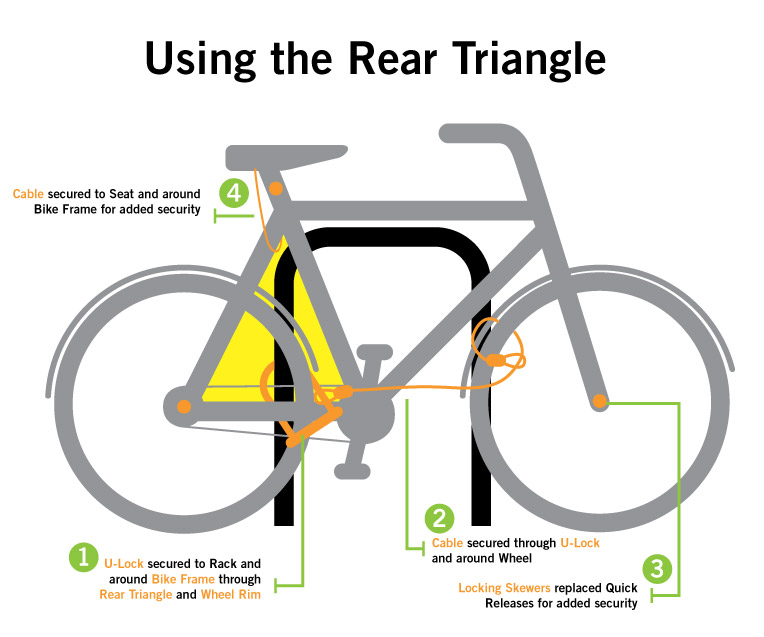
Image Source: sfbike.org
Why U-Locks are a Top Choice for Bike Security
When it comes to portable bike security, U-locks stand out. Their rigid design makes them much harder to cut through than cable locks, which can often be defeated with simple bolt cutters. The thick, hardened steel of a good U-lock offers significant resistance against various attack methods. This makes it a crucial component in your bike lock arsenal.
The Anatomy of a U-Lock
A U-lock consists of two main parts:
- The Shackle: This is the curved, U-shaped piece of hardened steel. It’s the primary barrier against cutting tools.
- The Crossbar (or Locking Mechanism): This piece connects the two ends of the shackle. It contains the locking cylinder and is usually the part that detaches.
The strength of a U-lock is often measured by its thickness, the quality of the steel, and the design of its locking mechanism.
Choosing the Best U-Lock for Cycling
Not all U-locks are created equal. When you’re choosing a bike lock, consider these factors to find the best U-lock for cycling:
- Shackle Thickness: Thicker shackles generally offer more resistance. Look for U-locks with shackles that are at least 13mm thick.
- Material Quality: Hardened steel is the standard for good U-locks. Some higher-end locks also incorporate other alloys for added strength.
- Locking Mechanism: The quality of the cylinder is vital. Disc detainer or high-security pin tumbler locks are more resistant to picking.
- Size: A smaller U-lock can be more secure as it leaves less room for leverage for thieves. However, ensure it’s large enough to lock your frame and at least one wheel to a secure object.
- Brand Reputation: Reputable brands often invest more in research and development, leading to more robust locks.
- Security Ratings: Many U-locks come with security ratings from independent organizations. Higher ratings indicate better resistance to various attack methods.
Comparing U-Lock Security Levels
| Lock Type | Security Level (General) | Vulnerability to Bolt Cutters | Vulnerability to Angle Grinders | Portability | Best Use Case |
|---|---|---|---|---|---|
| Cable Lock | Low | High | Very High | Very Portable | Low-risk areas, secondary security |
| Chain Lock | Medium | Medium | Medium | Moderately Portable | Medium-risk areas, good flexibility |
| U-Lock (Thin) | Medium-High | Low | Medium | Portable | Quick stops, low-to-medium risk areas |
| U-Lock (Thick) | High | Very Low | Low | Less Portable, often carried on bike frame | High-risk areas, extended parking |
| Folding Lock | Medium-High | Low | Medium | Very Portable | Good balance of security and portability |
Mastering the Art of Locking Your Bike Correctly
Simply owning a U-lock isn’t enough; locking your bike correctly is crucial for effective security. Improper U-lock placement can leave your bike vulnerable.
Key Principles for Effective U-Locking
- Lock to a Fixed Object: Always secure your bike to something immovable. A sturdy bike rack, a metal pole, or a solid fence post are good choices. Avoid locking to signs or small, flimsy objects that can be easily lifted or dismantled.
- Minimize Space: The less space inside the U-lock, the harder it is for a thief to attack. Try to fill the shackle as much as possible with your bike frame and the object you’re locking to.
- Lock the Frame and at Least One Wheel: The most critical part of your bike to secure is the frame, especially the rear triangle. If you have a quick-release front wheel, it’s also vulnerable. Ideally, use your U-lock to secure the frame and the rear wheel. You might need a secondary lock (like a cable or another U-lock) for the front wheel.
- Consider Vertical vs. Horizontal Locking:
- Vertical Locking: Placing the U-lock vertically through the rear wheel and frame, then locking it to a rack. This is generally less secure as it allows more room for leverage.
- Horizontal Locking: Placing the U-lock horizontally through the rear wheel, frame, and rack. This minimizes space and is generally considered more secure.
Optimal U-Lock Placement Strategies
1. The “All-in-One” Approach (Ideal Scenario):
- Objective: Secure the frame and rear wheel to a fixed object with one U-lock.
- How-To:
- Position your bike next to a sturdy, immovable object (e.g., a dedicated bike rack).
- Thread the U-lock shackle through the rear triangle of your frame.
- Pass the shackle through the rear wheel rim.
- Encircle the U-lock around the base of the bike rack.
- Connect the crossbar to the shackle, ensuring a snug fit with minimal gaps.
2. Securing the Frame and Front Wheel:
- Objective: If you can’t get the rear wheel in the primary lock, secure the frame and front wheel.
- How-To:
- Follow the same steps as above, but position the lock to capture the front wheel and frame.
- Crucial Note: Front wheels are often attached with quick-release skewers, making them easier to steal than rear wheels. If this is your primary lock, you must use a secondary lock for the rear wheel.
3. The Two-Lock Strategy (Highly Recommended):
- Objective: Maximize security by using multiple locks.
- How-To:
- Use your primary U-lock to secure the frame and rear wheel to a fixed object.
- Use a secondary lock (another U-lock or a robust cable lock) to secure the front wheel to the U-lock’s shackle or the frame itself. This prevents the front wheel from being easily removed.
Visualizing U-Lock Placement
Imagine a bike rack.
- Good: U-lock goes around the seat tube (or chainstay), through the rear wheel, and around the rack. The shackle is tight.
- Better: U-lock goes around the seat tube, through the rear wheel, and around the rack. The shackle is tight, and the lock is horizontal.
- Best: U-lock secures the frame and rear wheel to the rack. A secondary lock secures the front wheel to the frame or the U-lock.
Securing Your Bike in Various Scenarios
How to lock bike effectively depends on your environment and how long you’ll be leaving it.
Quick Stops: Coffee Shops and Corner Stores
- Risk Level: Low to Medium
- Best Practice: Use your primary U-lock. Lock the frame and rear wheel to a secure rack. A quick-release front wheel should be secured as well if possible, or by a secondary lock. Keep it brief.
Extended Parking: Work, Shopping Malls, or Evening Out
- Risk Level: Medium to High
- Best Practice: This is where a high-quality, thick U-lock becomes essential. Use the “two-lock strategy.” Secure your frame and rear wheel with your best U-lock. Use a secondary lock for the front wheel. Choose a well-lit, visible location.
Locking Your Bike at Home
- Risk Level: Varies
- Best Practice: Don’t forget home security! If you store your bike in a garage or shed, ensure those areas are secure. Consider locking your bike to a solid anchor point even indoors if it’s easily accessible from an outside door or window.
Common Mistakes to Avoid with U-Locks
Even with a great U-lock, you can make mistakes that compromise your bicycle security tips.
- Locking only the wheel: Never just lock a wheel. Wheels can be removed from the frame if not secured properly.
- Leaving too much space: A large gap within the U-lock shackle provides thieves with leverage for bolt cutters or pry bars.
- Using a weak secondary lock: If using a cable lock as a secondary, ensure it’s also of good quality. Thin, flimsy cables offer little protection.
- Locking to inappropriate objects: A U-lock is useless if the object it’s attached to can be easily cut, removed, or lifted.
- Not considering the locking mechanism’s vulnerability: Some U-locks have exposed locking cylinders that can be attacked.
- Leaving the key in the lock: This is an obvious but surprisingly common oversight.
U-Lock Accessories and Carrying Options
For portable bike security, how you carry your U-lock matters.
- Frame Mounts: Most U-locks come with a frame mount. These are convenient for carrying your lock on your bike. Ensure it’s securely attached.
- Backpack or Bag: If your lock is too bulky for a frame mount or you prefer not to carry it on your bike, a backpack or pannier bag is a good option.
- Cable Lock Wraps: Some U-locks have integrated cable lock holders or you can use a separate Velcro strap to keep a cable lock attached.
Deterring Thieves: Beyond the Lock
While a U-lock is your primary defense, other measures enhance your bike theft prevention:
- Register Your Bike: Register your bike’s serial number with local authorities or online databases. This helps in recovery if it’s stolen.
- Take Photos: Keep clear photos of your bike, including any unique features or serial numbers.
- Location, Location, Location: Always choose well-lit, high-traffic areas to park your bike. Thieves prefer to work unseen.
- Vary Your Parking Spots: Don’t always park in the same place. Thieves may monitor popular spots.
- Use a Second Lock: As mentioned, a second lock dramatically increases security.
- Quick-Release Skewers: If your bike has quick-release wheels or seatposts, consider replacing them with locking skewers that require a special tool to remove.
Frequently Asked Questions (FAQ)
Q1: Is a U-lock enough to secure my bike?
A1: A high-quality U-lock is very effective, but using it with a secondary lock (like a cable or another U-lock) offers superior security, especially in high-risk areas or for extended periods.
Q2: Can a U-lock be cut?
A2: Yes, U-locks can be cut, typically by angle grinders. However, thick, hardened steel U-locks offer significant resistance, making the process time-consuming and noisy, which deters most thieves.
Q3: How do I carry a U-lock?
A3: U-locks can be carried using frame mounts, in a backpack, or in a bike bag. Ensure it’s securely attached so it doesn’t bounce around while you’re riding.
Q4: What’s the best way to use a U-lock with a quick-release wheel?
A4: Always lock your U-lock around the frame and the wheel that has the non-quick-release axle (usually the rear). Then, use a secondary lock to secure the quick-release wheel to the frame or the primary lock.
Q5: Should I leave my U-lock on the bike when it’s parked?
A5: It’s often recommended to keep the lock with the bike. If you detach it, you might be tempted to leave it at home, which is not ideal. Many frame mounts are designed to deter quick removal by thieves.
Q6: What does “U-lock security rating” mean?
A6: U-lock security ratings are given by independent testing organizations to indicate how well a lock resists various types of attacks (cutting, picking, prying). Higher ratings mean better security.
Q7: Is it better to lock the front or rear wheel?
A7: It’s always best to lock the frame and the rear wheel, as the rear wheel is more expensive and harder for thieves to replace. If you can only secure one wheel with your main lock, make it the rear.
Conclusion: Your Bike’s Best Defense
Secure your bike with confidence by mastering the use of your U-lock. By understanding how to lock bike correctly, choosing the best U-lock for cycling, and employing smart bicycle security tips, you significantly reduce the risk of bike theft prevention. Remember, a good bike lock is an investment in your cycling freedom. Make sure your U-lock placement is always secure, and you’ll enjoy many more miles on your cherished bicycle.