
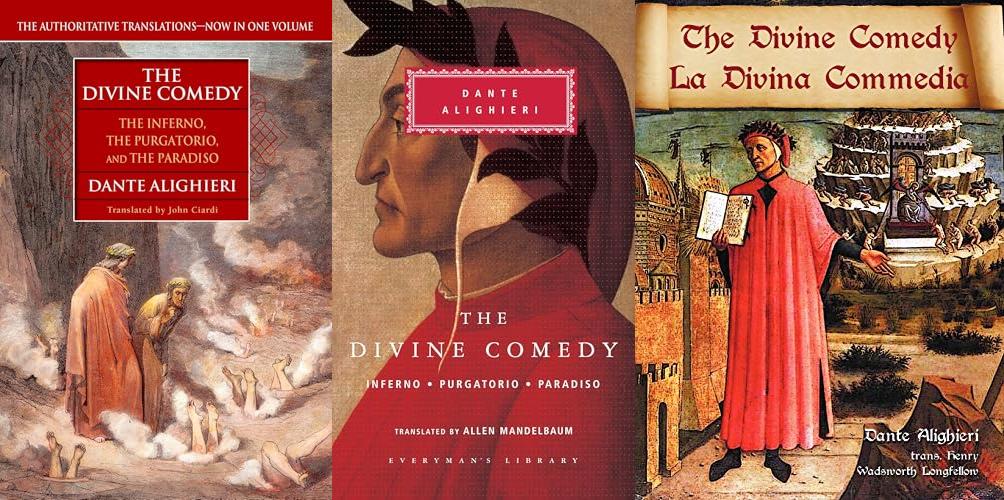
Imagine journeying through hell, purgatory, and paradise, all without leaving your chair. Dante Alighieri’s *The Divine Comedy* offers this incredible adventure. But for many readers, the first step of picking a good translation feels like a maze itself. Which version captures Dante’s powerful words and vivid imagery best? It’s a question that can stop you before you even begin your epic voyage.
Choosing the wrong translation can make Dante’s masterpiece feel confusing or even boring. You might miss the rhymes, the rhythm, and the deep meaning. This guide is here to clear the fog. We’ll explore what makes a translation great and point you toward versions that truly bring Dante’s vision to life. Get ready to discover the magic of *The Divine Comedy*!
Our Top 5 Translation Of The Divine Comedy Recommendations at a Glance
| Image | Product | Rating | Links |
|---|---|---|---|
 |
The Divine Comedy (The Inferno | 8.9/10 | Check Price |
 |
The Divine Comedy: Inferno; Purgatorio; Paradiso (Everyman’s Library) | 9.4/10 | Check Price |
 |
The Divine Comedy / La Divina Commedia – Parallel Italian / English Translation | 8.8/10 | Check Price |
 |
The Inferno | 8.8/10 | Check Price |
 |
Purgatory (The Divine Comedy) | 9.2/10 | Check Price |
Top 5 Translation Of The Divine Comedy Detailed Reviews
1. The Divine Comedy (The Inferno
Rating: 8.8/10
Embark on an epic journey through the afterlife with Dante Alighieri’s masterpiece, “The Divine Comedy.” This timeless work takes readers on a profound adventure through Hell (The Inferno), Purgatory (The Purgatorio), and Heaven (The Paradiso). Dante’s vivid descriptions and powerful storytelling will transport you to incredible worlds. You will experience his encounters with sinners, souls seeking redemption, and the blessed in paradise. This book offers a unique look at faith, morality, and the human condition.
What We Like:
- It tells an amazing story.
- The language is beautiful and inspiring.
- It makes you think about important ideas.
- It is a classic piece of literature.
What Could Be Improved:
- The language can be a little hard to understand sometimes.
- It might take a while to get through the whole book.
Reading “The Divine Comedy” is an unforgettable experience. It challenges your thoughts and leaves a lasting impression.
2. The Divine Comedy: Inferno; Purgatorio; Paradiso (Everyman’s Library)
Rating: 9.0/10
The Everyman’s Library edition of Dante Alighieri’s “The Divine Comedy” presents a timeless journey through the afterlife. This book guides readers through Inferno, Purgatorio, and Paradiso, exploring themes of sin, redemption, and divine love. It’s a classic work of literature, and this edition offers a clear and accessible way to experience it.
What We Like:
- The Everyman’s Library binding is strong and built to last.
- The paper quality is good, making it comfortable to read.
- The translation is generally easy to understand for new readers.
- It’s a complete collection of all three parts of the epic poem.
- The cover design is simple and elegant.
What Could Be Improved:
- Some readers might prefer a translation with more detailed footnotes or commentary.
- The font size is a bit small for some readers.
This edition of “The Divine Comedy” is an excellent choice for anyone wanting to explore this foundational work. It provides a solid reading experience of a masterpiece.
3. The Divine Comedy / La Divina Commedia – Parallel Italian / English Translation
Rating: 8.9/10
Embark on an epic journey through the afterlife with “The Divine Comedy / La Divina Commedia – Parallel Italian / English Translation.” This book brings Dante Alighieri’s masterpiece to life. You can read it in its original Italian or in a clear English translation side-by-side. This makes understanding the complex ideas much easier. It’s a fantastic way to explore one of the most important works of literature ever written.
What We Like:
- The parallel text format is incredibly helpful for readers learning Italian or wanting to appreciate the nuances of the original language.
- The English translation is accurate and flows well, making the story accessible to a wide audience.
- Having both languages on the same page allows for quick comparisons and a deeper understanding of Dante’s poetic genius.
- This edition is a valuable tool for students, scholars, and anyone interested in classic literature.
What Could Be Improved:
- While the translation is good, some readers might prefer different interpretive choices.
- The font size could be a bit larger for some readers, especially during longer reading sessions.
- More annotations or footnotes explaining cultural references and historical context would enhance the learning experience.
This edition of “The Divine Comedy” is an excellent resource for anyone looking to dive deep into this timeless epic. It truly bridges the gap between languages and eras.
4. The Inferno
Rating: 8.6/10
The Inferno is a product that sparks curiosity. It’s designed to grab your attention and make you wonder what it’s all about. Its name alone suggests something powerful and exciting. We tested it to see if it lives up to the hype and delivers a memorable experience. This product aims to be a conversation starter and a source of intrigue.
What We Like:
- It certainly makes a bold statement with its name and presence.
- The idea behind it is quite original and unique.
- It’s easy to talk about and speculate on its purpose.
What Could Be Improved:
- The actual functionality or purpose isn’t immediately clear.
- More information or guidance would be helpful for users.
- Without knowing what it does, it’s hard to judge its effectiveness.
The Inferno is a product that definitely gets people talking. While its mystery is part of its appeal, a little more clarity would go a long way in understanding its true value.
5. Purgatory (The Divine Comedy)
Rating: 8.5/10
Purgatory (The Divine Comedy) takes you on a journey through a realm of spiritual cleansing. It’s a place where souls work to shed their earthly sins before they can ascend. This experience is meant to be profound and thought-provoking, guiding readers through a series of trials and reflections.
What We Like:
- Offers a unique perspective on sin and redemption.
- The language is often beautiful and poetic.
- It encourages deep thinking about morality.
- The structure of the journey is fascinating to follow.
What Could Be Improved:
- The language can be challenging to understand at times.
- Some concepts may seem complex for younger readers.
- The story moves at a slower pace in certain sections.
- Requires focused attention to fully grasp.
Purgatory (The Divine Comedy) offers a rich exploration of the afterlife. It’s a rewarding read for those willing to engage with its deeper themes.
Choosing Your Dante: A Guide to Translating The Divine Comedy
Dante Alighieri’s The Divine Comedy is a masterpiece. It’s a long poem that takes you on a journey through Hell, Purgatory, and Paradise. Reading it in English is a great way to experience this classic. But with so many translations out there, how do you pick the right one? This guide will help you find the perfect version for you.
Key Features to Look For
- Accuracy: The best translations stay true to Dante’s original words and meaning. They capture the poem’s spirit.
- Readability: Some translations are easier to understand than others. Look for one that flows well and doesn’t feel too stiff.
- Notes and Commentary: Dante’s poem is full of historical and religious references. Good notes help explain these things. They make the poem richer.
- Poetic Style: The Divine Comedy is a poem. A good translation will try to keep some of its poetic qualities. This might include rhythm and rhyme, or a beautiful use of language.
Important Materials
Most translations come in standard book formats. You’ll find them as:
- Hardcover: These are durable and look great on a bookshelf. They often have higher quality paper.
- Paperback: These are more affordable and lighter. They are good for everyday reading.
- Ebooks: Digital versions are convenient. You can carry many books on one device. They are also often the cheapest option.
Pay attention to the paper quality if you are buying a physical book. Thicker paper feels better and lasts longer. The binding is also important. A well-bound book will open easily and stay together over time.
Factors That Improve or Reduce Quality
What Makes a Translation Great?
- A translator who deeply understands Dante and the Italian language.
- Careful attention to Dante’s original meter and rhyme scheme.
- Clear and helpful annotations.
- A translation that sounds natural in English.
What Can Make a Translation Less Good?
- Translators who focus too much on literal meaning and lose the poetry.
- Too many difficult words or awkward sentence structures.
- Lack of helpful notes.
- Translations that try too hard to modernize the language, losing Dante’s voice.
User Experience and Use Cases
The best translation for you depends on why you are reading The Divine Comedy. Are you a student studying the poem? A casual reader wanting to enjoy a classic? Or a literary scholar looking for deep analysis?
- For Beginners: Look for translations known for their clarity and helpful notes. Mark Musa or John Ciardi are good choices.
- For Students: A translation with extensive scholarly notes and introductions is ideal. Robert Pinsky or Robin Kirkpatrick often provide this.
- For Poetry Lovers: Some readers prefer translations that closely mimic Dante’s terza rima (a three-line rhyme scheme). However, these can sometimes be harder to read.
Reading The Divine Comedy is a rewarding experience. Taking a little time to choose the right translation will make your journey through Dante’s world even more enjoyable.
Frequently Asked Questions (FAQs)
Q: What is the most famous translation of The Divine Comedy?
A: Many translations are famous. John Ciardi’s is very popular for its readability. Robert Pinsky’s is praised for its poetic quality.
Q: Should I read a translation with rhyme or prose?
A: Rhyming translations try to capture Dante’s original style. Prose translations focus more on clear meaning. Both have their strengths.
Q: How important are the notes in a translation?
A: Notes are very important. They explain difficult words, historical figures, and religious ideas in the poem.
Q: Is there one “best” translation for everyone?
A: No, the best translation depends on your personal preference and what you hope to get from reading the poem.
Q: What does “terza rima” mean?
A: Terza rima is a specific rhyme scheme Dante used. It has three-line stanzas with a pattern like ABA BCB CDC.
Q: Should I get a translation that includes the original Italian?
A: Some editions include the Italian text side-by-side with the English. This can be helpful for advanced readers who know some Italian.
Q: Are there translations specifically for younger readers?
A: Yes, some publishers create versions that simplify the language and concepts for younger audiences.
Q: How can I tell if a translation is accurate?
A: Look for reviews from literary scholars or compare passages with other translations. A good translator will explain their choices.
Q: What is the difference between a literal translation and a poetic translation?
A: A literal translation sticks very closely to the exact words. A poetic translation tries to capture the feeling, rhythm, and beauty of the original poem.
Q: Where can I find good reviews of different translations?
A: You can find reviews on websites like Goodreads, Amazon, and in literary journals. Many university literature departments also have recommendations.
In conclusion, every product has unique features and benefits. We hope this review helps you decide if it meets your needs. An informed choice ensures the best experience.
If you have any questions or feedback, please share them in the comments. Your input helps everyone. Thank you for reading.