
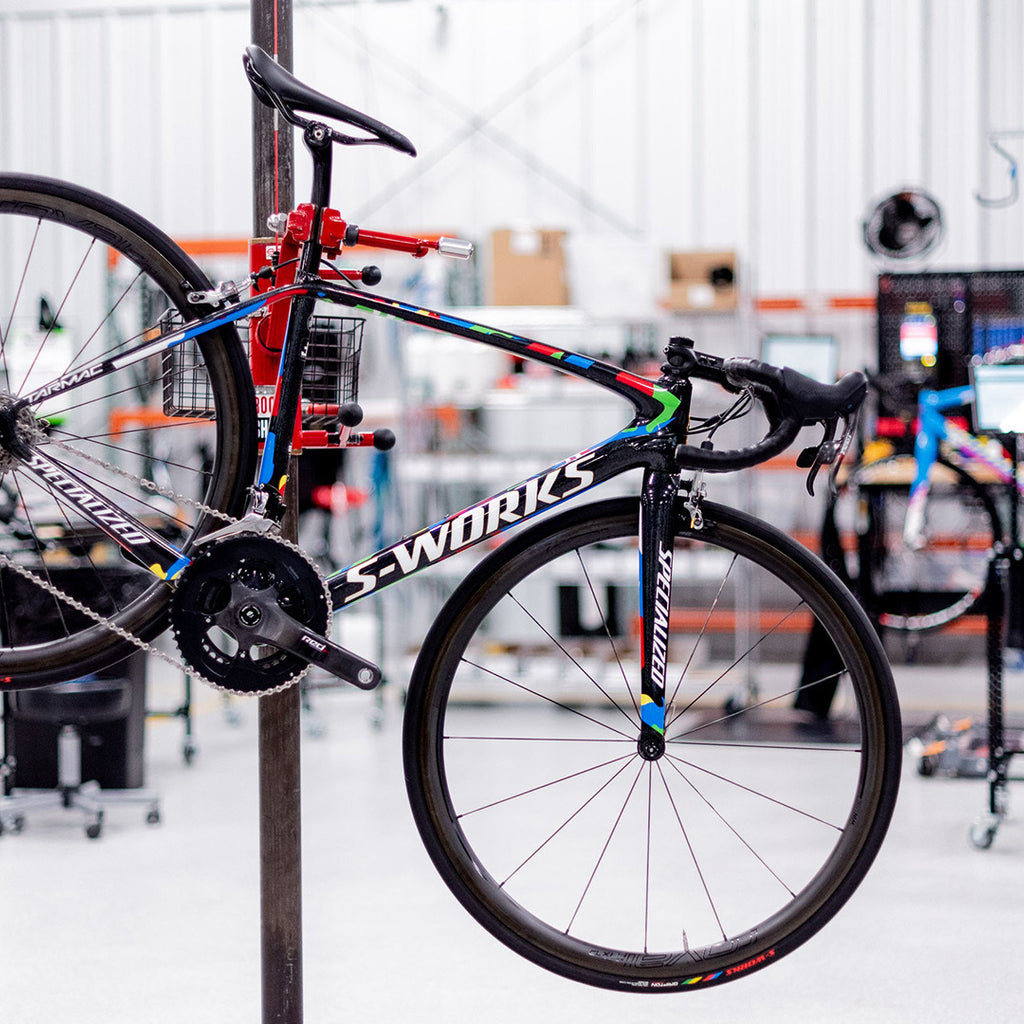
Image Source: www.theproscloset.com
Road Bike Weight: How Much Does A Road Bike Weigh?
So, how much does a road bike weigh? The average road bike weight can range from 15 to 25 pounds (approximately 6.8 to 11.3 kilograms). However, this is a broad estimate, and the actual weight can vary significantly based on many factors, including the materials used, the components, and the bike’s intended purpose.
Deciphering Road Bike Weight: A Comprehensive Guide
For cyclists, weight is often a significant consideration. Whether you’re a seasoned racer aiming for every possible advantage or a recreational rider looking for a comfortable and efficient machine, understanding how much a road bike weighs and what influences that number is crucial. This deep dive will explore the world of road bike weights, from entry-level models to elite racing machines, and the factors that contribute to their heft.
Factors Affecting Road Bike Weight
Several elements contribute to the overall weight of a road bike. These can be broadly categorized into frame material, components, and design.
Frame Material: The Foundation of Weight
The material from which a bike’s frame is constructed is arguably the most significant determinant of its weight. Different materials offer varying levels of strength, stiffness, ride quality, and, of course, weight.
- Carbon Fiber: Often considered the gold standard for lightweight road bikes, carbon fiber frames can be incredibly light while maintaining excellent stiffness and strength. The ability to precisely lay up carbon fibers in specific directions allows manufacturers to create frames that are optimized for performance and weight. Carbon road bike weight can vary, but high-end race frames can weigh as little as 1.5 to 2.5 pounds (0.7 to 1.1 kg).
- Aluminum Alloys: Aluminum is a popular choice for mid-range and entry-level road bikes. It offers a good balance of affordability, durability, and reasonably light weight. Modern aluminum frames often feature hydroformed tubing and butting (varying tube wall thickness) to reduce weight without compromising strength. Aluminum road bike weight typically ranges from 2.5 to 4 pounds (1.1 to 1.8 kg) for the frame.
- Steel: While historically the dominant frame material, steel has seen a resurgence in popularity for its ride comfort and durability. Modern steel alloys, such as chromoly (chromolydenum steel), can be surprisingly light and offer a very supple ride. However, generally speaking, steel frames tend to be heavier than their carbon or aluminum counterparts. Steel road bike weight for a frame can range from 3.5 to 5 pounds (1.6 to 2.3 kg) or more.
- Titanium: Titanium offers an excellent blend of light weight, strength, and corrosion resistance. It provides a unique ride quality often described as “springy” and is known for its longevity. However, titanium frames are typically more expensive and can be heavier than comparable carbon frames.
- Steel Road Bike Weight Considerations: When considering steel, it’s important to remember that advancements in alloys and tube manipulation have made modern steel bikes much lighter than their older counterparts. However, for the absolute lightest bikes, carbon fiber still holds the advantage.
Road Bike Components Weight: The Sum of the Parts
Beyond the frame, every component attached to it adds to the bike’s overall weight. The choice of components can dramatically impact the final weight.
- Wheels: Wheels are often referred to as the “engine” of a bike, and their weight has a profound effect on acceleration and handling. Lightweight wheels, especially those made from carbon fiber with aerodynamic profiles, can shave significant weight. Conversely, heavier, robust wheels found on touring or cyclocross bikes will add to the overall mass.
- Groupset (Drivetrain and Brakes): A groupset includes shifters, derailleurs, crankset, bottom bracket, cassette, chain, and brakes. Higher-end groupsets typically use lighter materials like titanium and carbon fiber, and employ more advanced manufacturing techniques to reduce weight. For example, a top-tier electronic groupset will be considerably lighter than a lower-tier mechanical one.
- Handlebars, Stem, and Seatpost: These contact points are often made from aluminum or carbon fiber. Carbon fiber components are generally lighter and can also offer vibration-dampening benefits, contributing to a more comfortable ride.
- Saddle: While saddles might seem like a small detail, they can vary in weight. Lightweight racing saddles often use carbon rails and minimal padding, while more comfortable touring saddles might be heavier.
- Tires and Tubes: While often overlooked, the weight of tires and inner tubes can add up. Tubeless setups or lighter racing tires can offer a slight weight advantage.
Road Bike Components Weight Examples:
To illustrate, consider the significant differences in weight within a single component category:
| Component Category | Entry-Level Example (Aluminum) | Mid-Range Example (Aluminum/Carbon Mix) | High-End Example (Full Carbon) | Typical Weight Range (per pair) |
|---|---|---|---|---|
| Wheels | 2000g | 1700g | 1300g | 1300g – 2200g |
| Groupset (Crank, Derailleurs, Shifters, Brakes) | 2800g | 2400g | 1900g | 1900g – 3000g |
| Handlebars | 320g | 280g | 220g | 220g – 400g |
| Stem | 150g | 130g | 100g | 100g – 200g |
| Seatpost | 300g | 250g | 180g | 180g – 350g |
Note: These are approximate weights and can vary by specific model and manufacturer.
Road Bike Weight Chart: A General Overview
To provide a clearer picture of road bike weight by material, here’s a general chart showing typical weight ranges for complete bikes. It’s important to remember that these are approximations, and variations exist within each category.
| Bike Type/Material | Typical Weight Range (Pounds) | Typical Weight Range (Kilograms) | Notes |
|---|---|---|---|
| Entry-Level Aluminum | 20 – 25 lbs | 9.1 – 11.3 kg | Often heavier components, robust frames. |
| Mid-Range Aluminum | 18 – 22 lbs | 8.2 – 10 kg | Better components, potentially some carbon parts. |
| High-End Aluminum | 16 – 19 lbs | 7.3 – 8.6 kg | Lightweight aluminum alloys, premium components. |
| Entry-Level Carbon Fiber | 17 – 20 lbs | 7.7 – 9.1 kg | Good balance of performance and price. |
| Mid-Range Carbon Fiber | 15 – 18 lbs | 6.8 – 8.2 kg | Performance-oriented carbon frames, lighter components. |
| High-End Carbon Fiber | 13 – 16 lbs | 5.9 – 7.3 kg | Top-tier race bikes, ultra-light components, aerodynamic designs. |
| Steel (Modern Alloys) | 19 – 24 lbs | 8.6 – 10.9 kg | Focus on ride quality and durability, can be lighter than older steel. |
| Titanium | 16 – 20 lbs | 7.3 – 9.1 kg | Excellent ride quality, durable, but often heavier than comparable carbon. |
| Gravel Bikes (Varies) | 20 – 27 lbs | 9.1 – 12.2 kg | Designed for versatility, wider tires add weight. |
| Endurance Road Bikes | 17 – 22 lbs | 7.7 – 10 kg | Comfort-oriented geometry and features can add slight weight. |
| Aero Road Bikes | 15 – 18 lbs | 6.8 – 8.2 kg | Aerodynamics often prioritized, can be slightly heavier than pure climbers. |
| Lightweight Road Bikes | Below 15 lbs | Below 6.8 kg | Typically high-end, dedicated climbing machines. |
What is the Road Bike Weight Limit?
When we talk about road bike weight limit, it’s important to distinguish between the rider’s weight limit and the bike’s structural weight limit.
- Rider Weight Limit: Most manufacturers specify a maximum rider weight limit for their bikes. This is typically in the range of 250 to 300 pounds (113 to 136 kg) for standard road bikes, including the rider and any gear. This limit is in place to ensure the structural integrity of the frame, wheels, and other components under stress. Exceeding this limit can lead to premature wear, component failure, and potential safety hazards.
- Bike Structural Weight Limit: While manufacturers don’t usually provide a specific “bike only” weight limit, the rider weight limit implicitly covers the bike’s ability to handle typical riding loads. Extremely lightweight bikes, particularly those designed for racing, may have lower rider weight limits to maximize performance and minimize material.
It’s always advisable to check the manufacturer’s specifications for the specific model you are interested in, as these limits can vary. If you are a heavier rider, looking for bikes with robust construction or those designed for touring or commuting might be a better option, as they are often built to handle greater loads.
The Pursuit of Lightweight Road Bikes
The quest for lightweight road bikes is a constant driving force in cycling technology. For competitive cyclists, every gram saved can translate into a tangible performance advantage, especially on climbs.
- Climbing Performance: Lighter bikes require less energy to accelerate and ascend gradients. This is why climbers often favor ultra-lightweight machines.
- Acceleration: A lighter bike feels more responsive and quicker to accelerate from a standstill or out of corners.
- Handling: While weight isn’t the sole factor in handling, a lighter bike can often feel more nimble and agile.
However, it’s crucial to remember that weight is not the only factor determining a bike’s performance. Stiffness, aerodynamics, tire choice, and the rider’s fitness all play significant roles. A slightly heavier, stiffer, or more aerodynamic bike might outperform an ultra-light bike in certain scenarios.
Road Bike Weight by Material: A Deeper Look
Let’s re-examine road bike weight by material with a bit more detail, considering common examples and the trade-offs involved.
Carbon Road Bike Weight
Carbon road bike weight is a prime example of how advanced materials can lead to remarkable lightness. The manufacturing process for carbon frames involves layering sheets of carbon fiber pre-impregnated with resin (pre-preg) into molds and then curing them under heat and pressure.
- Advantages: Incredible strength-to-weight ratio, design flexibility for aerodynamics and stiffness, vibration damping.
- Disadvantages: Generally more expensive than aluminum, can be susceptible to impact damage if not handled with care.
- Typical Frame Weights:
- Entry-level carbon: 1.1 – 1.3 kg (2.4 – 2.9 lbs)
- Mid-range carbon: 0.9 – 1.1 kg (2.0 – 2.4 lbs)
- High-end/Race carbon: 0.7 – 0.9 kg (1.5 – 2.0 lbs)
- Ultra-light climbing frames: Can dip below 0.7 kg (1.5 lbs)
Aluminum Road Bike Weight
Aluminum frames are constructed using various methods, including welding, hydroforming (shaping tubes with high-pressure fluid), and butting (varying tube wall thickness).
- Advantages: More affordable than carbon, durable, good stiffness.
- Disadvantages: Generally heavier than carbon, can feel harsher ride-wise if not designed well, less design flexibility for complex aerodynamic shapes.
- Typical Frame Weights:
- Entry-level aluminum: 1.4 – 1.8 kg (3.1 – 4.0 lbs)
- Mid-range aluminum: 1.2 – 1.5 kg (2.6 – 3.3 lbs)
- High-end aluminum (e.g., race-spec): 1.0 – 1.3 kg (2.2 – 2.9 lbs)
Steel Road Bike Weight
While often associated with being heavier, modern steel frames, especially those made from high-quality chromoly tubing, can be surprisingly light and offer a comfortable ride.
- Advantages: Excellent ride quality, durability, repairability, classic aesthetics.
- Disadvantages: Generally heavier than carbon and high-end aluminum, can be prone to rust if not cared for.
- Typical Frame Weights:
- Standard steel: 1.8 – 2.5 kg (4.0 – 5.5 lbs)
- High-quality chromoly: 1.6 – 2.0 kg (3.5 – 4.4 lbs)
The Role of Components in Overall Weight
Let’s delve deeper into how road bike components weight influences the final bike. Even a very light frame can be weighed down by heavy components.
- Wheelsets: A high-quality carbon wheelset can weigh as little as 1300 grams, while a more basic aluminum wheelset might be 1800 grams or more. That’s a difference of over a pound (around 500 grams) just in the wheels.
- Groupsets: The difference between a Shimano Ultegra and a Shimano Dura-Ace groupset can be several hundred grams. Similarly, SRAM Red is significantly lighter than SRAM Apex.
- Contact Points: Upgrading handlebars, stem, and seatpost from aluminum to carbon fiber can shave off another 200-300 grams.
- Saddle and Pedals: Even small components like the saddle and pedals can contribute to the overall weight. Lightweight titanium-railed saddles and carbon-soled cycling shoes can save grams.
Example Scenario: Weight Difference from Component Upgrades
Imagine a mid-range aluminum bike weighing 20 lbs (9.1 kg) with a mix of entry-level and mid-range components. By upgrading to a lighter wheelset, a higher-tier groupset, carbon handlebars, stem, and seatpost, and a lighter saddle, it’s not uncommon to reduce the total bike weight by 3-5 lbs (1.4-2.3 kg), bringing it into the 15-17 lb (6.8-7.7 kg) range. This demonstrates the significant impact of component choices.
What is the Average Road Bike Weight?
As mentioned earlier, the average road bike weight is a broad spectrum, but generally falls between 15 to 25 pounds (6.8 to 11.3 kilograms).
- Entry-level bikes: Tend to be at the higher end of this range (20-25 lbs).
- Mid-range bikes: Sit comfortably in the middle (17-20 lbs).
- High-end and race bikes: Fall at the lower end or even below (14-17 lbs).
- Ultra-lightweight or super-bikes: Can weigh as little as 11-13 lbs (5-6 kg) for the complete bike, but these are very specialized and expensive machines.
Frequently Asked Questions (FAQ)
Q1: Does a lighter road bike always mean faster?
Not necessarily. While a lighter bike requires less energy to accelerate and climb, aerodynamics, frame stiffness, and tire rolling resistance also play critical roles in overall speed. On flat terrain, aerodynamic efficiency can be more important than weight.
Q2: How much does a road bike weigh with accessories?
Accessories like water bottles, saddlebags, lights, and computers will add to the bike’s weight. A full water bottle can add around 1.5 lbs (0.7 kg) to the bike.
Q3: Is it worth spending more for a lighter bike?
This depends on your cycling goals. For competitive racers or those who frequently tackle steep climbs, the performance benefits of a lighter bike can justify the cost. For recreational riders, the ride quality, comfort, and durability of a slightly heavier bike might be more important.
Q4: Can I make my current road bike lighter?
Yes, you can often reduce the weight of your existing road bike by upgrading components. Focusing on wheels, tires, and the drivetrain are common starting points for weight reduction.
Q5: Are there road bikes designed specifically for heavier riders?
Yes, while not always explicitly marketed as “heavy rider bikes,” manufacturers often design bikes with stronger frames and wheels that can better accommodate heavier loads. Look for bikes with robust construction or those marketed for touring or gravel riding, as they often have higher weight tolerances.
In conclusion, road bike weight is a multifaceted topic influenced by frame materials, component choices, and design. While the pursuit of lighter bikes is ongoing, it’s essential to balance weight with other performance characteristics and your personal riding needs and budget. Whether you’re building a dream machine or choosing your first road bike, a solid grasp of these factors will help you make an informed decision.